


Among all production processes on a poultry farm, feed preparation is the only link that simultaneously affects flock health, labor costs, and formulation flexibility. The choice between an automatic and a manual Chicken feed mixer directly determines whether these three dimensions move toward optimization or decline.
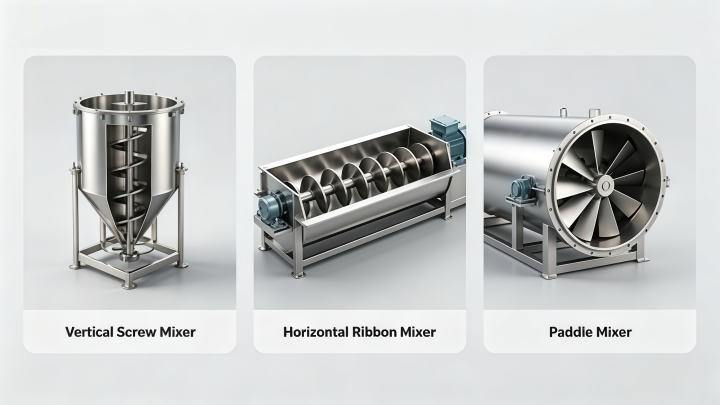
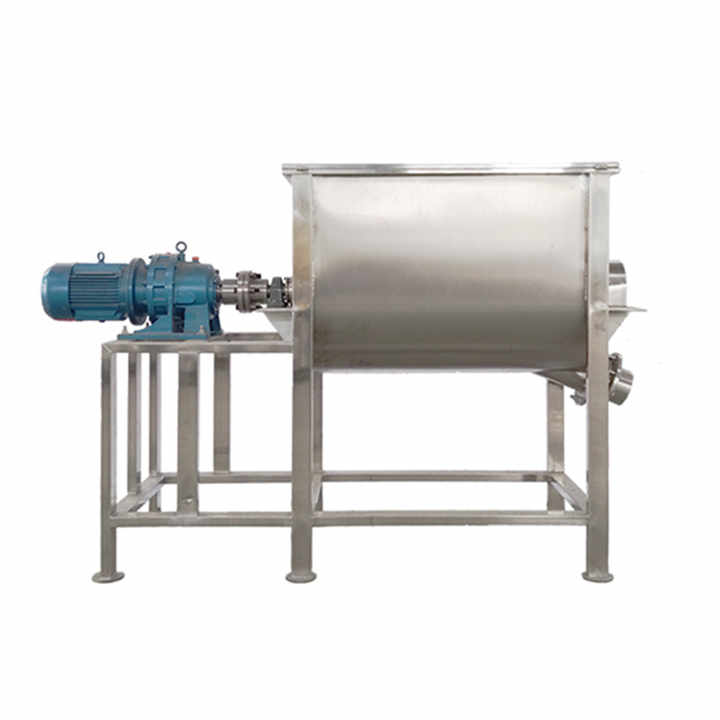
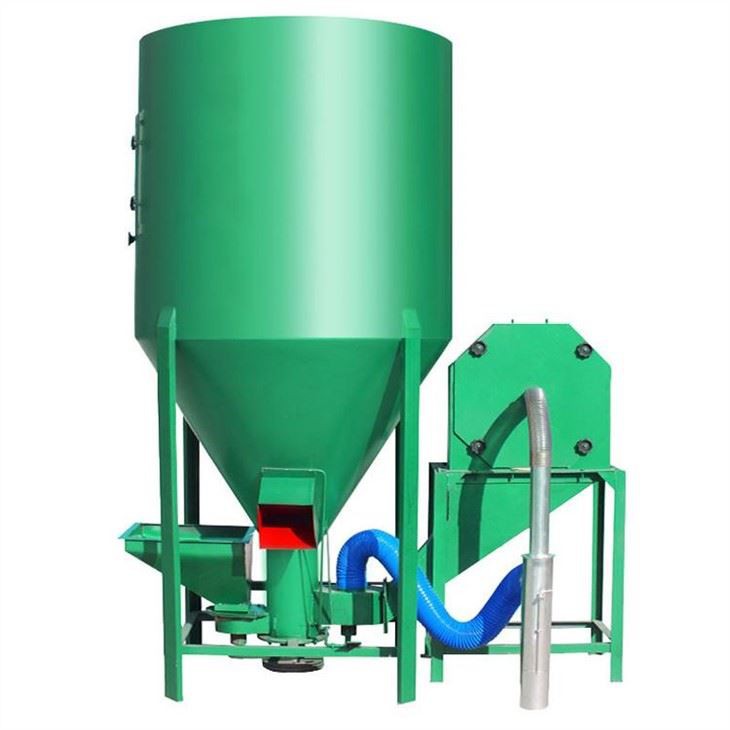
Models available on the market mainly fall into three categories: vertical screw, horizontal ribbon, and paddle types, each suited for different scenarios. The vertical design has a simple structure and low failure rate, making it suitable for small-scale farms. The horizontal ribbon type delivers high mixing uniformity and large batch capacity, making it the mainstream choice for medium and large operations. The paddle type handles high-fiber or high-moisture ingredients more effectively.
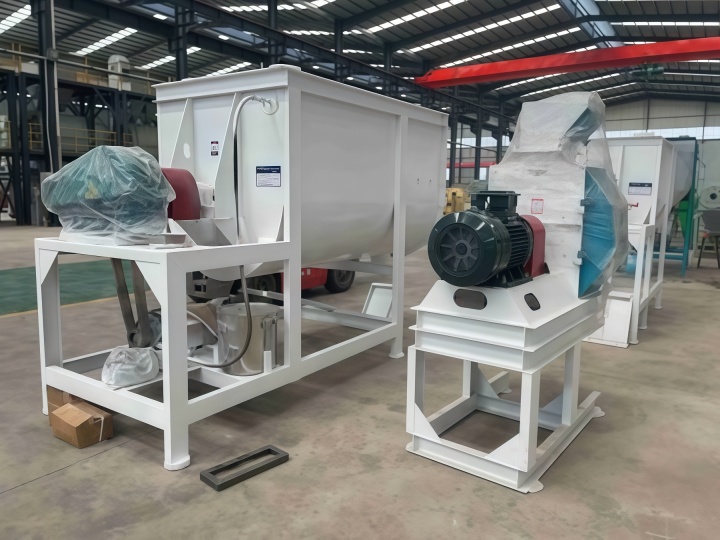
If your raw materials include whole corn or soybeans, you will also need a hammer mill, as grinding particle size directly affects subsequent mixing uniformity. Different types of equipment vary significantly in price and application scenarios.
The true cost of an automatic unit cannot be calculated from the purchase date alone. Fixed entry-level automatic models range from $12,000 to $22,000, while fully automatic self-propelled units can reach $180,000 to $300,000. Manual units carry much lower price tags, but over two years of operation, cumulative labor and waste expenses often match or exceed the price difference.
For a medium-sized farm, manual equipment incurs significantly higher annual expenses in labor and feed waste compared to automatic systems. Over two years, the total cost of ownership for manual equipment often surpasses that of automatic units. Equipment that appears cheaper upfront frequently proves more expensive in the long run.
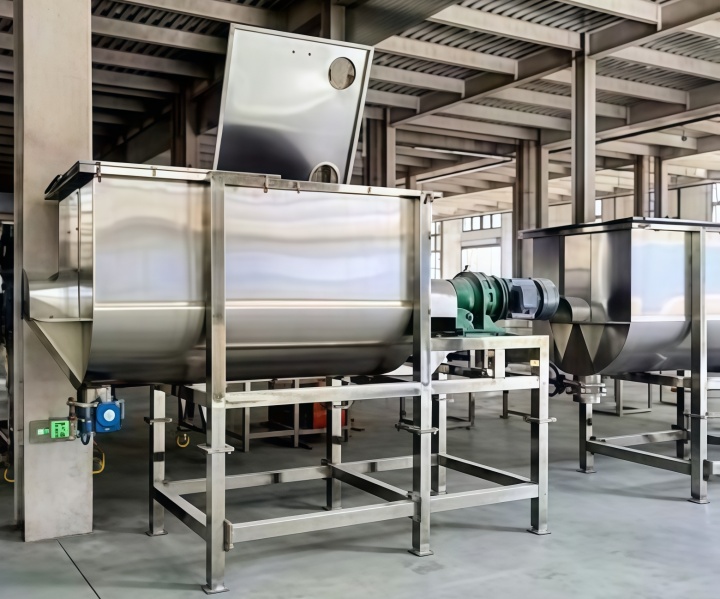
To determine whether a unit achieves uniform mixing, the industry standard is to check whether the coefficient of variation, or CV value, falls below 10%. The benchmark sets CV below 10% as acceptable, while the ideal standard for poultry feed is CV ≤ 5%. Professional horizontal models can consistently maintain CV values below 5%, with some high-end units achieving 2% to 3%.
Manual units require 10 to 20 minutes per batch, with CV values fluctuating between 8% and 15%. Automatic systems achieve batching accuracy of ±0.2%, with CV values consistently below 5%. When daily output falls below 2 tons, the advantages of automatic equipment are less apparent. However, when three or more batches are needed daily, the time savings and formulation consistency offered by automatic systems become very clear.
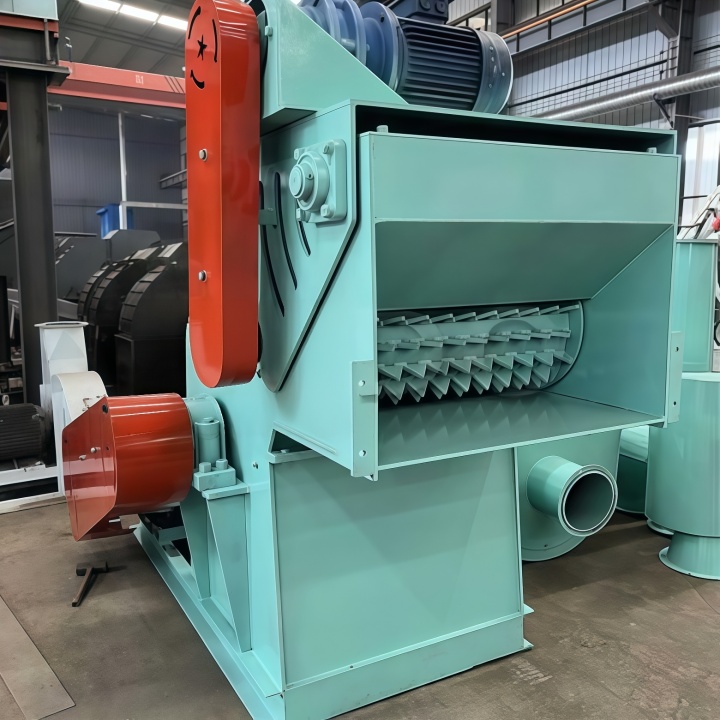
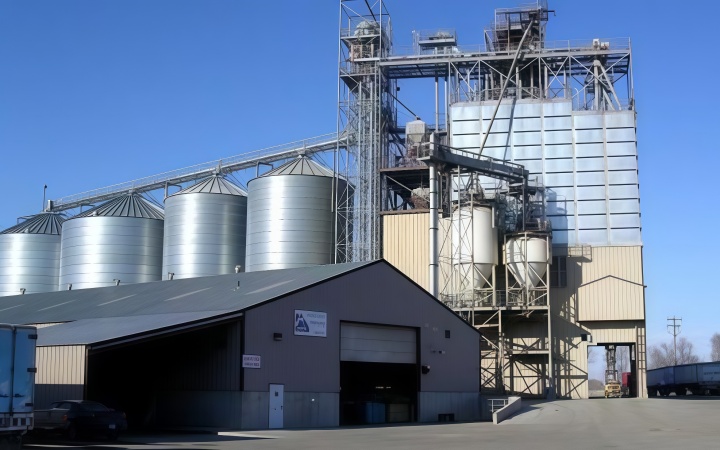
A large egg production company in São Paulo, Brazil, had long relied on third-party feed suppliers. In 2025, it commissioned a 16-ton-per-hour fully automatic poultry feed production line with batching accuracy controlled within 0.1%, using a twin-shaft paddle mixer for rapid and uniform blending. After commissioning, pellet durability exceeded 95%, and moisture content remained consistently below 13%. Producing feed in-house significantly improved egg production consistency and feed efficiency while reducing dependence on external suppliers.
A 120,000-layer farm in Vojvodina, Serbia, operated an old single-shaft ribbon mixer with CV values ranging from 12% to 18%. Calcium content variation across different samples reached as high as ±18%, and eggshell breakage rates climbed to 6.2%. After replacing it with a twin-shaft paddle mixer in 2025, CV values dropped below 4.2%, pellet durability increased to 96.8%, and annual output rose from 8,200 tons to 15,000 tons while eliminating cross-contamination risks. The plant manager summarized it this way: shorter mixing time, more stable results, and production targets were met.
There is a cautionary lesson worth noting here. A poultry farmer in China saw that a peer achieved good results with a high-capacity unit and bought the same model. However, his daily output was only half of his peer's. The equipment ran at low load for an extended period, and energy costs turned out higher than with his old machine. After six months, he switched back to a smaller model. Selecting a machine is not about choosing the largest capacity available—matching throughput to daily production requirements is what truly matters.
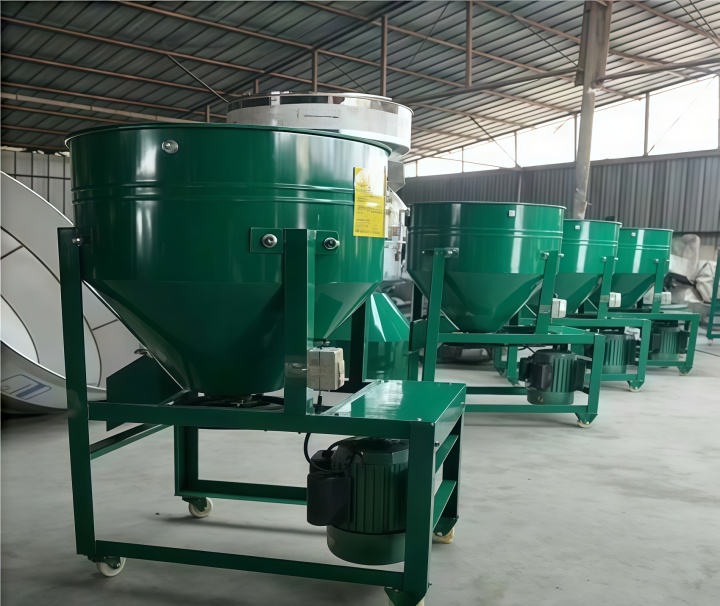
An automatic Chicken Feed Mixer typically recovers its cost difference within about one year when monthly output exceeds 60 tons. The ROI of manual units lies in their low initial investment, making them suitable for operations with daily output below 2 tons. Automatic equipment delivers value through labor savings and reduced waste. Compared to purchasing commercial feed, producing feed in-house can save 12% to 25% on costs. The investment payback period for a 1-ton-per-hour system typically ranges from 5 to 8 months.
Four-step self-check for equipment selection: calculate total daily feed requirement (flock size × average daily feed intake); determine the number of batches needed per day; assess available labor and operating time; calculate 5-year total cost of ownership including labor, energy, and maintenance. After completing these four steps, the appropriate type for your operation will become much clearer.
A properly maintained machine can see its service life extended by more than 30%. The standard maintenance schedule is as follows:
| Maintenance Item | Frequency | Key Points |
|---|---|---|
| Remove residual feed | Every 8 hours | Focus on shaft ends and drum dead corners |
| Bearing lubrication | Every 40 hours | Use high-temperature lithium grease |
| Inspect mixing blades | Monthly | Replace when edge wear exceeds 3mm |
| Check belts and main shaft | Quarterly | Loose belts cause slipping; eccentric shaft damages bearings |
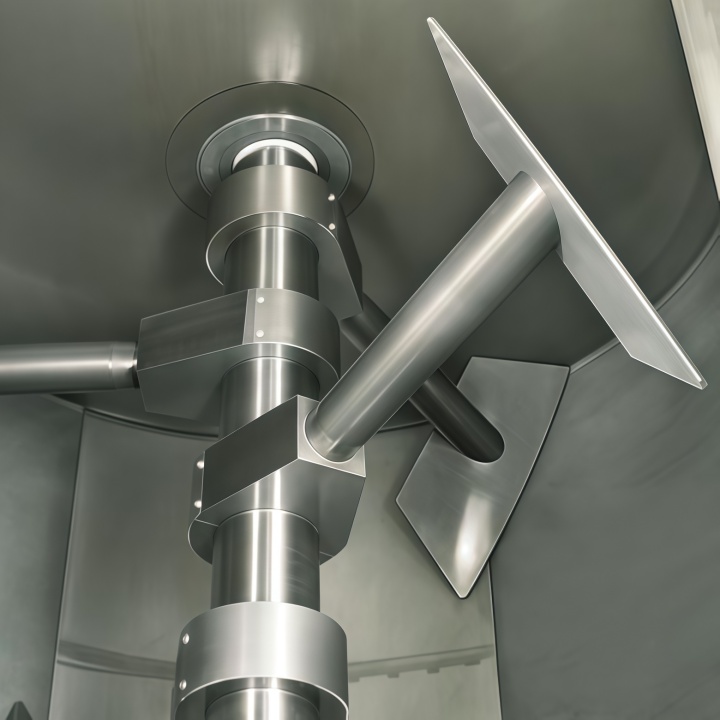
Cross-contamination is an easily overlooked safety risk in feed mixing. Trace amounts of medicated feed from previous batches can carry over into the next batch through dead zones in the mixing chamber or discharge ports. For feed destined for export markets or contract farms, cross-contamination can lead to product rejection or food safety issues. EU feed hygiene regulations require mixing equipment to feature easy-clean designs that eliminate dead zones and residual accumulation. When selecting a unit, priority should be given to stainless steel contact surfaces and dead-zone-free chamber designs.
A real-world maintenance case: one farm failed to clean residual feed from the mixing chamber for three consecutive months, allowing corn meal and soybean meal to cake and mold in dead corners. This corroded the mixing shaft seals and contaminated three batches of finished feed, resulting in a loss exceeding $2,000. Maintenance neglect often proves to be the most hidden cost.
How do I know if my Chicken Feed Mixer is mixing evenly?
Test nutrient composition differences across sample locations. Industry standard requires CV below 10%, with an ideal target of CV ≤ 5%.
What capacity Chicken Feed Mixer do I need for my flock size?
A farm with 10,000 broilers typically requires 400 to 1,000 kg batch capacity. Multi-tier cage systems need an extra 15% to 20% margin.
What are the common mistakes when buying a Chicken Feed Mixer?
Looking only at price while ignoring labor and waste costs, overlooking spare parts availability, and failing to match materials to local humidity conditions—any of these can significantly increase total cost.
Can I start with a manual Chicken Feed Mixer and upgrade later?
Yes, but vertical and horizontal models have different foundation requirements. Upgrading may require redoing the base slab.
Is an automatic Chicken Feed Mixer worth it for a small farm?
Manual equipment is more economical when daily output is below 2 tons. However, if you switch formulations frequently, the setup time saved by an automatic unit represents valuable hidden benefits.
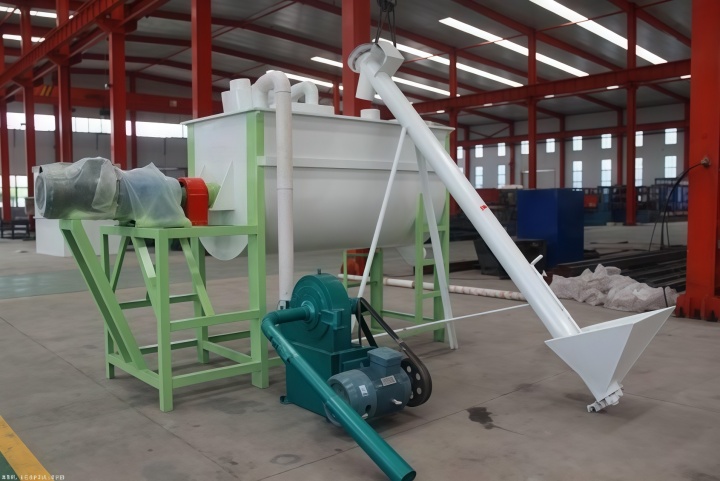
Our recommendation is straightforward: if your daily output is below 2 tons and labor is readily available, a manual unit will serve you well. However, if your flock size is steadily expanding or formulations need frequent changes, the time savings and uniformity assurance provided by automatic equipment will directly impact the feed conversion ratio of every batch.
Before selecting equipment, calculate the total cost of ownership rather than looking only at the purchase price. If you are unsure, start with a simple cost estimation sheet, then approach equipment suppliers with your data—this will give you greater confidence in your decision.


Address:China,Yanjin county forest park gate to the west 1000 meters north road.


 Online Chat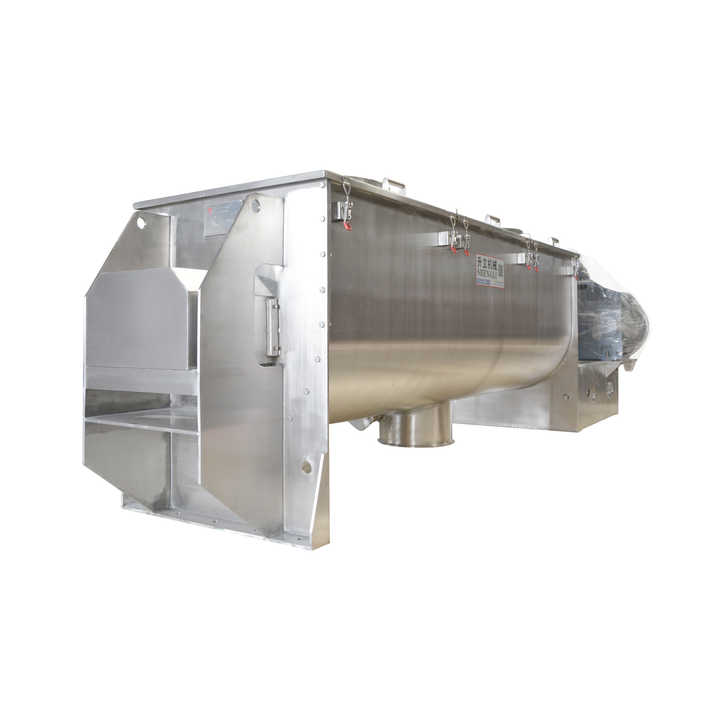
 Email
Email