


In the polymer processing industry, achieving consistent compound quality is a persistent challenge. Whether you are manufacturing rubber seals, silicone gaskets, PVC dry blends, or masterbatches, the performance of your final product depends heavily on two critical factors: temperature precision and shear intensity during mixing. The rubber and plastic thermal mixer—also known as an internal mixer or heated kneader—addresses these challenges through advanced engineering that delivers both.
This article explores how precision temperature control and high‑intensity shear work together to elevate compounding quality, reduce cycle times, and ensure batch‑to‑batch consistency.
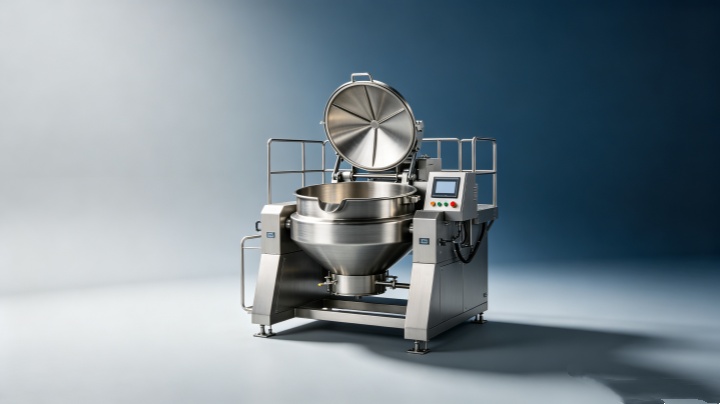
Polymer compounding is not simply about stirring ingredients together. It involves:
Dispersing fillers, pigments, and additives uniformly
Kneading high‑viscosity elastomers and plastics into a homogeneous mass
Controlling chemical reactions such as crosslinking or plasticization
Two parameters dominate this process: temperature and shear rate. Improper temperature control can lead to thermal degradation of heat‑sensitive materials, premature curing, or insufficient plasticization. Insufficient shear results in poor dispersion, creating weak spots or color inconsistencies in the final product.
The thermal mixer solves both problems through an enclosed mixing chamber, specially designed rotors, and a comprehensive heating/cooling system.
Modern thermal mixers are equipped with jacketed mixing chambers and hollow rotors through which heating or cooling media circulate. Common systems include:
| Heating Method | Cooling Method | Typical Application |
| Electric heating elements | Water jacket circulation | Laboratory and small‑batch production |
| Steam circulation | Oil circulation | Medium to large‑scale rubber compounding |
| Thermal oil circulation | Air cooling channels | High‑temperature plastics and masterbatches |
| Self‑friction (mechanical) | Direct cooling water injection | High‑speed PVC dry blend mixing |
The system is typically monitored by PLC controllers with real‑time thermocouple feedback, maintaining temperature accuracy within ±0.5°C.
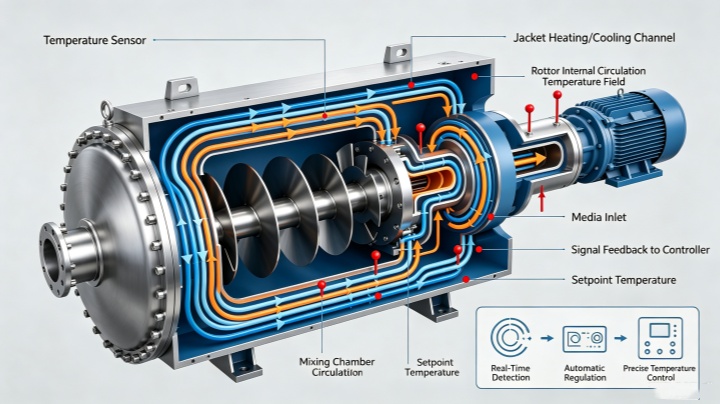
Benefits of Precise Temperature Control
Prevents Thermal Degradation
Many polymer compounds are heat‑sensitive. Silicone rubber, for example, can begin to cure prematurely if temperatures exceed recommended ranges. Similarly, certain plasticizers and pigments degrade at elevated temperatures, causing discoloration or loss of functional properties. A thermal mixer with precise control prevents these issues by maintaining optimal processing temperatures throughout the mixing cycle.
Enables Controlled Chemical Reactions
Compounding often involves chemical processes such as:
Dynamic vulcanization of thermoplastic elastomers
Crosslinking of rubber compounds
Plasticization of PVC with heat‑activated stabilizers
These reactions require specific temperature windows. Data from high‑shear dynamic vulcanization processes show that superior tensile properties are achieved when temperature is maintained between 180°C and 230°C during the vulcanization zone. Precision control ensures these reactions proceed as designed.
Reduces Energy Consumption
Efficient heat transfer through jacketed chambers and heated rotors reduces the time required to reach processing temperature. Some systems report up to 30% higher heat transfer efficiency compared to single‑layer jacket designs. This translates to lower energy costs per batch.
Enables Rapid Cooling
When the mixing cycle is complete, rapid cooling is often necessary to prevent post‑mixing degradation. Cooling water or oil circulated through the jacket and rotors can bring material temperature down quickly, preserving compound properties and enabling faster unloading.
Inside the thermal mixer, two specially designed rotors rotate toward each other at slightly different speeds—typically a gear ratio of 3:2 for tangential rotors or 1:1 for intermeshing designs. This differential speed creates intense shearing, kneading, and folding action that breaks down agglomerates and disperses additives uniformly.
Key design elements that determine shear intensity include:
Rotor geometry: Sigma (Z‑blades), cam‑type, roller‑type, or intermeshing designs
Rotor speed: Typically adjustable from 0 to 140 RPM via inverter control
Tip clearance: The gap between rotor tips and chamber wall determines maximum shear rate
Chamber fill factor: Typically 60‑70% of free volume to allow material folding
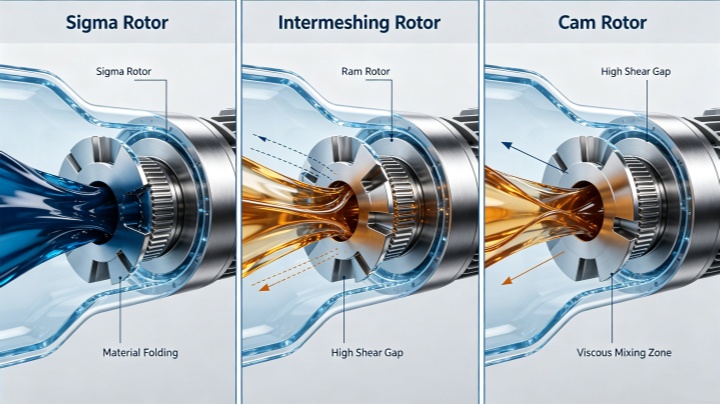
Why High Shear Improves Compound Quality
Breaks Down Agglomerates
Powder additives, carbon black, and pigments naturally form agglomerates. High shear forces break these down to primary particle size, ensuring that every gram of compound contains uniformly distributed ingredients. This is essential for consistent color, mechanical properties, and processability.
Enhances Polymer‑Filler Interaction
High shear promotes better wetting and bonding between polymer matrices and fillers. In rubber compounding, improved filler dispersion directly correlates with higher tensile strength, tear resistance, and abrasion resistance.
Reduces Mixing Cycle Times
Intensive shear accelerates the mixing process. Typical mixing cycles in a thermal mixer range from 6 to 12 minutes per batch—significantly faster than open‑mill mixing. This increases production throughput and reduces labor costs.
Enables Processing of High‑Viscosity Materials
Thermal mixers can handle viscosities up to 5,000 Pa·s and beyond. High‑viscosity materials like silicone rubber, EPDM compounds, and thermoplastic elastomers require substantial shear to flow and mix effectively. Conventional mixers simply cannot generate the necessary forces.
Precision temperature control and high‑intensity shear are not independent variables—they work together to achieve optimal compounding results.
Example: Dynamic Vulcanization of Thermoplastic Elastomers
Research on polypropylene/EPDM blends demonstrates this synergy clearly:
| Parameter | Low‑Shear (Banbury Mixer) | High‑Shear (Extruder‑Mixer) |
| Shear rate | ~360 sec⁻¹ | ~4,850 sec⁻¹ |
| Residence time | 4‑4.5 minutes | 32‑42 seconds |
| Temperature | ~197°C | 180‑230°C |
| Result | Non‑extrudable compound | Extrudable product with superior tensile properties |
The combination of high shear (generating heat through friction) and precise temperature control (removing excess heat via cooling jackets) allows the process to achieve complete vulcanization in a fraction of the time while producing a superior product.
High‑shear mixing generates significant heat through friction between materials, between particles, and between material and mixing tools. In some high‑speed mixers, this self‑friction heating is sufficient to raise material temperature to processing levels without external heating.
However, excessive heat can cause problems. The cooling system must remove this excess heat to prevent thermal degradation. The integration of temperature sensors, PLC controllers, and cooling jackets enables automatic adjustment, maintaining the optimal temperature throughout the cycle.
Rubber Compounding
Tire manufacturing
Silicone rubber and sealants
Rubber automotive parts (hoses, seals, gaskets)
Reclaimed rubber processing
Plastics and PVC Processing
PVC dry blend preparation
Masterbatch production
Pigment and colorant dispersion
Thermoplastic rubber processing
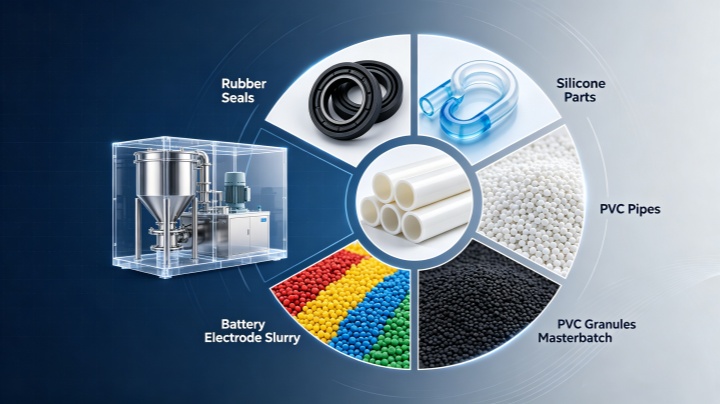
Adhesives, Sealants, and Chemicals
High‑viscosity adhesives and sealants
Silicone sealant production
Battery electrode pastes
Food and Pharmaceuticals
Chewing gum production
Pharmaceutical ointments and creams
When choosing a thermal mixer for your application, consider:
| Parameter | Considerations |
| Capacity | 1L for lab scale to 500L+ for production |
| Heating system | Electric, steam, or oil circulation—depending on temperature requirements |
| Cooling system | Water or oil jacket—ensure sufficient capacity for heat removal |
| Rotor type | Sigma blades, cam rotors, or intermeshing rotors—match to material and shear requirements |
| Discharge system | Hydraulic tilting, screw extrusion, or ball valve—consider ease of cleaning and material handling |
| Control system | Manual, semi‑automatic, or fully automated PLC with data logging |
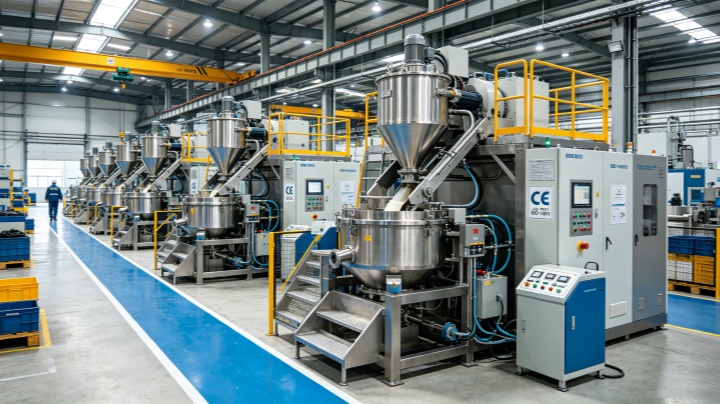
The rubber and plastic thermal mixer is the cornerstone of modern polymer compounding. Its ability to deliver precision temperature control and high‑intensity shear in a single enclosed system enables manufacturers to:
Achieve superior dispersion and homogenization
Maintain batch‑to‑batch consistency
Reduce mixing cycle times and energy costs
Process a wide range of materials from silicone rubber to PVC dry blends
When temperature and shear work in harmony, the result is a compound that processes better, performs reliably, and meets the highest quality standards. If you are evaluating equipment for your compounding line, prioritize machines with advanced thermal control and proven shear capabilities—they will directly impact your product quality and profitability.


Address:China,Yanjin county forest park gate to the west 1000 meters north road.


 Online Chat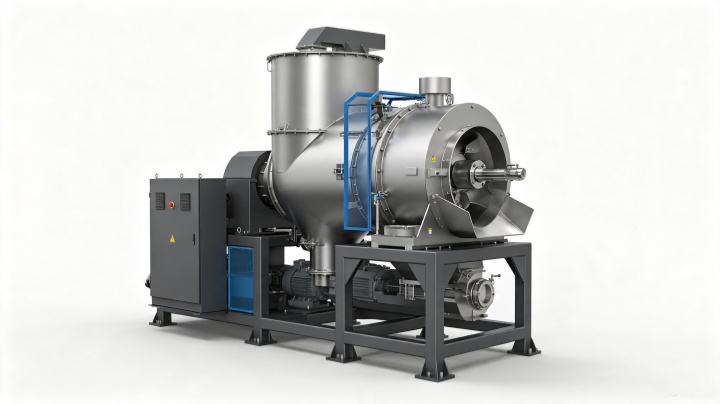
 Email
Email