


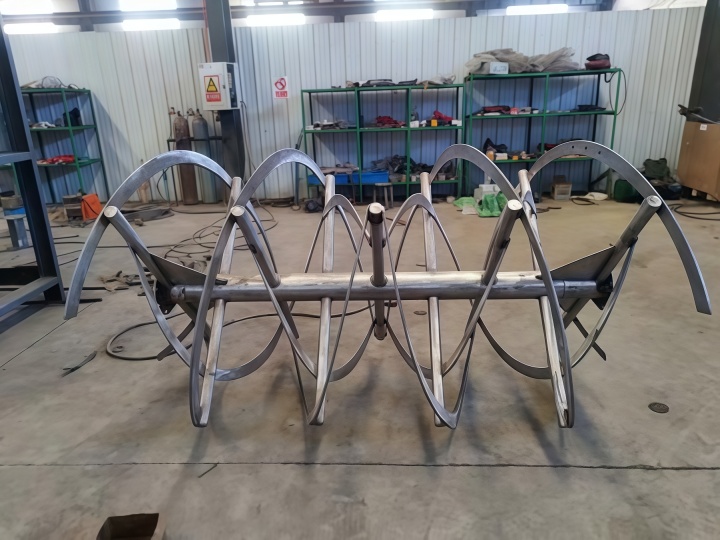
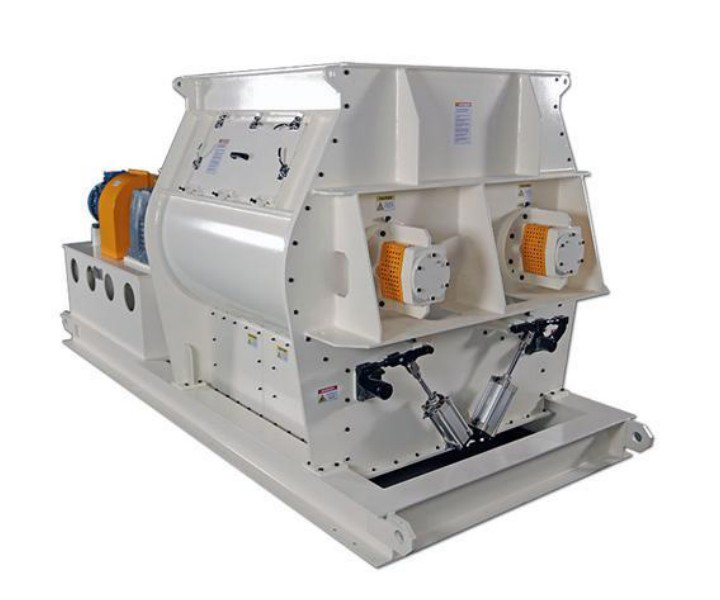
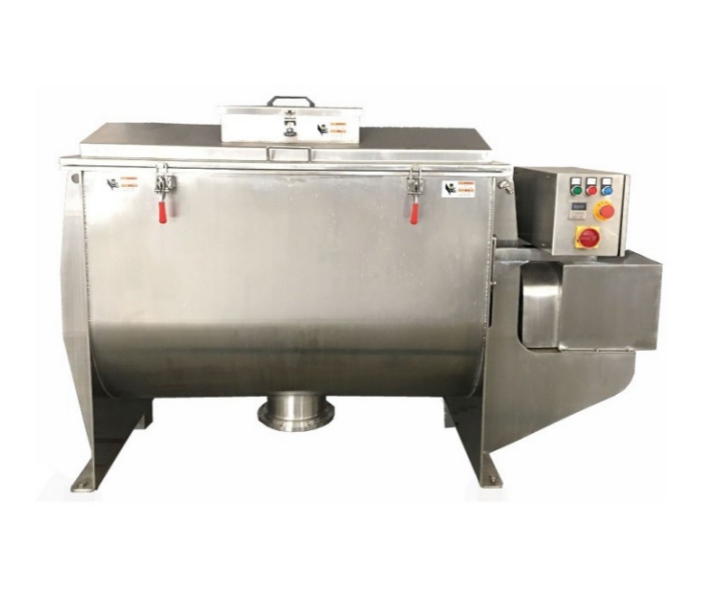
Horizontal Stainless Steel Ribbon Mixer uses inner and outer double‑layer ribbon agitators to achieve convective circulation and shear dispersion. The outer ribbon pushes material from both ends of the trough toward the center, while the inner ribbon pushes material from the center toward both ends, creating intense relative motion.
Equipment specifications range from 50‑liter laboratory models to 30,000‑liter industrial‑scale units. Industry survey data indicates that over 60% of production issues related to mixing can be traced back to equipment selection errors made during procurement. The hidden costs of sizing miscalculations—additional energy consumption, increased cleaning time, and lost production capacity—are often overlooked at the time of purchase.
Selecting the right capacity unit requires systematic evaluation across five dimensions: batch output, material characteristics, fill ratio, production cadence, and installation conditions.
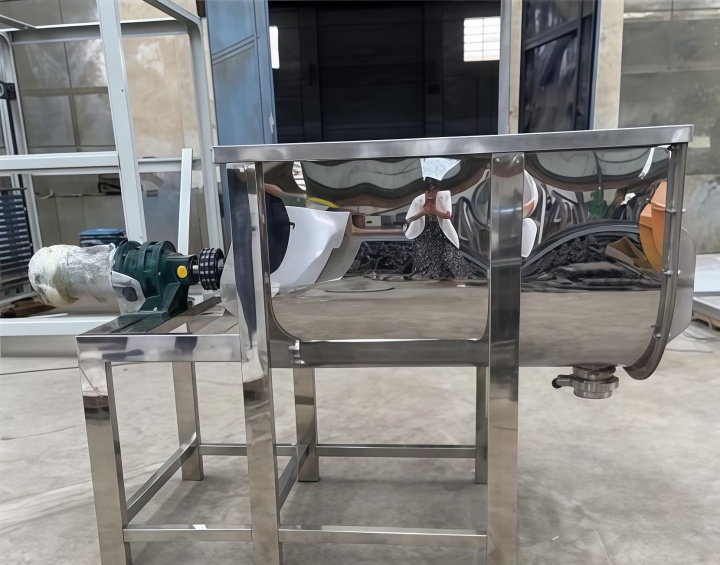
The first step in sizing is to determine the material weight per batch, rather than looking directly at the total volume listed on the equipment model. The actual mixing capability of the mixer depends on working capacity—the volume of material that effectively participates in mixing—rather than total geometric volume.
Dividing batch weight by bulk density yields the required working volume. If the production target is 4,000 pounds per hour and each complete cycle takes 15 minutes, this equals 4 batches per hour, requiring 1,000 pounds per batch. With a bulk density of 30 pounds per cubic foot, the material occupies approximately 33.3 cubic feet.
At a recommended fill rate of 60%, a Horizontal Stainless Steel Ribbon Mixer with a total volume of approximately 55.5 cubic feet would be required. For multi‑formula production, sizing should be based on the material with the most demanding density conditions rather than averaging values.
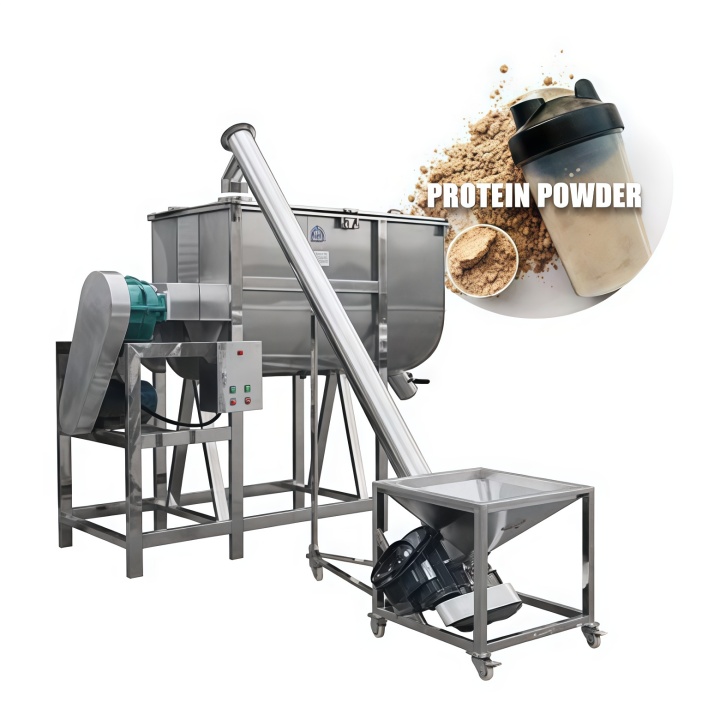
Different materials exhibit significantly different flow characteristics in the ribbon blender. Free‑flowing powders mix smoothly, while materials with high viscosity or high liquid content require adjusted fill ratios and possibly the addition of chopper devices.
Academic research shows that particle density variations from 417 kg/m³ to 2,500 kg/m³ significantly affect mixing behavior. For the same formulation, bulk density can differ considerably across feeding, mixing, and discharging stages. In the spice industry, one manufacturer spent three months troubleshooting batch consistency issues. All raw materials were within specification, yet the problem traced back to a mismatch between the equipment and the formulation containing hygroscopic binders.
This case demonstrates that the alignment between material characteristics and equipment selection directly impacts product quality. The recommended fill range for this unit is 40% to 70% of total volume, with 60% as a common design value. NIR analysis experiments indicate that fill level is one of the primary parameters affecting mixing rate. Below 30% to 40%, ribbon‑to‑material contact is insufficient. Above 70%, material circulation becomes restricted and mixing time extends. A 3,000‑liter unit operating at 60% fill rate has an actual batch capacity of approximately 1,800 liters.
The complete cycle includes loading, mixing, discharging, and cleaning, not just mixing time alone. The mixer may require only 8 to 15 minutes of mixing time, but if discharging and cleaning take additional time, the actual number of batches per hour falls well below theoretical values.
Production line planning must incorporate the complete cycle into capacity calculations. If the target is 4,000 pounds per hour and each complete cycle takes 15 minutes, this equals 4 batches per hour, requiring 1,000 pounds per batch.
Future growth margin should also be considered. Industry experience suggests reserving 20% to 30% additional capacity as a safety margin. However, oversizing reduces fill levels during small‑batch production—a ribbon mixer requires at least 30% to 40% of total volume to achieve effective mixing. A Horizontal Stainless Steel Ribbon Mixer designed for 3,000 liters may not effectively move material when processing only 1,000 liters.
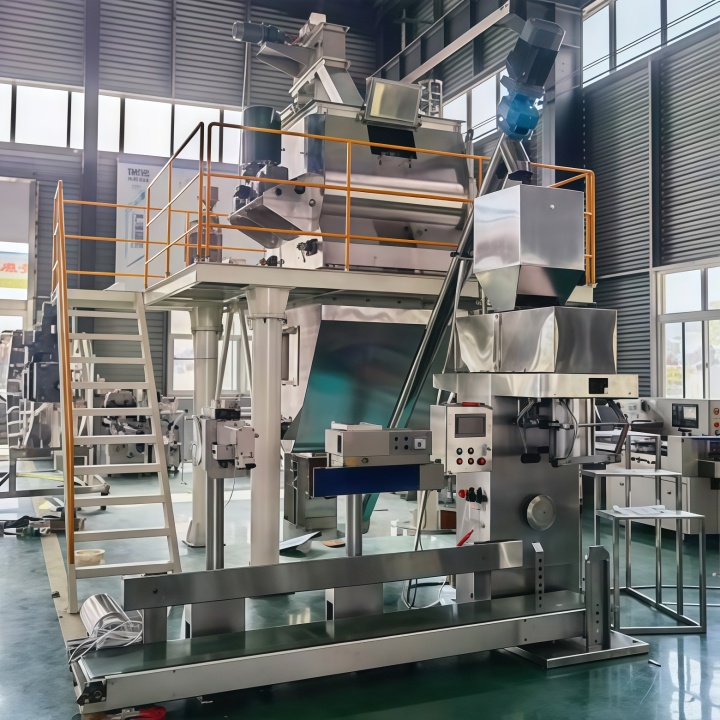
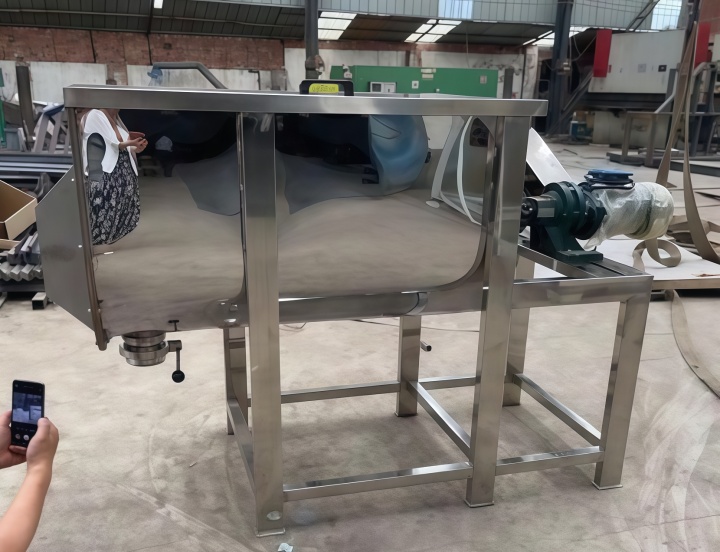
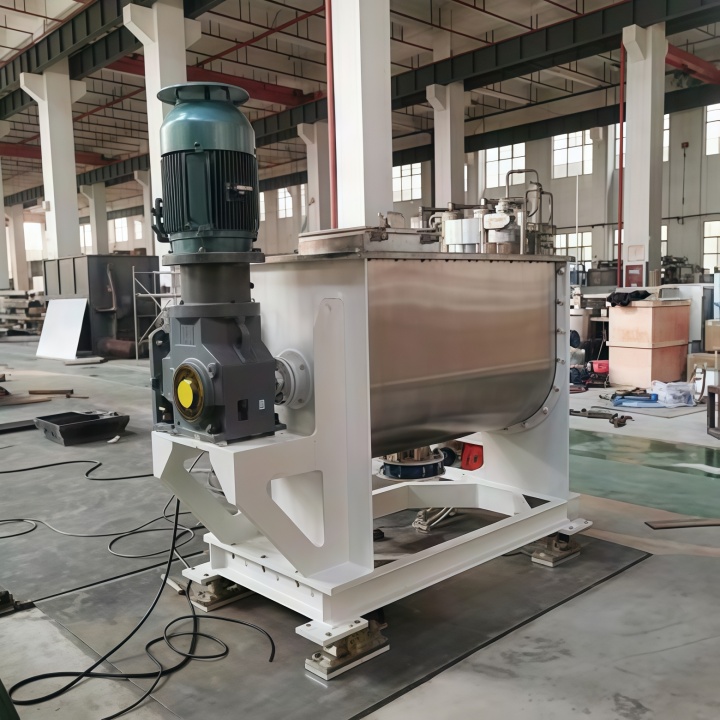
The machine has a horizontal configuration, with overall dimensions determined by trough length, motor and reducer installation space, and the height of the bottom discharge valve and top feed inlet.
Different capacity units differ significantly in length, width, and height. Installation area constraints and maintenance access requirements must be verified. Ribbon outer diameter is typically slightly smaller than the U‑shaped trough inner width, with blade‑to‑trough clearance generally maintained at 3 to 10 millimeters.
Motor power must match batch capacity and material density. Power requirements typically range from 3 to 5 kW per cubic meter. A working volume of 1 cubic meter processing material at 900 kg/m³ would require approximately 3 to 5 kW, with the actual selection rounded up. A standard unit typically handles material with bulk density around 560 kg/m³. Higher‑density materials require heavy‑duty drive systems with reinforced shafts and higher‑torque gearboxes.
Sizing errors can be summarized into three categories: using total volume instead of working capacity, overlooking density variations, and substituting theoretical mixing time for the complete cycle.
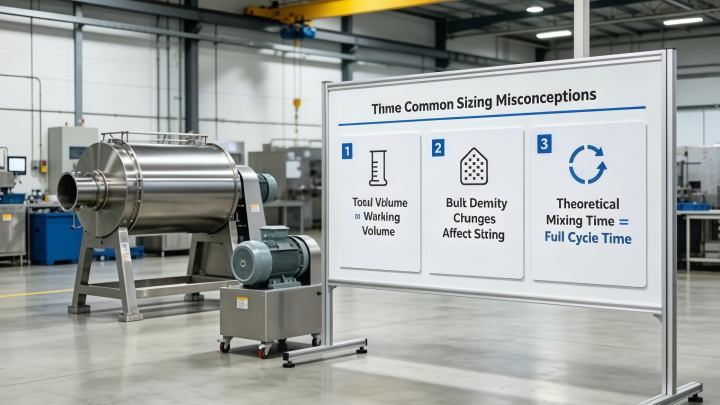
Misconception 1: Looking only at total volume while ignoring working capacity. A unit labeled 1,000 liters provides only about 600 liters at 60% fill rate. Many buyers focus on container volume and motor size, but the real decision should start with material and process requirements.
Misconception 2: Overlooking dynamic changes in bulk density. Loose material, compacted material, and post‑mix material can behave completely differently. Hygroscopic ingredients, fiber content, and particle size distribution can all shift density enough to affect sizing.
Misconception 3: Replacing the complete production cycle with theoretical mixing time. If a Horizontal Stainless Steel Ribbon Mixer takes only 8 minutes to mix but the complete cycle requires 25 minutes, the actual batches per hour is less than one‑third of the theoretical value. Avoiding these misconceptions ensures the selected equipment truly meets production needs.
If the unit has arrived and capacity is found mismatched, the following measures can partially mitigate the issue. For oversized units, ensure each batch reaches the minimum effective fill level, typically no less than 30% to 40% of total volume. If the current batch size falls below this threshold, consider combining batches or adjusting the production schedule.
For undersized units, optimize non‑mixing portions of the cycle—reducing loading, discharging, and cleaning times can increase batches per hour without replacing the equipment. These measures only provide partial relief and cannot fundamentally resolve the mismatch. The more reliable approach remains completing a thorough capacity assessment before purchase.
Common bulk density references: food powders approximately 0.4 to 0.7 kg/L, chemical powders 0.5 to 0.9 kg/L, mineral powders 0.8 to 1.5 kg/L. Fill rates: free‑flowing materials 60% to 70%, viscous materials 50% to 60%, formulations with liquid content exceeding 5% at 40% to 50%. Motor power: approximately 3 to 5 kW per cubic meter of working volume.
Final sizing confirmation should address seven core metrics: batch weight, material density, working volume, production cycle, formulation conditions, installation space, and motor power.
- Has batch weight been confirmed with a safety margin included
- Has bulk density been measured in both loose and compacted states
- Has working volume been back‑calculated from fill rate rather than taken from total volume
- Has the complete production cycle been incorporated into capacity calculations
- Has the most demanding formulation condition been used for multi‑formula sizing
- Do installation area dimensions and maintenance access meet equipment requirements
- Does motor power match the maximum batch weight and density
Completing each item before purchase significantly reduces the risk of sizing errors.
Selecting the right capacity Horizontal Stainless Steel Ribbon Mixer is a comprehensive decision based on batch output, material density, fill ratio, production cadence, and site conditions. Technical guides from global equipment manufacturers all emphasize that sizing should start from material data and actual process requirements.
The data and methods above are drawn from publicly verifiable industry technical literature and academic research. For specific materials requiring parameter calibration, measured data can be provided for further comparison.
FAQ 1: Should sizing be based on total volume or working volume for a Horizontal Stainless Steel Ribbon Mixer?
Sizing should be based on working volume. A 1,000‑liter unit at 60% fill rate provides approximately 600 liters of actual usable capacity.
FAQ 2: What are the consequences of excessively low or high fill rates for a Horizontal Stainless Steel Ribbon Mixer?
Below 30% to 40% the ribbon cannot effectively move the material, and above 70% circulation becomes restricted and mixing time extends.
FAQ 3: What issues arise from undersizing or oversizing a Horizontal Stainless Steel Ribbon Mixer?
Undersizing creates production bottlenecks requiring additional batches, while oversizing increases investment and energy costs with reduced effectiveness at low fill levels.
FAQ 4: How does material density affect capacity sizing for a Horizontal Stainless Steel Ribbon Mixer?
Required volume is obtained by dividing batch weight by bulk density, then back‑calculating to determine total volume. A standard unit typically handles material around 560 kg/m³.
FAQ 5: What margin should be reserved when sizing a Horizontal Stainless Steel Ribbon Mixer?
A 20% to 30% capacity margin above current requirements is recommended to accommodate production fluctuations.


Address:China,Yanjin county forest park gate to the west 1000 meters north road.


 Online Chat
 Email
Email