


Choosing the right sand mixer is one of the most critical decisions when building or expanding a foundry plant. The selection directly impacts casting quality, production efficiency, and long‑term operating costs. This guide walks through the key criteria for selecting a twin shaft paddle mixer tailored to your foundry's specific needs.
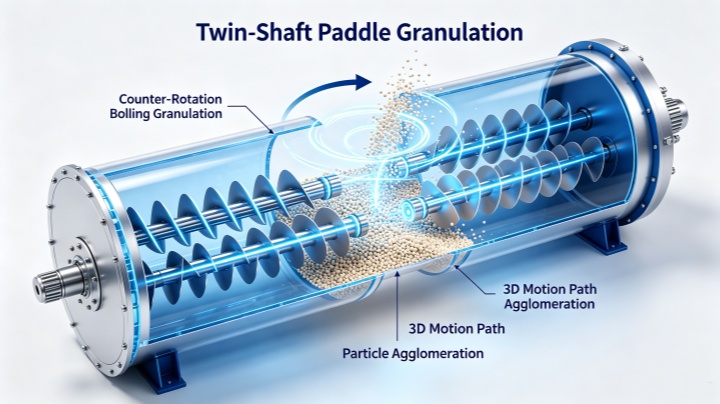
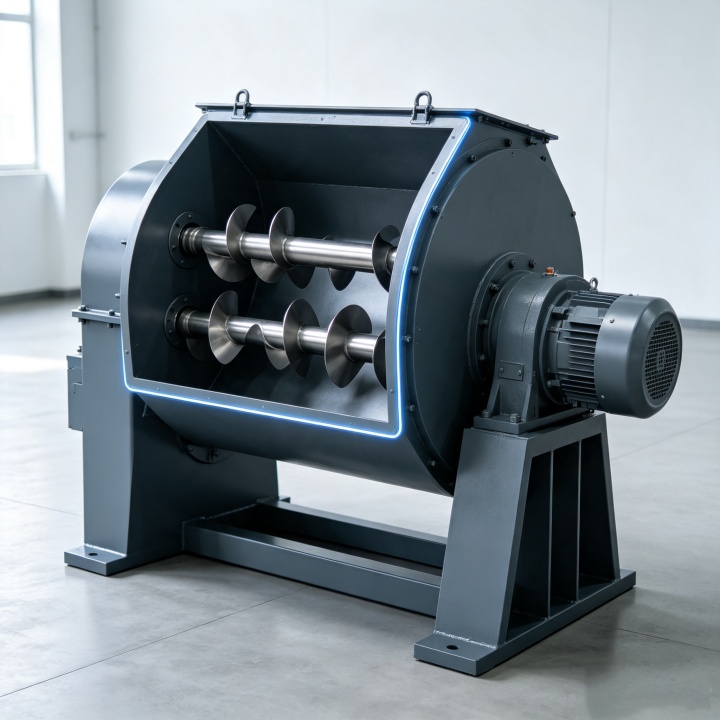
Twin shaft paddle mixers have become the preferred choice for modern foundries due to their superior mixing uniformity and efficiency. Unlike traditional mullers, these mixers use two contra‑rotating shafts fitted with pitched paddles to create a kneading and folding action inside an enclosed mixing chamber. The paddles lift the material while pushing it forward, creating a fluidized "weightless" zone where sand particles freely intermingle.
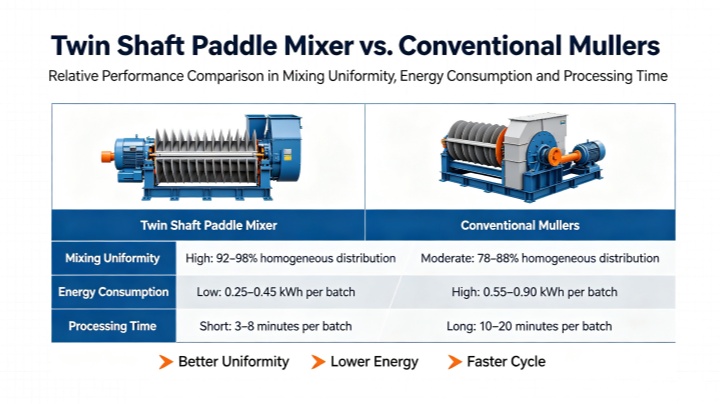
This design achieves homogeneity rates up to 99% in just 1‑3 minutes, making it ideal for automated molding lines producing automotive castings, engine blocks, and other critical components. Understanding these fundamentals helps frame your selection criteria.
Throughput Capacity
Begin by calculating your required tonnes per hour. Industry experts recommend choosing a mixer with 20‑30% more capacity than your current output to accommodate future growth and demand.
Consider your complete cycle time, not just mixing duration. A full cycle includes:
Fill time – loading sand into the chamber
Mix time – typically 30 seconds to 3 minutes for twin shaft paddle mixers
Discharge time – emptying the conditioned sand
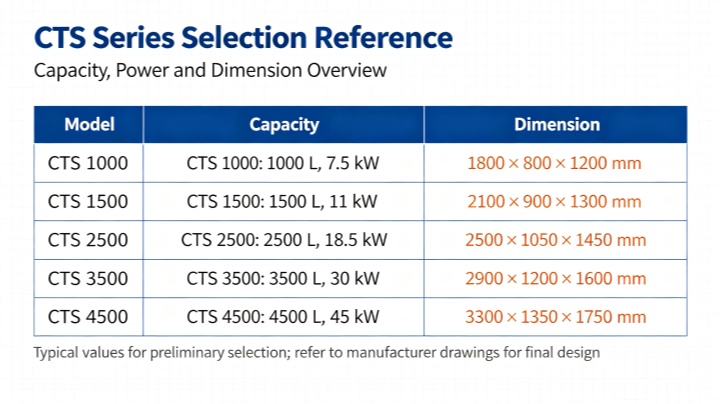
For a medium foundry, output ranges from 3‑60 tonnes per hour, while high‑capacity operations may require up to 100 TPH. Match the model's working capacity (measured in litres) to your target throughput. Standard configurations range from 1,000L to 6,000L capacity.
Sand Type and Binder System
The nature of your sand and binder system significantly influences mixer selection:
| Application | Considerations |
| Green sand molding | Requires consistent moisture and clay distribution for automated lines |
| Resin sand systems | Furan self‑set, cold‑box, or hot‑box processes demand precise chemical addition |
| Sodium silicate systems | Handles sticky binders with minimal residue buildup |
| Reclaimed sand conditioning | Mixes new sand with reclaimed material while maintaining binder distribution within ±2% |
The mixer must accommodate your specific recipe while preventing clumping or uneven coating.
Mixing Uniformity Requirements
Uniformity is measured by the Coefficient of Variation (COV). For twin shaft paddle mixers, COV values typically range from 3‑5%, indicating excellent homogeneity. This is significantly better than ribbon blenders (5‑10%) or conical mixers (5‑8%).
For high‑precision applications like resin‑coated sand where micro‑additives must be evenly distributed, look for:
COV ≤ 5% as a baseline requirement
Standard deviation as low as 0.00003 for critical 1:1000 ratio mixes
Consistent batch‑to‑batch performance
Wear Resistance and Maintenance
Foundry sand is highly abrasive. Your mixer's durability depends on:
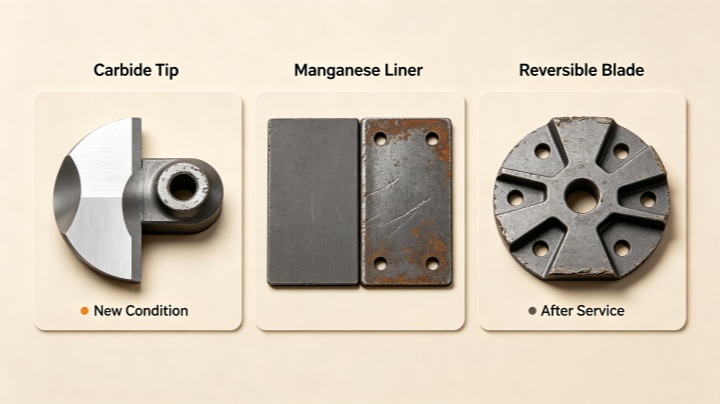
Blade material – Tungsten carbide tipped blades offer extended service life. For highly abrasive applications, manganese alloy or tungsten carbide linings can double component lifespan.
Liner material – Manganese steel chambers resist abrasive wear from silica sand.
Paddle clearance – Optimal clearance of 2‑5mm between paddles and chamber minimizes residue buildup.
Look for reversible blades that can be turned over to double their operating life. Easy maintenance access features like one‑touch doors and flip‑up covers reduce downtime.
Liquid Addition System
Precise liquid addition is crucial for binder distribution. The best systems feature:
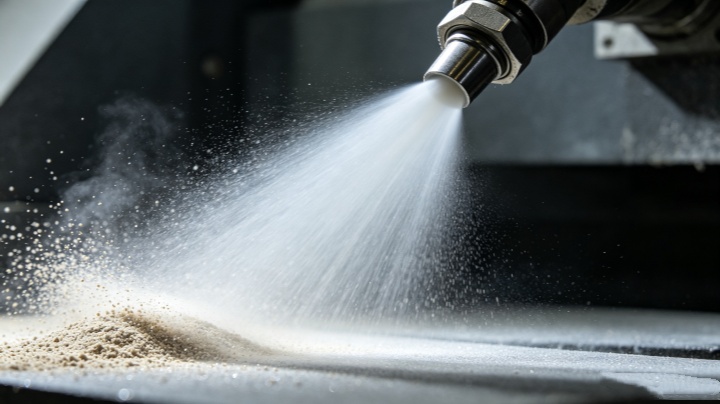
High‑pressure spray nozzles mounted above the mixing paddles
Precisely regulated water curtain that atomizes liquid onto airborne sand
Individual pressure adjustments for different chemicals
Quality spray systems ensure every sand grain is coated while using 5‑30% less liquid than competing systems. This reduces chemical costs and improves consistency.
Discharge System
Choose a discharge mechanism that suits your plant layout:
Pneumatic – Fast, automated operation
Electric – Reliable, consistent performance
Manual – For smaller operations or budget constraints
Full‑length bottom discharge doors enable complete batch emptying in seconds and eliminate residual material accumulation. This prevents cross‑contamination between different sand formulations.
Step 1: Define Your Production Requirements
Calculate current hourly sand consumption
Add 20‑30% buffer for growth
Determine batch cycle time targets
Step 2: Identify Your Binder and Additive Profile
Green sand, resin, sodium silicate, or reclaimed?
Required liquid addition percentage
Additive types and mix ratios
Step 3: Assess Material Characteristics
Bulk density of your sand (typically 1.4‑1.6 t/m³ for foundry sand)
Particle size distribution
Abrasiveness level
Step 4: Evaluate Power Requirements
Match motor power to batch size
Consider energy efficiency – twin shaft mixers typically consume 1/4 to 2/5 the energy of conventional systems
Verify site utilities (voltage, frequency, compressed air)
Step 5: Compare Model Specifications
| Model | Working Capacity (L) | Motor Power (kW) | Weight (kg) | Typical Output |
| Entry Level | Up to 1,000 | 37 | 5,000 | 3‑10 TPH |
| Mid‑Range | 1,500‑2,000 | 37‑55×2 | 6,000‑8,400 | 3‑60 TPH |
| High Capacity | 3,000‑6,000 | 55‑75×2 | 9,500‑14,500+ | Up to 100 TPH+ |
Step 6: Consider Total Cost of Ownership
Look beyond initial purchase price:
Energy consumption over 5‑10 years
Replacement part availability and cost
Maintenance frequency and downtime impact
Wear part longevity with your specific sand type
Underestimating capacity needs – Choosing a mixer that barely meets current requirements leaves no room for growth and may operate at less than optimal fill levels (60‑80% of mixing volume is recommended).
Ignoring abrasiveness – Foundry sand is highly abrasive. Inadequate wear protection leads to rapid component failure and costly downtime.
Overlooking chemical addition precision – Inconsistent binder distribution results in scrap castings and wasted chemicals.
Neglecting maintenance access – A mixer that's difficult to maintain will suffer from neglected inspections and premature failures.
| Feature | Why It Matters |
| Multi‑layer floating oil seals | Prevent material escape and bearing contamination |
| Automatic lubrication system | Reduces maintenance frequency and extends component life |
| Manganese steel chamber lining | Withstands abrasive silica sand wear |
| Reversible/tungsten carbide blades | Doubles operating life before replacement |
| Full‑length discharge door | Complete emptying in seconds, minimal residue |
| High‑pressure spray system | Uniform liquid coating with 5‑30% less consumption |
For most medium‑to‑large foundries producing automotive castings, engine components, or industrial parts, a twin shaft paddle mixer offers the optimal balance of:
Speed – 70‑105 second mixing cycles
Uniformity – 99% homogeneity with COV ≤ 5%
Efficiency – Lower energy consumption and binder usage
Durability – Wear‑resistant construction for abrasive foundry sand
The specific model should be selected based on your throughput requirements and binder system. Request detailed specifications, including bill of materials for wear components, from your supplier. Where possible, conduct a factory acceptance test using your actual sand and binder formulation to verify performance before purchase.


Address:China,Yanjin county forest park gate to the west 1000 meters north road.


 Online Chat
  Email
Email