


Selecting a horizontal ribbon blender for your powder production line is a critical decision that directly impacts product quality, production efficiency, and operational costs. A blender that looks right on paper can still fail on the plant floor if selection is based solely on capacity and price rather than material behavior, batch targets, and cleaning requirements.
This guide will walk you through the key factors to consider when choosing a horizontal ribbon blender, helping you make an informed investment that delivers repeatable quality and predictable throughput.
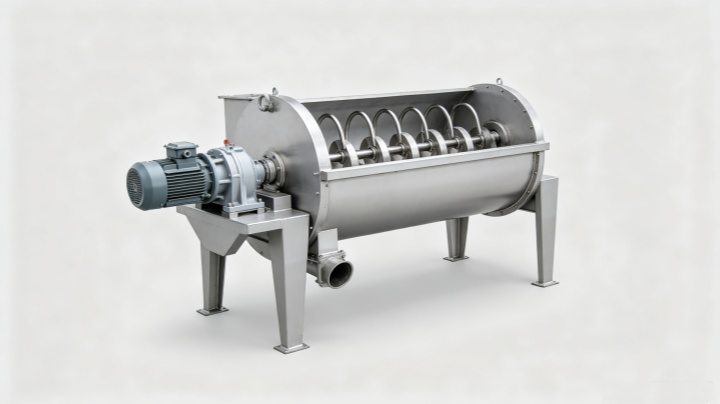
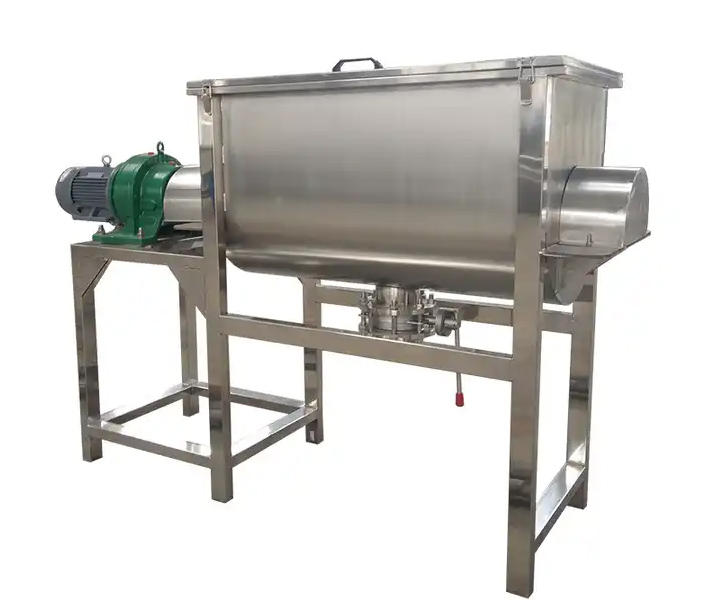
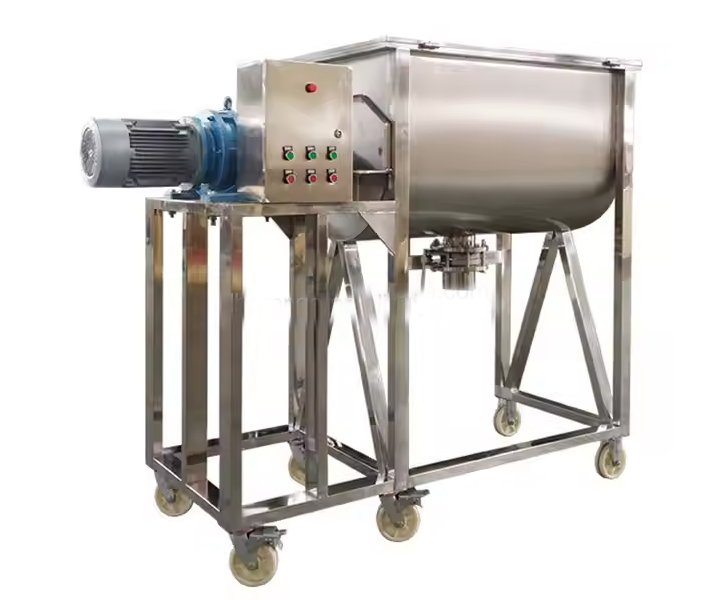
A horizontal ribbon blender consists of a U‑shaped trough and a specially designed double‑layer ribbon agitator. The mixing action is driven by two helical ribbons moving in opposite directions:
This counter‑current flow creates a three‑dimensional circulation pattern within the trough, achieving mixing uniformity of over 99% in just 5 to 15 minutes.
The most common buying mistake is selecting by vessel volume alone. Begin by thoroughly understanding your material's characteristics:
| Material Property | Why It Matters |
| Bulk Density | Affects batch weight, motor load, and working volume requirements |
| Particle Size Distribution | Wide distribution or density differences raise segregation risks |
| Flowability | Free‑flowing powders work best; cohesive materials may require modifications |
| Moisture Content | Impacts mixing action and cleaning requirements |
| Friability | Fragile materials may degrade under aggressive ribbon action |
A ribbon blender performs best when the product flows well enough to circulate through the inner and outer ribbons. If your formulation bridges, packs, or forms lumps, you may need a modified ribbon design or different mixer type entirely.
Many buyers start with the desired pounds per batch and work backward. However, usable working volume is not the same as total vessel volume.
Key capacity considerations:
Calculate actual throughput by including loading time, blend time, discharge time, and cleaning time—not just the mixing cycle.
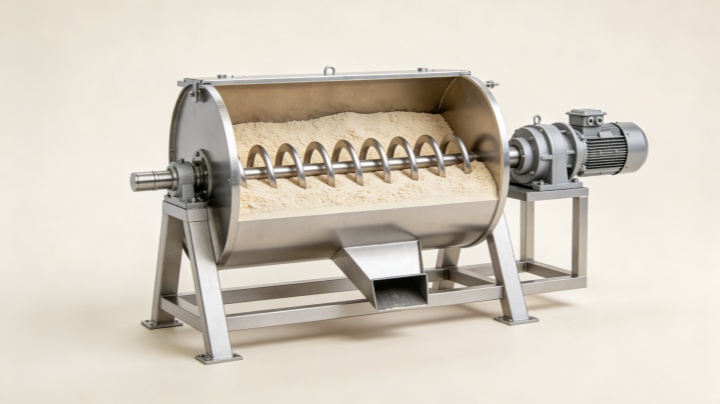
If your process requires adding oils, binders, flavors, or other liquids, consider these factors:
For significant liquid addition, consider optional spray bars or injection ports.
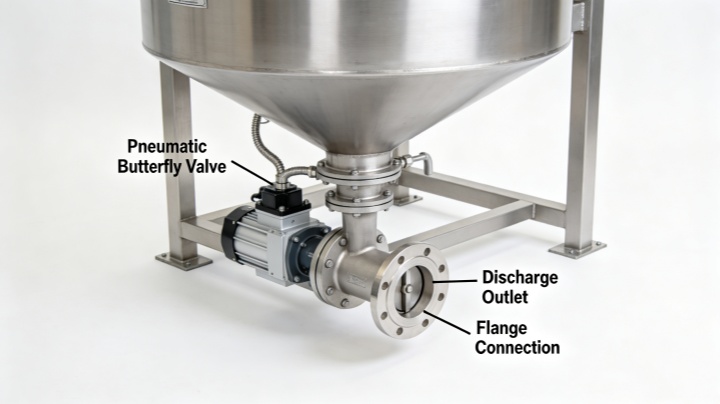
Fast, complete discharge is a major advantage of a well‑designed ribbon blender. Evaluate:
Poor discharge design can undo the blend quality achieved inside the vessel.
Modern ribbon blenders offer several drive options:
| Drive Type | Advantages | Considerations |
| Direct Drive | Compact, reliable, efficient; eliminates belt slippage | Higher initial cost |
| Belt Drive | Flexible operation, torque versatility | Power loss through slippage; belt maintenance required |
| Variable Speed | Allows "tuning" for different products; essential for R&D | Higher investment |
| Soft Start | Prevents high torque spikes at startup; protects drive train | Recommended for heavy loads |
In many plants, the blender is judged less by blend time than by how easily it can be cleaned. This is especially critical in food, pharmaceutical, and nutraceutical production.
Consider:
Horizontal ribbon blenders serve a wide range of industries:
| Industry | Typical Applications |
| Food | Spice blends, flour premixes, vitamin fortification, dairy powders |
| Pharmaceutical | Tablet/capsule blends, powder medicines, herbal supplements |
| Chemical | PVC additives, pigments, adhesive raw materials, detergent powders |
| Building Materials | Dry mortar, cement premixes, thermal insulation mortar |
| Plastic & Recycling | Color masterbatch, engineering plastics, recycled pellets |
Based on your specific requirements, horizontal ribbon blenders can be customized with:
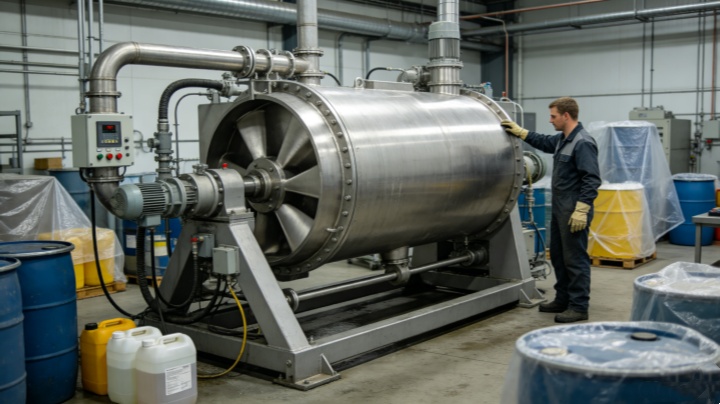
Before making your purchase decision, verify the following:
Selecting the right horizontal ribbon blender requires careful evaluation of your material properties, production targets, and operational requirements. By starting with your process needs rather than a machine specification, you can choose equipment that delivers consistent blend quality, efficient throughput, and easy maintenance.


Address:China,Yanjin county forest park gate to the west 1000 meters north road.


 Online Chat
 Email
Email