


In modern animal nutrition, amino acid premixes are the cornerstone of precision feeding. The mixer you choose directly determines whether those expensive, precisely formulated micro‑ingredients actually reach every pellet—or end up concentrated in a few random batches. With inclusion rates as low as 1 kg per metric ton of feed, even minor mixing deviations can compromise flock performance and feed conversion ratios.
This guide walks you through the critical factors for selecting an amino acid premix feed mixer, helping you make an investment that delivers consistent quality and long‑term reliability.
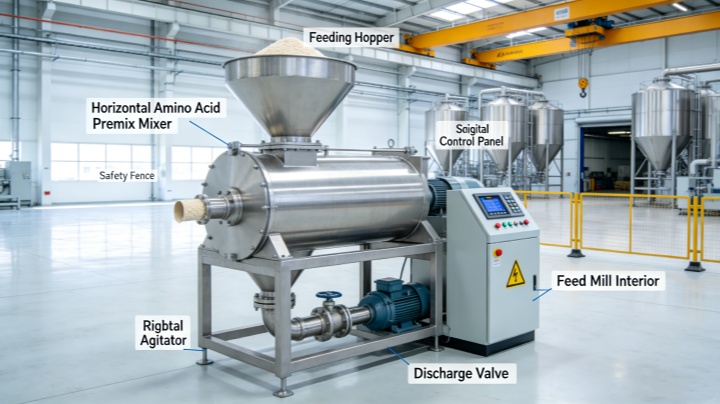
Amino acids like lysine, methionine, and threonine are typically added at very low inclusion levels. Unlike grains or protein meals that make up the bulk of a ration, these micro‑ingredients must be distributed with exceptional uniformity. Commercial feed production standards typically require a Coefficient of Variation (CV) below 5%, with advanced broiler operations targeting even tighter tolerances.
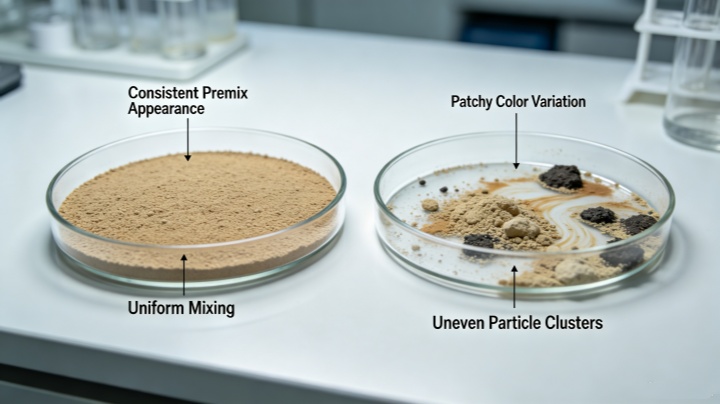
The challenge? Amino acid premixes are fine powders with different particle densities compared to base feed ingredients. Without proper mixing action, gravitational segregation can occur during discharge, leading to nutrient clustering that creates batch‑to‑batch inconsistency.
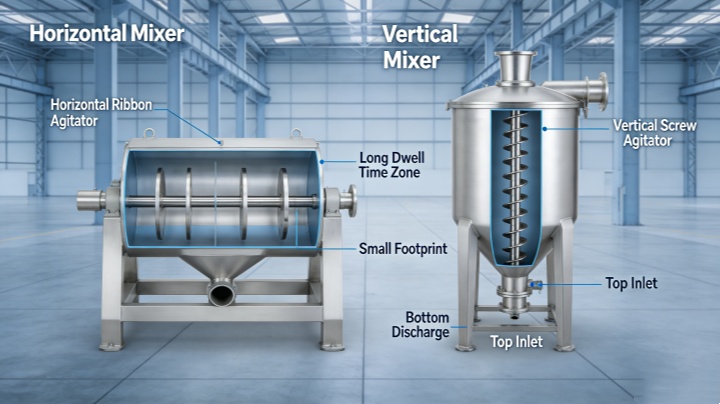
The perennial question for any feed operation is whether to choose a vertical or horizontal mixer. Each has its place, but for amino acid premix applications, the answer is rarely one‑size‑fits‑all.
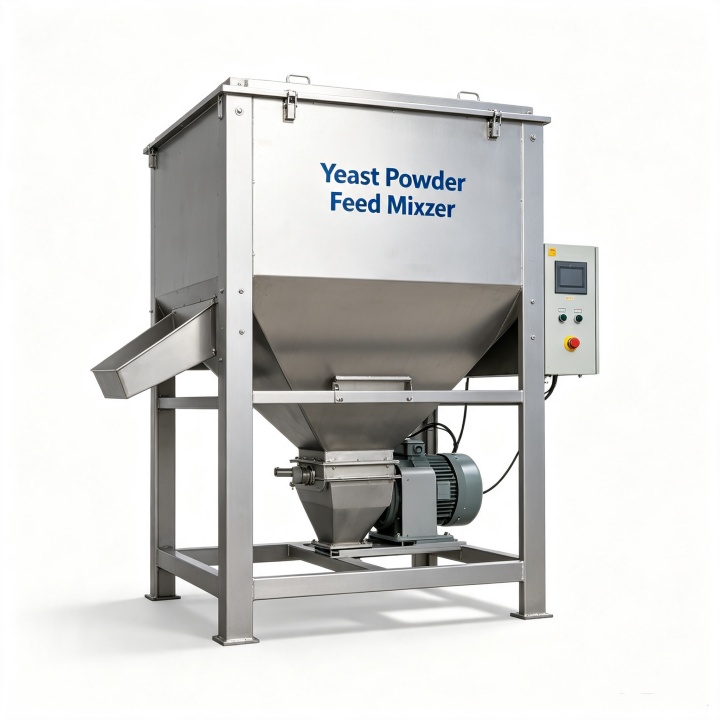
Vertical mixers are more affordable to purchase and operate, and they occupy less floor space—advantages that make them popular for small to medium farms.
However, there are significant limitations for precision premix work:
Best for: Small farms mixing complete feeds with premixed ingredient packages, where precision requirements are modest.
For amino acid premix applications, horizontal mixers are generally the recommended solution—especially for operations that purchase micro‑ingredients at low inclusion rates.
Key advantages:
Best for: Commercial feed mills, large farms buying raw amino acids for on‑site blending, and premix plants requiring marketing differentiation through quality.
If you've determined that a horizontal mixer is right for your operation, the next decision is which internal configuration best suits your materials.
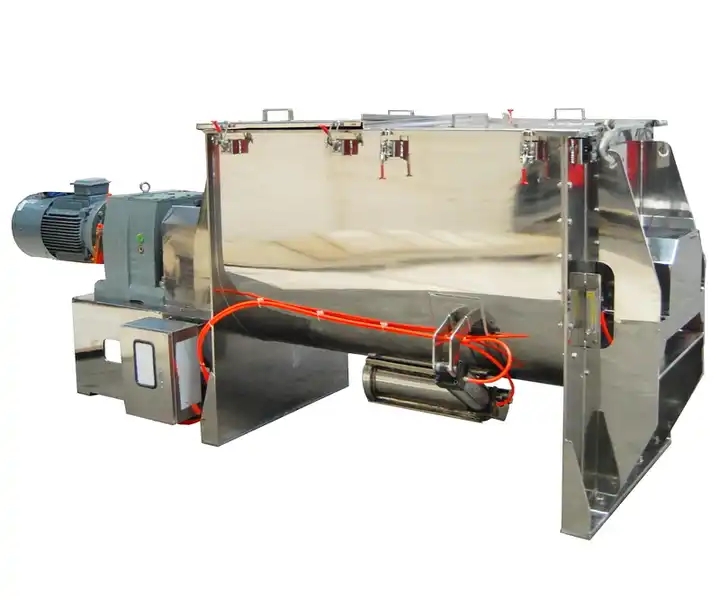
The industry workhorse, ribbon mixers feature a U‑shaped trough with double‑helical ribbon blades that move material in opposite directions, creating a counterflow mixing action.
Performance profile:
Ideal for: Dry amino acid premix blending, general feed mill applications, operations requiring reliable performance at moderate cost.
Paddle mixers offer faster mixing cycles and gentler handling of fragile ingredients compared to ribbon designs.
Performance profile:
Ideal for: Operations adding liquid amino acid solutions or oils, facilities prioritizing short batch cycles.
When you need the highest precision and fastest throughput, twin‑shaft paddle mixers deliver industry‑leading performance.
Performance profile:
Ideal for: Large‑scale commercial operations, premix plants, facilities requiring maximum precision and efficiency.
When comparing mixer options, focus on these technical parameters:
This is the single most important metric for evaluating mixing quality.
Request a mixing test from the manufacturer using salt or dye as a tracer. Samples taken from different points in the batch should show consistent concentration.
Calculate your required throughput based on daily feed demand, batch cycle frequency, and discharge efficiency.
A practical rule: for a line producing 10 tons per hour, choose a 1‑ton batch mixer with a 20% capacity margin.
Typical capacities for ribbon mixers:
Shorter cycles mean higher throughput and lower energy costs per ton.
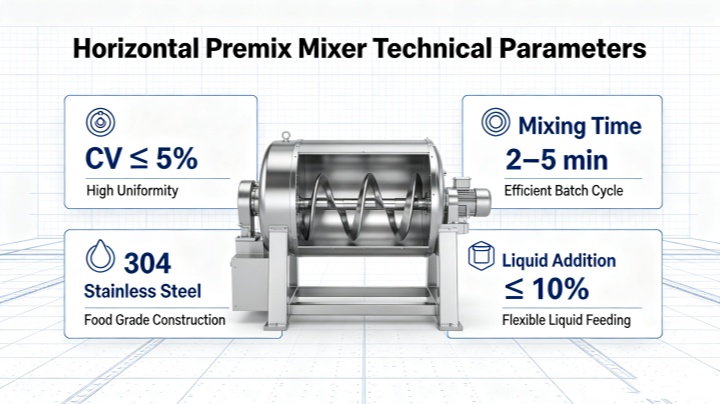
Amino acid premixes can be abrasive and corrosive. Construction quality matters for longevity.
If your operation uses liquid amino acids, oils, or molasses, ensure the mixer has:
Modern feed operations increasingly rely on automation for consistency and traceability.
Essential features to look for:
Bonus features:
Amino acid premix mixers operate under continuous abrasive loading. Wear components should be monitored proactively.
Questions to ask every supplier:
| Application | Recommended Mixer Type | Justification |
| Small farm (<500 birds) | Vertical mixer | Lower cost, adequate for premixed ingredients |
| Medium farm (500–5,000 birds) | Horizontal ribbon mixer | Balance of cost and precision, handles low inclusions |
| Large commercial farm | Twin‑shaft paddle mixer | Maximum uniformity, short cycle times, liquid handling |
| Premix plant | Horizontal paddle or twin‑shaft | Superior CV, minimal carryover, market differentiation |
| Feed mill producing multiple species | Horizontal with pneumatic seal | Prevents cross‑contamination from carryover |
Selecting the right amino acid premix feed mixer isn't just about capacity or price—it's about ensuring that every dollar spent on premium amino acids delivers its intended nutritional value. A mixer that consistently achieves CV below 5% protects your investment in high‑quality ingredients and supports optimal animal performance.
In one sentence: choose a mixer that is stable, durable, and delivers low CV values batch after batch.
For most operations handling amino acid premixes at low inclusion rates, a horizontal mixer—whether ribbon, paddle, or twin‑shaft—is the recommended path. Evaluate your throughput requirements, liquid addition needs, and quality targets against the specifications outlined above, and you'll be well‑positioned to make a confident investment.


Address:China,Yanjin county forest park gate to the west 1000 meters north road.


 Online Chat
  Email
Email