


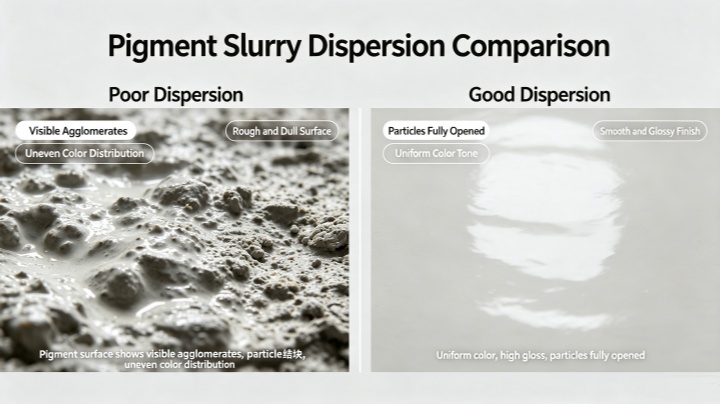
Achieving consistent, vibrant colors in paint, ink, coating, and plastic production depends on one critical factor: uniform pigment dispersion. Pigments, whether organic or inorganic, naturally exist as agglomerates—clusters of primary particles that must be broken down and evenly distributed throughout a liquid carrier to deliver full color strength, stability, and gloss.
This is where chemical pigment mixing equipment, particularly high‑shear mixers, becomes indispensable. But with so many options available, how do you choose the right machine for your specific pigment formulation?
This guide breaks down the key considerations for selecting a high‑shear mixer that delivers homogeneous colors batch after batch, supporting your production goals and product quality.
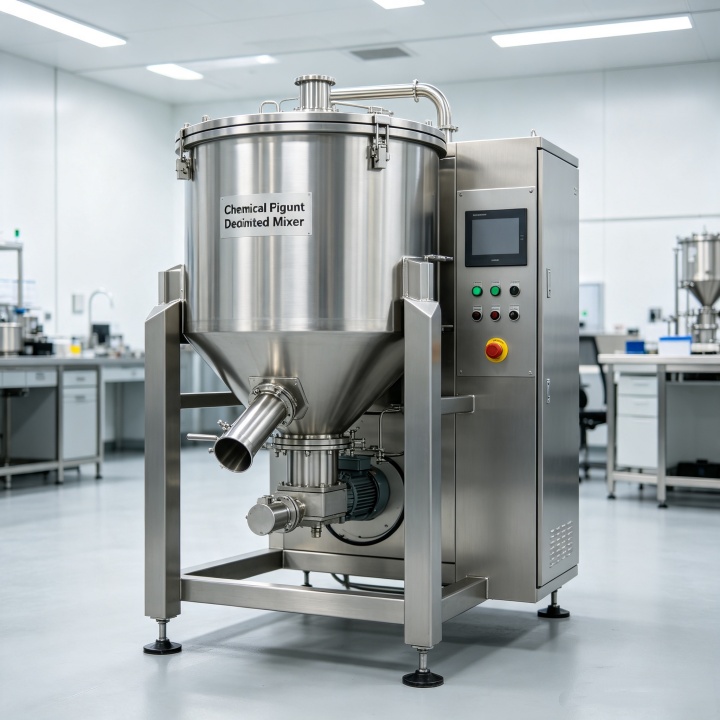
Before selecting equipment, it helps to understand the three‑stage process of pigment dispersion:
Wetting: Replacing air and moisture on the pigment surface with the liquid medium (resin, solvent, or water). The liquid must have a lower surface tension than the pigment's surface energy to penetrate the agglomerates effectively.
De‑agglomeration (Breaking Down): Applying mechanical energy (shear) to break pigment agglomerates into primary particles or small, stable clusters.
Stabilization: Preventing the dispersed particles from re‑agglomerating (flocculating) by using dispersants that create a physical or electrostatic barrier around each particle.
A high‑shear mixer excels at step two—delivering the intense mechanical energy needed to overcome pigment particle attraction forces and achieve a fine, uniform dispersion.
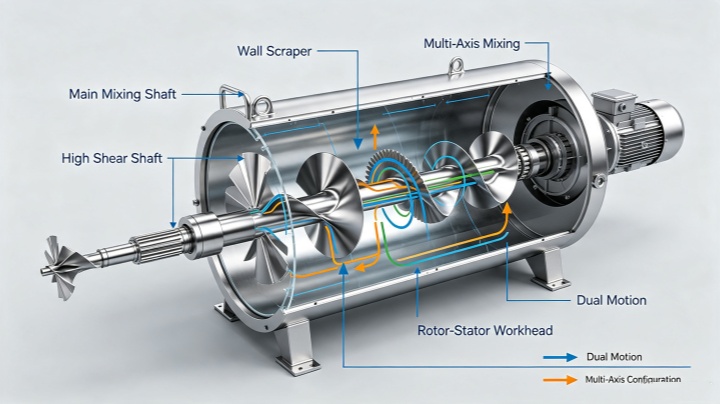
Effective chemical pigment mixing equipment shares several key design features:
High‑Shear Rotor‑Stator Technology
High‑shear mixers use a rotor‑stator mechanism: a rotor spinning at high speed within a stationary stator. As pigment agglomerates are drawn into the mixing head, they are subjected to intense hydraulic shear and mechanical impact, breaking them down to the micron or sub‑micron level. Some advanced systems, like the SLIM (Solids/Liquid Injection Manifold) technology, create a vacuum to draw powders directly into the high‑shear zone for near‑instantaneous dispersion.
Variable Speed Control
Different pigments and formulations require different shear intensities. A variable frequency drive (VFD) allows operators to:
Use low speed for gentle wetting of fragile or heat‑sensitive pigments
Apply medium speed for bulk blending and initial incorporation
Engage high speed for intense dispersion of hard‑to‑wet pigments, high‑viscosity pastes, or systems requiring fine particle size
Dual or Multi‑Shaft Configurations
For formulations that undergo significant viscosity changes during processing, multi‑shaft mixers are highly effective. These combine:
A low‑speed anchor agitator for bulk flow and heat transfer
A high‑speed disperser for de‑agglomeration
An optional high‑shear rotor/stator for final dispersion
This combination ensures uniform pigment distribution even as the batch transitions from a low‑viscosity liquid to a paste or gel.
Robust, Chemical‑Resistant Construction
Pigment mixing involves harsh chemicals, solvents, and abrasive particles. High‑quality mixers use stainless steel (SUS304 or SUS316L) for all contact parts to resist corrosion, prevent contamination, and enable easy cleaning between color changes.
When evaluating chemical pigment mixing equipment, consider these factors:
Viscosity Range
Low‑viscosity liquids (water‑like to 10,000 cP): High‑speed dispersers or inline rotor‑stator mixers like the SLIM system work efficiently.
Medium‑viscosity (paste‑like): Multi‑shaft mixers or high‑shear batch mixers provide the necessary power.
High‑viscosity (putty or gel, up to 6 million cP): Planetary mixers, which use blades that revolve around the mixing vessel while rotating on their own axis, are effective for heavy‑duty applications.
Throughput and Batch Size
Consider your production volume. Mixer capacities range from small lab‑scale units (e.g., 1 liter) to large production systems exceeding 10,000 liters. For high‑volume slurry mixing, some high‑shear systems can process up to 5,000 liters per hour with batch times as short as 3 minutes.
Safety Requirements
Pigment processing often involves flammable solvents or dusts. Choose equipment with:
Explosion‑proof (ATEX‑certified) motors and controls
Sealed systems to contain dust and prevent contamination
Emergency stop and temperature monitoring features
Ease of Cleaning and Maintenance
Frequent color changes demand quick, thorough cleaning. Look for:
Tool‑free disassembly of contact parts
Self‑cleaning designs where one liquid component is used to clean internal surfaces within the mixing cycle
Hydraulic lifting systems that raise the mixing head for easy vessel access
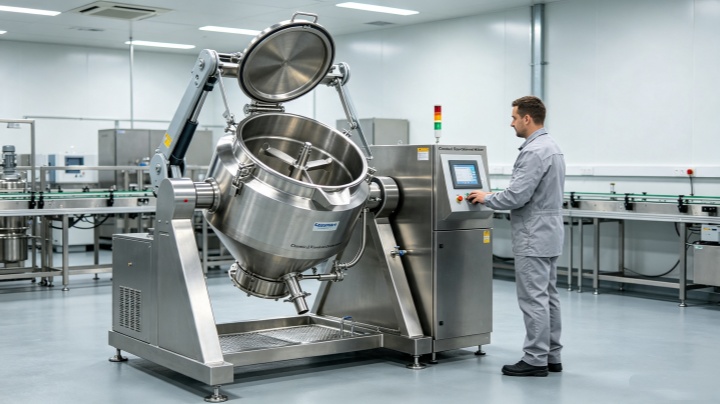
Integration and Automation
Modern pigment mixing lines benefit from automated systems that control speed, temperature, and cycle times for repeatable quality. Some mixers include HMI screens for recipe management and process tracking.
| Industry | Typical Application | Key Requirement |
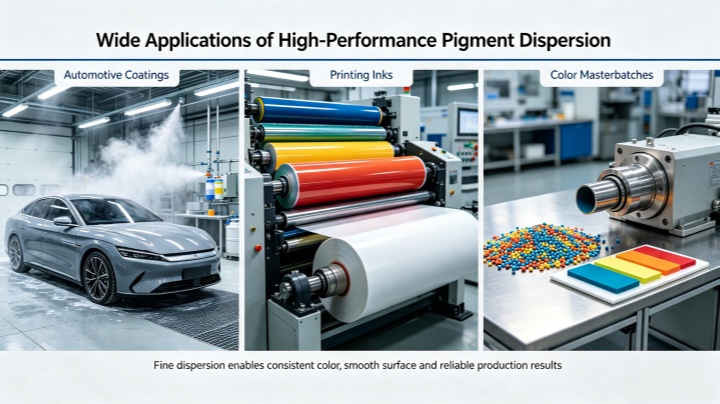
| Paints & Coatings | Dispersing titanium dioxide, iron oxides, and organic pigments into architectural, automotive, or industrial coatings | High uniformity, color consistency, gloss |
| Printing Inks | Producing offset, gravure, and inkjet inks with precise color strength and stability | Fine particle size, stable dispersion |
| Plastics & Masterbatches | Incorporating pigments into polymer resins and PVC compounds | Complete dispersion, heat stability |
| Cosmetics | Blending mineral pigments and iron oxides for foundations, eyeshadows, and lipsticks | Ultra‑fine particle size, contamination‑free |
| Construction Materials | Adding colorants to cement, sealants, and adhesives | High solid loading, robust construction |
A manufacturer of pigmented epoxy coatings sought to improve color intensity and uniformity while eliminating downstream milling. Initial testing with a dual‑shaft mixer (low‑speed anchor + high‑speed disperser) showed some improvement.
However, switching to a triple‑shaft configuration that added a high‑shear rotor/stator mixer delivered superior results: pigments were more evenly dispersed, and color intensity improved significantly—all in a single batch, eliminating additional processing steps.
Selecting the right chemical pigment mixing equipment is not just about the machine—it's about finding a technology partner that understands your formulation challenges. The ideal high‑shear mixer will:
Deliver consistent de‑agglomeration for full color development
Handle your specific viscosity and throughput requirements
Minimize downtime through easy maintenance and cleaning
Ensure operator safety in potentially hazardous environments
By carefully evaluating your pigment types, production volumes, and formulation demands, you can choose a high‑shear mixer that transforms your pigment processing—delivering homogeneous, vibrant colors efficiently and reliably.


Address:China,Yanjin county forest park gate to the west 1000 meters north road.


 Online Chat
 Email
Email