


In cattle feed processing, the Horizontal Shaft Ribbon Mixer for Cattle Feed Price is a core issue in purchasing decisions. Current public quotes for 500 kg batch carbon steel standard configuration are about $1,600 to $4,500, while stainless steel contact models are about $3,500 to $6,500.
This is a bare machine reference price. If you are comparing supplier quotes, the checklist and cost breakdown below can help you verify key parameters systematically and avoid looking only at the whole machine price while ignoring ongoing operating costs.
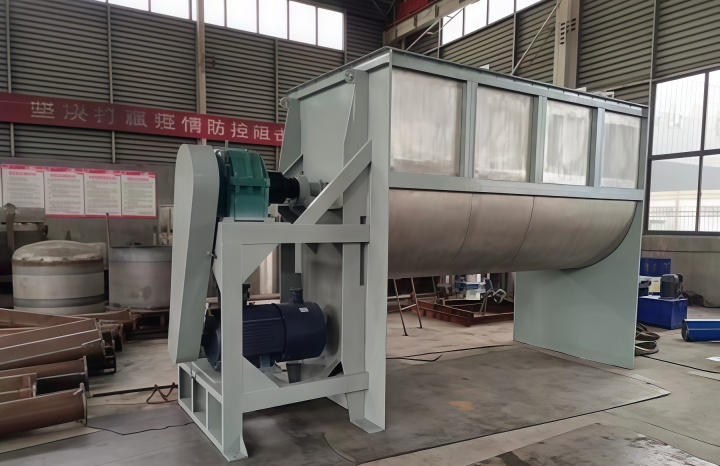
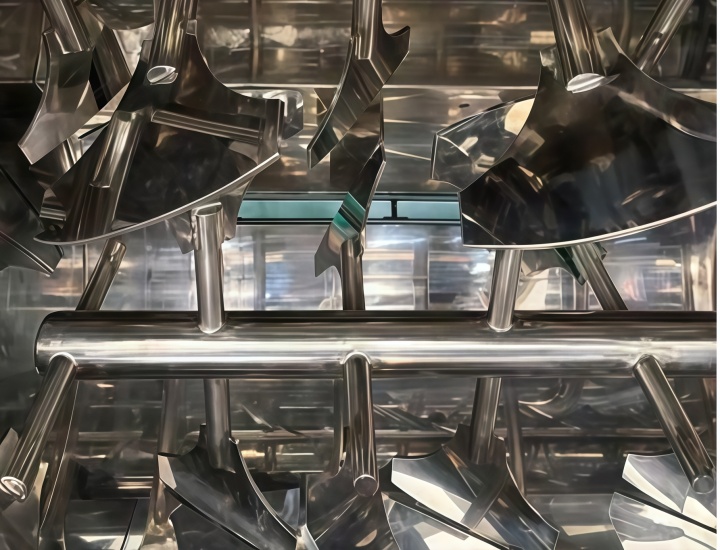
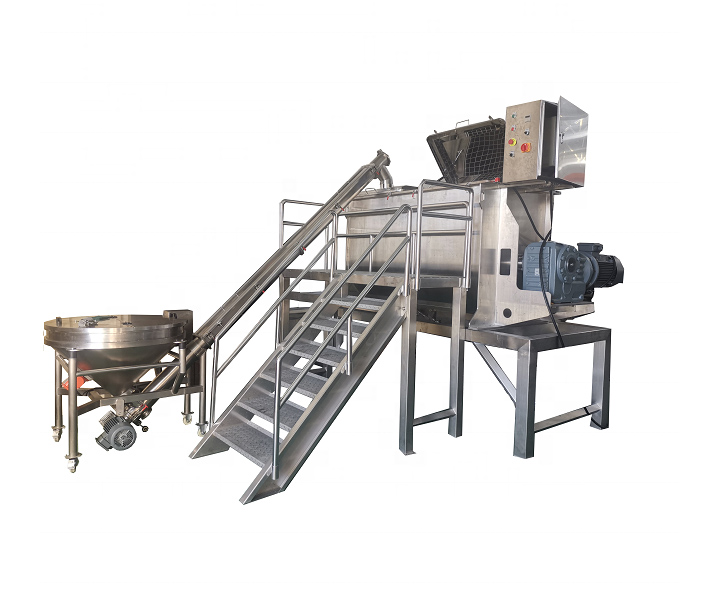
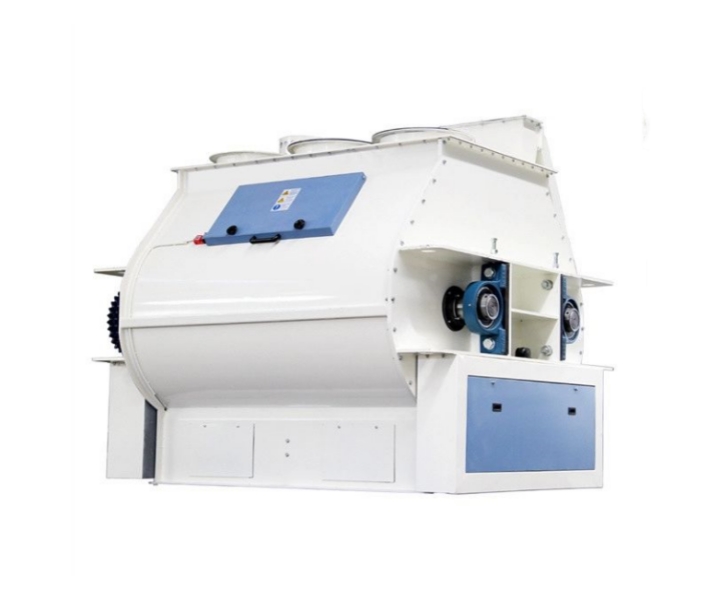
This type of horizontal ribbon mixer uses inner and outer ribbons rotating in opposite directions to blend grains, protein meals, vitamins, and minerals in 3 to 6 minutes. The filling coefficient is usually controlled between 30% and 70%, and the mixing uniformity coefficient of variation is generally within 5%.
Price is determined by four levers: capacity, material, drive, and automation. For two models with similar nominal capacity, after accounting for motor grade, mixing precision, discharge design, and documentation, the unit cost gap can reach 15% to 40%.
Batch capacity: from 250 kg to 3,000 kg, motor power from 4 kW to 45 kW.
Contact material: stainless steel contact surfaces usually cost 12% to 30% more than carbon steel. For formulas containing salt or minerals, the price difference can be recovered within two years through reduced maintenance.
Drive system: there is a clear price gap between a 7.5 kW standard configuration and an 18.5 kW or higher variable frequency configuration. Higher power is more suitable for two to three shifts of continuous production per day.
Automation level: semi-automatic models with PLC control and liquid addition systems usually cost more than 20% extra, but multi-formula production can reduce manual error.
Hidden costs are concentrated in three items: power consumption, cleaning, and wear parts. Power consumption is more sensitive to filling rate. For every 10% drop in filling rate, power consumption per ton increases by about 5%. When the filling rate drops from 70% to 40%, the mixing time required to reach the same CV value increases by an average of 35%, and power consumption per ton increases by about 18%.
For a 500 kg model running 8 batches per day, the extra electricity cost due to insufficient filling rate can reach $200 to $400 per year. Molasses or oil residue can extend cleaning from ten minutes to more than half an hour. Shaft seals should be inspected or replaced every 6 to 12 months, and the wear threshold for ribbon blades is recommended to be set at 30% of the original thickness.
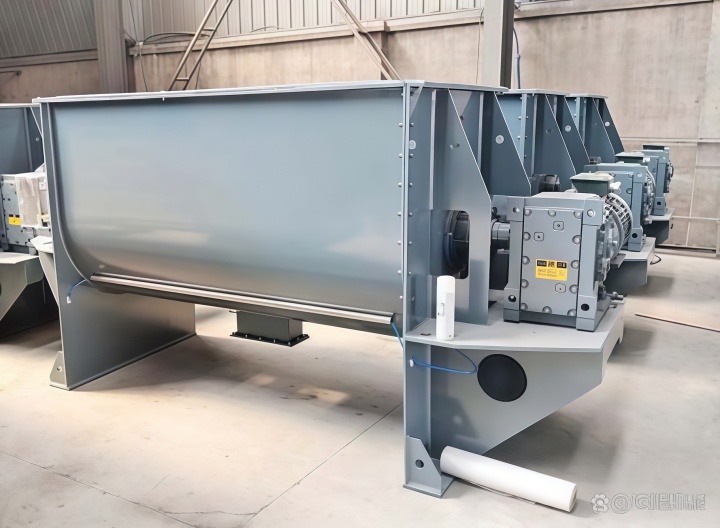
The three mainstream discharge methods differ in residue rate, operating speed, and maintenance cost. Pneumatic flap gate is suitable for dry powder formulas, manual slide gate has lower cost and is suitable for small cattle farms, and pneumatic butterfly valve is more suitable for semi-fluid formulas containing molasses or oil.
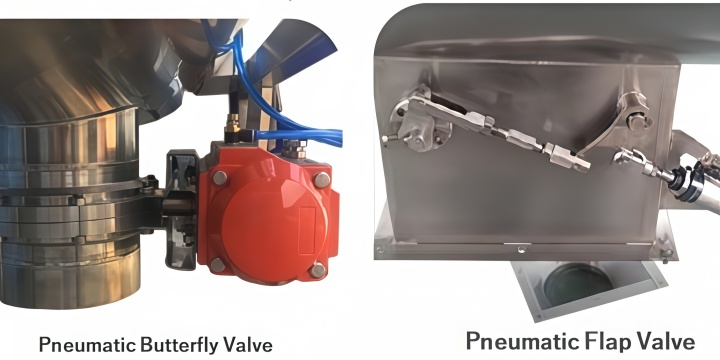
Pneumatic flap gate: bottom fully open, fast discharge, residue rate can be below 0.3%, suitable for dry cattle feed, single discharge about 30 to 60 seconds.
Manual slide gate: simple structure, lower purchase cost, suitable for small cattle farms under 20 tons per day, but sealing performance decreases with use time.
Pneumatic butterfly valve: better sealing than manual butterfly valve, suitable for semi-fluid formulas containing molasses or oil. Residue rate is higher than flap gate, but cleaning and maintenance are convenient.
Before purchase, focus on verifying seven aspects: power supply capacity, liquid addition ratio, effective volume, uniformity test report, quote amortization comparison, motor energy efficiency grade, and installation foundation. These variables mainly affect operating costs and mixing results after the equipment arrives.
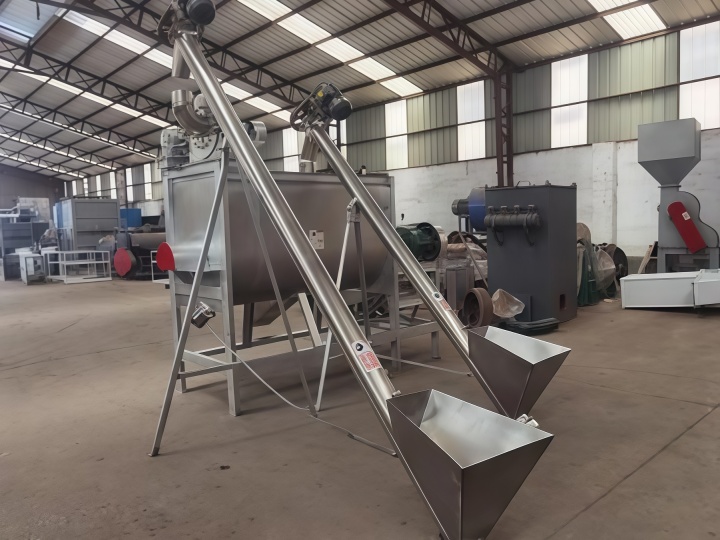
Confirm the margin between three-phase power capacity and the rated power of the mixer. If the crusher and pellet mill run at the same time, the peak load may exceed transformer capacity.
Confirm the liquid addition ratio. If molasses or oil exceeds 5%, inform the supplier in advance to configure a spray system and cylinder wall scraper.
Confirm effective volume rather than nominal volume, and ask the supplier for actual batch processing data.
Request a mixing uniformity CV test report, including batch size, speed, and mixing time.
Recalculate and compare quotes from three or more suppliers on a per-ton feed amortized cost basis, rather than looking only at the whole machine quote.
Confirm whether the motor uses IE3 or IE4 energy efficiency grade. An IE3 7.5 kW motor can reduce annual power consumption by about 8% compared with IE2.
Confirm the flatness requirements of the installation foundation. Insufficient rigidity can cause shaft misalignment.
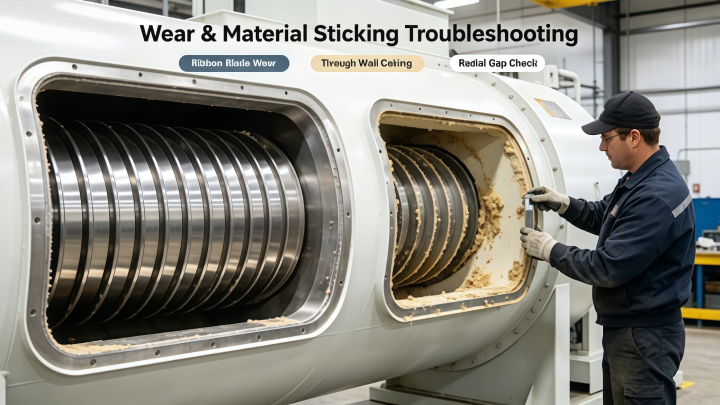
Common mistakes in use include looking only at nominal capacity, over-extending mixing time, ignoring discharge door sealing, and issues such as material sticking to the cylinder wall and abnormal vibration. These problems can lead to insufficient capacity or rising ongoing cleaning costs. A customer once reported high discharge residue. Inspection found that the radial clearance between the ribbon and cylinder wall had worn from 5 mm at factory to 12 mm, far beyond the standard range.
Only looking at nominal capacity: a nominal 3,000 L model often has an actual effective mixing volume of 2,100 to 2,400 L. Planning daily output by nominal capacity will lead to insufficient capacity.
Longer mixing time is better: a feed mill extended mixing from 4 minutes to 7 minutes per batch, but CV did not improve, and fine powder began to separate.
Ignoring discharge door sealing: a purchaser tested the discharge door clearance with an A4 paper and found the paper could easily be inserted. Fine powder will continue to leak.
Material sticking to cylinder wall: a cattle feed mill added 32 kg of molasses to 400 kg of dry material per batch. Manual pouring caused about 5 mm of caking on the cylinder wall. After installing a spray bar, mixing time returned from 12 minutes to 6 minutes.
Abnormal vibration or noise: bearing misalignment or loose foundation are the main causes. The equipment should be installed on a level, rigid foundation.
The purchase price is only the starting point. Mixing uniformity mainly affects daily weight gain and feed conversion rate of cattle. A well-maintained horizontal ribbon mixer can be used for more than 15 years, with main expenses concentrated on seals and lubrication maintenance. When evaluating this equipment, considering the per-ton feed uniformity compliance rate and equipment availability is more reflective of true economics than simply comparing quotes.
Understanding the complete cost of this equipment requires combining raw material characteristics, capacity planning, and maintenance system. If you are planning a feed line or replacing existing mixing equipment, you can first sort out your batch requirements and formula characteristics, then have a targeted technical communication with suppliers. A selection plan based on actual working conditions is often more valuable than a low-price quote.
Usually three-phase power is required, and voltage and frequency can be customized for the target market. If the crusher and pellet mill start at the same time, confirm transformer margin.
Dust mainly comes from the feed inlet and shaft seals. Adding a dust extraction interface can significantly improve it. If the negative pressure at the inlet is insufficient, a local sealing cover can be added and shaft seals checked regularly.
Controlling the filling rate at 60% to 70% and shortening mixing time is usually effective. If urea exceeds 10%, consider adding a bridging breaker or reducing the single batch mixing amount.
Training usually takes 1 to 2 days, focusing on filling rate control and lubrication cycles. If there are more than 3 different models on site, on-site training is recommended, because discharge valve and shaft seal maintenance points may be completely different.


Address:China,Yanjin county forest park gate to the west 1000 meters north road.


 Online Chat
 Email
Email