


Horizontal Shaft Ribbon Mixer for Cattle Feed uses a horizontal shaft-driven double ribbon as its mixing core. It is designed for multi-component cattle feed, including concentrates, roughage, additives, and minerals. The counter-current motion of the inner and outer ribbons mixes materials with different bulk densities and particle sizes, reducing stratification. Typical ingredients include silage, straw meal, soybean meal, cornmeal, and distillers' grains. For standard dry TMR at 12% moisture and 65% fill, the mixer achieves CV ≤ 5% in 10 minutes.
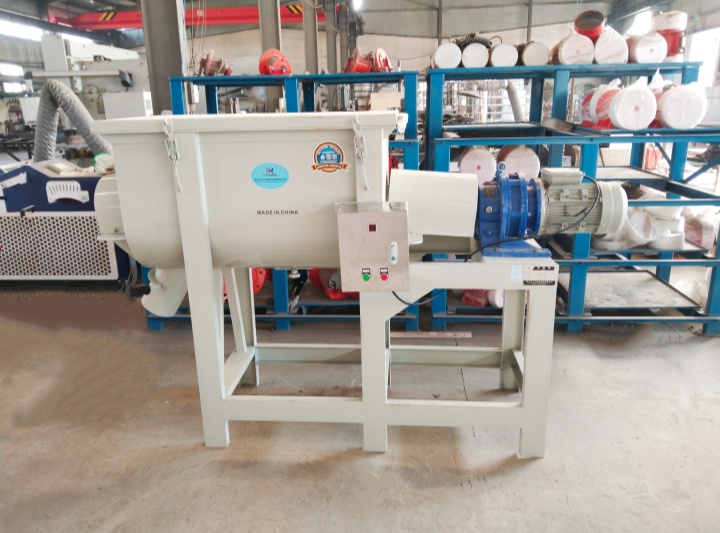
The Horizontal Shaft Ribbon Mixer for Cattle Feed supports non-standard customization, allowing you to adjust the machine size and change the shape and size of the inlet and outlet to meet your needs. It also supports various configuration requirements, including the addition of moving rollers, spray systems, and intelligent control systems, ensuring various mixing needs are met during the mixing process. Customization options include: capacity 100–6,000 kg/batch; inlet/outlet size and position; manual or pneumatic discharge; movable rollers; spray system with 20–50 L/min flow rate; and PLC control with Siemens components.
The Horizontal Shaft Ribbon Mixer for Cattle Feed is suitable for processing various cattle feeds, including concentrates, roughage, and daily rations, boasting core advantages such as high mixing uniformity, strong material adaptability, and low residue.
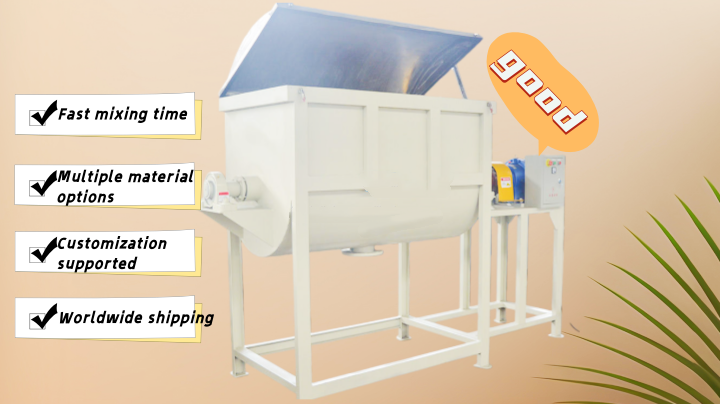
High mixing uniformity: CV ≤ 5% tested at 65% fill, 12% moisture, standard beef cattle TMR. Double-ribbon counter-current flow prevents stratification of minerals and concentrates.
Suitable for various cattle feeds: Tested with silage, straw powder, soybean meal, corn flour, and distillers' grains. Mixing force is controlled to avoid breaking roughage fibers while dispersing trace additives.
Suitable for large-scale farming: Batch capacity 100–6,000 kg. Mixing cycle 8–20 minutes depending on model and recipe. Supports continuous production lines with pneumatic discharge and PLC control.
Low residue: Residual rate ≤ 0.3% after 20 consecutive batches. U-shaped drum and controlled ribbon-to-wall gap reduce dead corners.
Easy operation: Variable frequency drive allows speed adjustment. Manual or pneumatic discharge valve. Modular access for cleaning.
The Horizontal Shaft Ribbon Mixer for Cattle Feed is available in two main types based on ribbon configuration: single ribbon and double ribbon. Both are suitable for multi-component mixing needs of cattle feed. The core differences lie in the mixing structure, mixing efficiency, and applicable scenarios, precisely matching the production needs of different farming scales.
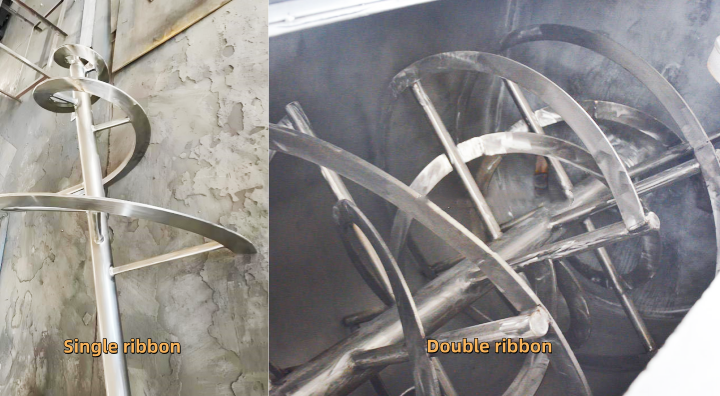
Single-Ribbon Mixer for Cattle Feed: Utilizing a single-unit continuous spiral belt mixing structure, the horizontal shaft drives the feed in a circular motion, conveying and mixing the feed from one end of the drum to the other. It features a simple structure, low energy consumption, gentle mixing force, and minimal breakage of roughage fibers such as straw and silage. Suitable for small to medium-sized cattle farms requiring small-batch, low-frequency cattle feed mixing.
Double-Ribbon Mixer for Cattle Feed: Equipped with a double-layer counter-rotating spiral belt, the outer layer gathers the feed from both sides towards the center of the drum, while the inner layer pushes the material outwards in the opposite direction, creating a bidirectional convection vortex. This ensures thorough mixing of concentrates, roughage, and trace additives, resulting in a more uniform and thorough blend. Suitable for large-scale, continuous cattle feed production needs in cattle farms and feed processing plants.
Selection rule: choose single-ribbon for below 500 kg/batch dry feed and low-frequency use; choose double-ribbon for above 500 kg/batch TMR or when trace additives and roughage must be mixed in one cycle.
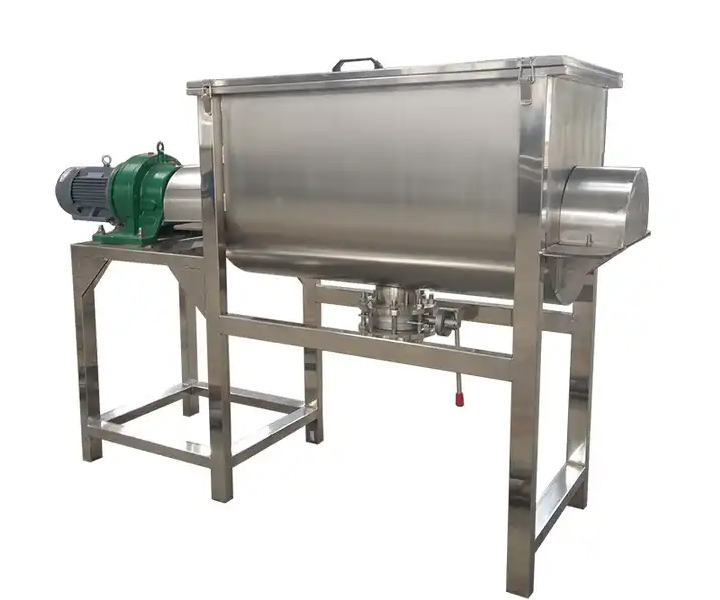
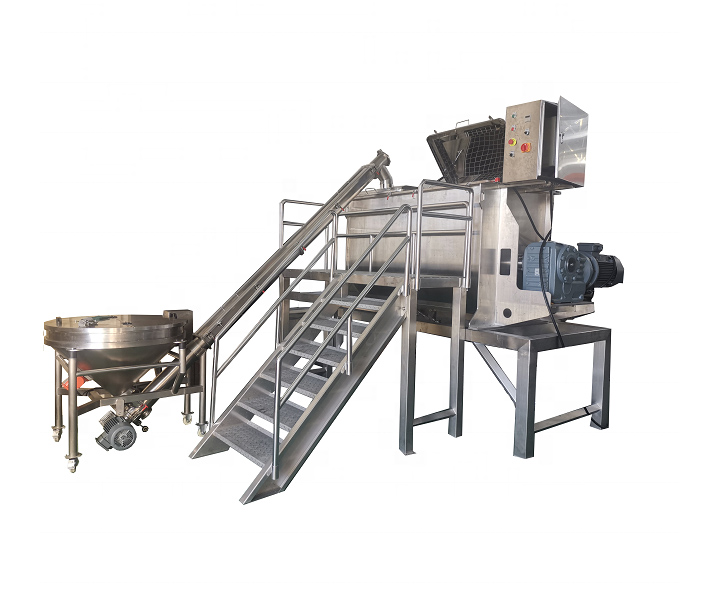
The horizontal shaft belt mixer for cattle feed is a horizontal integrated structure, consisting of four core parts: the main drum, the horizontal shaft mixing system, the transmission drive system, and the unloading control system.
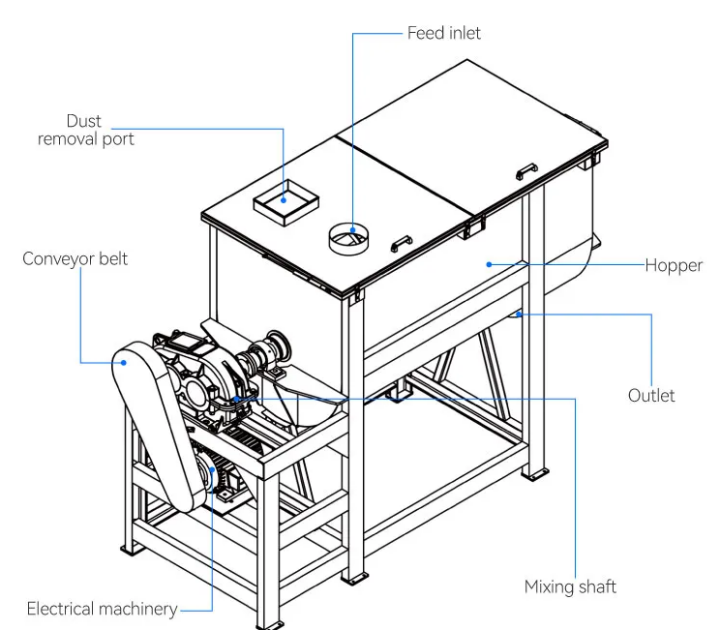
Main Unit: Constructed of thickened carbon steel and stainless steel, its classic U-shaped design conforms to the mixing trajectory, eliminating dead corners and preventing material buildup. The unit wall undergoes wear-resistant and rust-proofing treatment, withstanding friction from coarse and hard raw materials such as straw and distiller's grains.
Horizontal Shaft Mixing System: The core of this system is a horizontal through-shaft mixer paired with a ribbon mixing assembly. The gap between the ribbon and the unit wall is precisely controlled. Wear-resistant bushings are fitted at both ends of the mixing shaft, ensuring effective mixing while preventing wear from hard friction.
Transmission Drive System: Composed of a motor, reducer, coupling, and sealing cover. The motor is typically a frequency converter, allowing for adjustable mixing speed. The reducer is equipped with high torque output to meet the power requirements for mixing roughage. The transmission components undergo double-layer sealing to prevent feed dust and moisture ingress.
Unloading Control System: An arc-shaped discharge port is located at the bottom of the unit, paired with manual/pneumatic discharge valves. The valves fit snugly against the arc of the tank bottom, ensuring thorough and residue-free unloading. The pneumatic version can be linked for control, adapting to automated production lines.
Key wear parts: ribbon, shaft bushings, and discharge gate seal. Under normal cattle feed operation, ribbon inspection interval: 3–6 months; bushing replacement: 6–12 months. These intervals vary with abrasive materials such as straw and distillers' grains.
The Horizontal Shaft Ribbon Mixer for Cattle Feed features a horizontal cylindrical structure with multiple layers of counter-rotating spiral belts inside. During operation, the main motor drives the spiral belt shaft to rotate via a reducer. The outer spiral belt pushes the material from both ends towards the center, while the inner spiral belt conveys the material in the opposite direction, creating a high-intensity convection circulation. The material simultaneously undergoes radial, axial, and tangential combined motions in three-dimensional space, achieving uniform mixing of roughage and concentrate under shearing and diffusion effects.
Mixing Time Variability Note: The stated 8–20 min range for standard dry cattle feed assumes 12% moisture content and 60–70% fill level.For each 3% increase in moisture above 15%, mixing time should be extended by approximately 2–3 minutes to maintain uniform mixing.
Choosing the correct model depends on your herd size and feed types. Use this quick guide:
| Your Farm Scale | Recommended Model | Key Consideration |
| Small Farm (below 100 heads) | LHY-0.25 ~ LHY-0.5 | Single-ribbon, manual discharge. Typical batch 100–300 kg. Motor 3–5.5 kW. |
| Medium Farm (100–500 heads) | LHY-1 ~ LHY-2 | Double-ribbon recommended if using molasses or trace additives. Pneumatic discharge reduces labor. Batch 400–1,000 kg. Motor 7.5–22 kW. |
| Large Farm / Feed Mill (above 500 heads) | LHY-3 ~ LHY-10 | Double-ribbon, stainless steel optional, VFD + PLC. Batch 1,200–6,000 kg. Motor 18.5–75 kW. Plan 8–20 min/cycle for dry TMR; add 2–3 min if moisture above 15%. |
| Model | LHY-0.25 | LHY-0.5 | LHY-1 | LHY-1.5 | LHY-2 | LHY-3 | LHY-4 | LHY-6 | LHY-8 | LHY-10 |
| One-time mixing (kg) | 100-150 | 200-300 | 400-600 | 600-900 | 800-1000 | 1200-1800 | 1600-2400 | 2400-3600 | 3200-4800 | 4000-6000 |
| Mixing time (min)* | 3-20 | 3-20 | 3-20 | 3-20 | 3-20 | 3-20 | 3-20 | 3-20 | 3-20 | 3-20 |
| Mixing speed (r/min) | 60 | 55 | 45 | 40 | 35 | 25 | 25 | 20 | 15 | 15 |
| Motor power (kw) | 3-5.5 | 4-11 | 7.5-15 | 11-18.5 | 15-22 | 18.5-30 | 22-37 | 37-55 | 37-55 | 45-75 |
| Weight (kg) | 500 | 900 | 1800 | 2500 | 3200 | 4100 | 5100 | 6300 | 7500 | 8500 |
Notes: Mixing time depends on moisture, fill level, and liquid addition. Standard dry cattle feed at 12% moisture and 65% fill: 8–20 min. Single-ribbon light batches: 3–8 min. Double-ribbon large TMR batches: 5–20 min. Capacity also depends on material bulk density. For high-molasses or wet feed, choose stainless steel and a spray system configuration.
The technical table above gives standard parameters. The following scenarios show how mixing performance changes with moisture, batch size, and feed type. Use these as a reference when selecting a model and configuring the mixer.
| Feed Type | Moisture | Batch Size | Mixing Time | Recommended Configuration |
| Standard beef cattle TMR | 12% | 1,000 kg | 8 min | Baseline double-ribbon |
| High-molasses dairy feed | 18% | 800 kg | 14 min | Polyurethane ribbon edge + spray system |
| Calf starter fine grind | 10% | 600 kg | 6 min | Reduced fill level to 65% |
The Horizontal Shaft Ribbon Mixer for Cattle Feed is highly adaptable, capable of mixing all types of cattle feed, including concentrates such as cornmeal and soybean meal, roughage such as straw meal and silage, and can also mix trace additives, byproducts, and wet feed containing liquid.
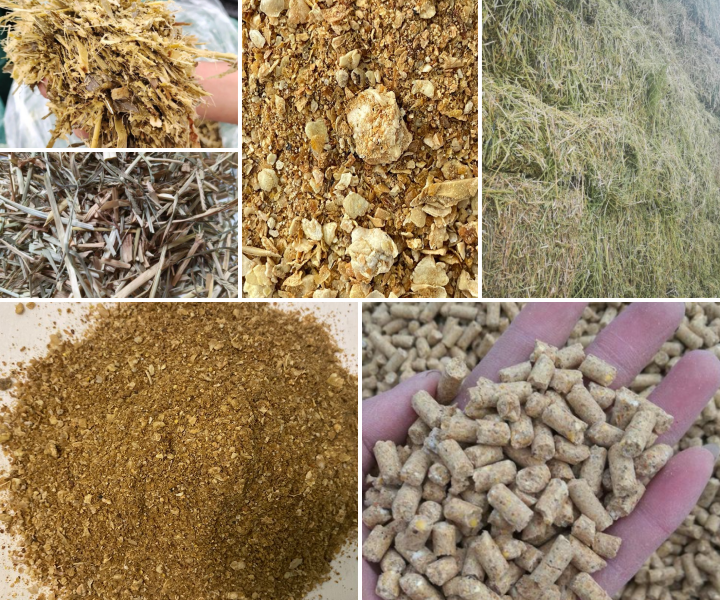
Fine Feeds: Suitable for mixing with powdered and granular concentrates such as cornmeal, soybean meal, wheat bran, rice bran, and rapeseed cake. The spiral mixing mechanism ensures uniform blending of different protein and energy-producing concentrates.
Roughage Feeds:Compatible with straw powder, silage, yellow silage, peanut vine powder, and hay powder. The gentle mixing prevents damage to the coarse fiber structure, meeting the feed requirements for ruminant digestion in cattle.
Total Mixed Rations:Enables precise blending of concentrates and roughages, while also being compatible with by-products such as distiller's grains, soybean residue, and beet pulp, providing a one-stop solution for mixing complete cattle rations.
Additive-Based Compound Feeds:Thoroughly mixes trace elements, vitamins, amino acids, mold inhibitors, probiotics, and other micronutrient additives with the base feed, preventing localized additive aggregation.
Wet/Semi-Wet Feeds: Can be mixed with wet or semi-wet feeds containing water, syrup, and oil. The spiral mixing mechanism ensures thorough blending of liquid and dry feeds without dead zones or residue buildup.
Typical Cattle Feed Formulation Scenarios
| Feed Type | Moisture | Batch Size | Mixing Time | Recommended Configuration |
| Standard beef cattle TMR | 12% | 1,000 kg | 8 min | Baseline double-ribbon |
| High-molasses dairy feed | 18% | 800 kg | 14 min | Polyurethane ribbon edge + spray system |
| Calf starter fine grind | 10% | 600 kg | 6 min | Reduced fill level to 65% |
Our factory offers two main material options for the Horizontal Shaft Ribbon Mixer for Cattle Feed: carbon steel and stainless steel. The choice depends on the scale of the farm, the type of feed, and the operating conditions, balancing practicality and cost control. The carbon steel material is thickened and wear-resistant, treated with rust-proof paint. It boasts high hardness and impact resistance, withstanding friction from coarse feeds such as straw and distiller's grains. It also offers lower procurement and maintenance costs, suitable for the basic needs of small to medium-sized cattle farms mixing regular dry feed and roughage.
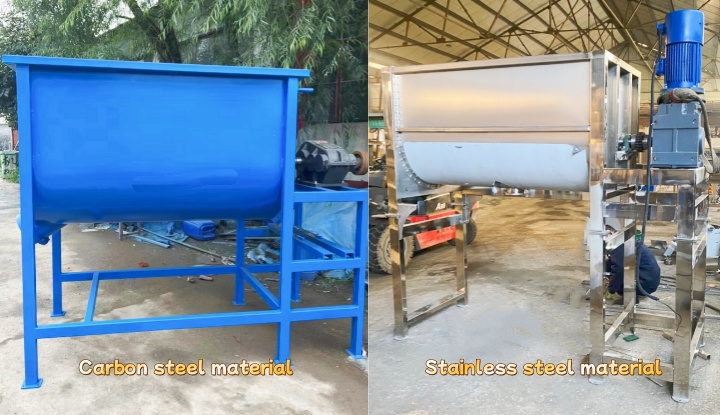
The stainless steel material is made of food-grade stainless steel. Its smooth, corner-free inner wall is corrosion-resistant and prevents feed residue buildup. It is easy to clean and avoids feed contamination. It is suitable for mixing wet feeds containing moisture, acids, or alkalis, as well as waste feeds, or for large-scale farms and feed processing plants with high hygiene standards.
Material Selection Guide
| Material | Best For | Avoid When |
| Carbon steel | Dry feed, small-medium farm, lower budget | Wet feed, high molasses, high hygiene requirement |
| Stainless steel | Wet feed, molasses, high hygiene, large farm/feed mill | Budget-limited dry feed operation |
Batch mixing time is not a fixed number. It depends on ribbon type, moisture content, fill level, and whether liquid is added. The 8–20 minute range in the technical table refers to standard dry cattle feed at 12% moisture and 65% fill. Single-ribbon models can complete light dry batches in 3–8 minutes. Double-ribbon models typically take 5–20 minutes for large TMR batches. For each 3% increase in moisture above 15%, add approximately 2–3 minutes to maintain uniform mixing. For high-molasses or wet feed, use a spray system and extend the final mixing stage by 2–3 minutes. Always confirm the exact cycle with a factory trial using your actual recipe.
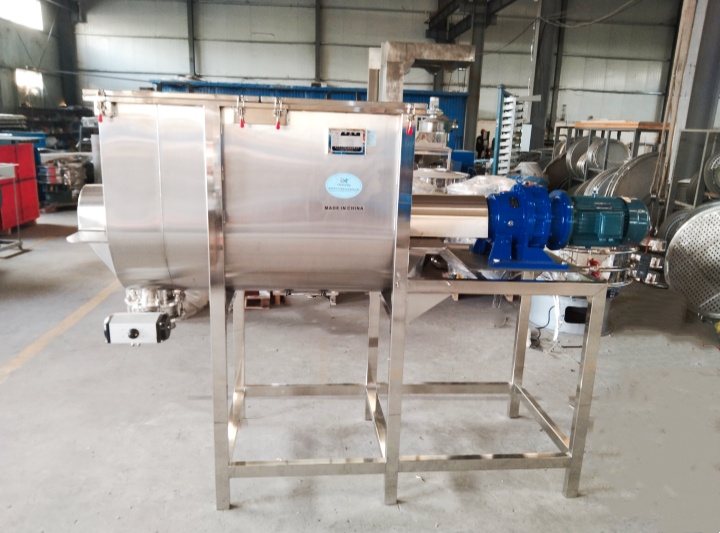
Dahan Machinery manufactures Horizontal Shaft Ribbon Mixers for Cattle Feed, which can be customized with carbon steel or stainless steel materials. The entire machine is manufactured in strict accordance with industry standards, with a comprehensive quality control system to ensure durability and mixing stability. Supporting customized designs, equipment parameters and configurations can be adjusted according to the scale of farming and production conditions. Factory trial runs, debugging guidance, and after-sales spare parts services are also provided. The products cover large, medium, and small cattle farms and feed processing plants, and have gained long-term recognition from farmers across the country due to their high cost-effectiveness and comprehensive service.
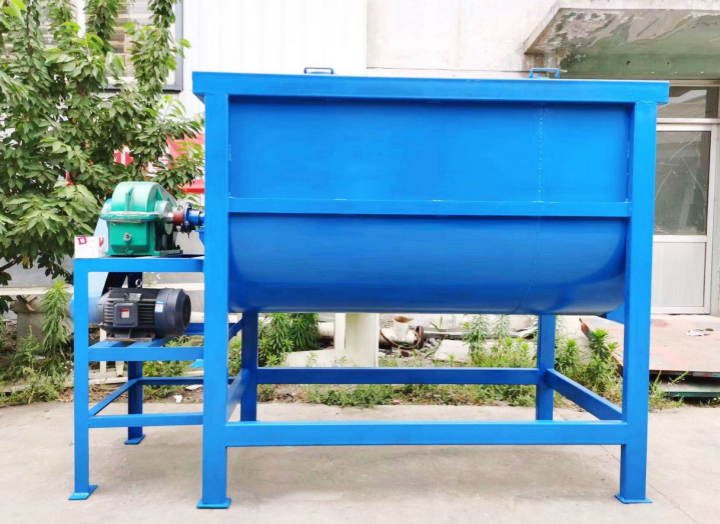
The Horizontal Shaft Ribbon Mixer for Cattle Feed, as a key piece of equipment for modern large-scale farm production, has become a core tool for improving feed nutritional uniformity and reducing farming costs due to its rapid mixing performance and stable operation.
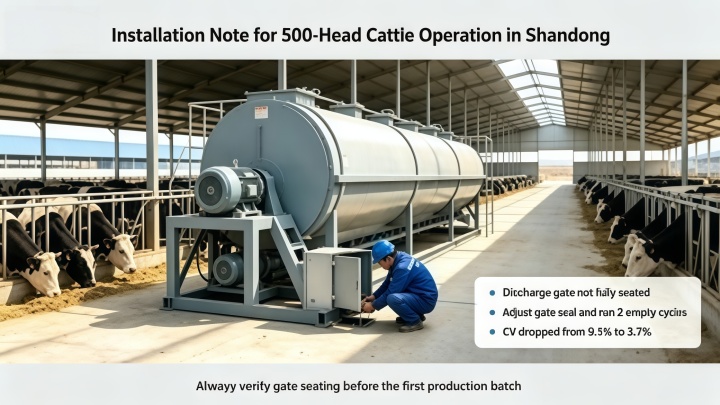
On a recent installation for a 500-head cattle operation in Shandong, the customer initially reported uneven mixing in the first 3 batches. Root cause: the discharge gate was not fully seated, causing partial material bypass during the mixing cycle. After adjusting the gate seal and running 2 empty cycles, CV dropped from 9.1% to 3.7%. Lesson: always verify gate seating before the first production batch.
Yes. Our robust design and customizable spray system allow for efficient mixing of wet/semi-wet feeds (including silage, molasses, and oils) with dry concentrates, without material buildup or clumping.
For most dry cattle feed recipes at 12% moisture and 65% fill, the mixing cycle is 8–20 minutes per batch. Single-ribbon light batches can finish in 3–8 minutes. Double-ribbon large TMR batches typically take 5–20 minutes. High-molasses or wet feed may require 2–3 extra minutes.
Absolutely. We support full non-standard customization of size, inlet/outlet, and configuration, including moving rollers, spray systems, and intelligent PLC control for automated production lines.
Yes, with the following configuration: (1) discharge gate clearance increased to 8 mm; (2) inner ribbon edge coated with wear-resistant polyurethane; (3) mixing sequence: dry ingredients first for 3–4 minutes, then molasses sprayed at 40–50°C through a dosing pump during the final 5–6 minutes. Without these adjustments, molasses above 15% of total batch weight may cause ribbon wrapping.
Run the mixer empty for 2–3 minutes with the discharge gate open. For wet or sticky feed, use the spray system with warm water, then run empty for another 2 minutes. The U-shaped drum and modular access panels allow manual cleaning of corners and the discharge gate seal.


Address:China,Yanjin county forest park gate to the west 1000 meters north road.


 Online Chat
 Email