


Silicone rubber is one of the most demanding materials to process in the mixing industry. With viscosities that can reach up to 6 million cP, high‑viscosity silicone rubber requires specialized equipment that can handle extreme shear forces while maintaining precise temperature control throughout the mixing cycle. Selecting the right thermal mixer is not just about capacity—it is about matching machine capabilities to your specific material behavior, production goals, and quality requirements.
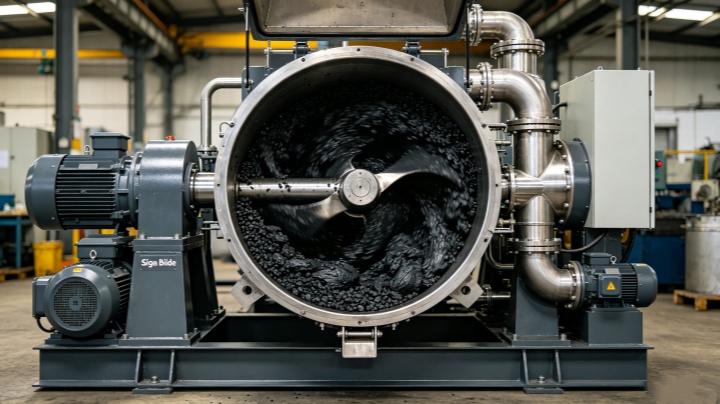
This guide walks through the essential factors for choosing the correct thermal mixer for high‑viscosity silicone rubber, helping you make an informed investment that delivers consistent batch quality and long‑term operational efficiency.
Different silicone rubber formulations have different processing characteristics. The first step in selecting a thermal mixer is identifying which type of silicone you are producing.
| Silicone Rubber Type | Typical Viscosity Range | Key Processing Requirements |
| HTV (High‑Temperature Vulcanized) | Very high; requires strong shear | High shear, precise heating for vulcanization |
| RTV (Room‑Temperature Vulcanized) | Medium to high | Moderate shear, often requires vacuum for bubble removal |
| LSR (Liquid Silicone Rubber) | Lower | Premixing components, good dispersion uniformity |
| Silicone Sealants/Adhesives | High | Strong kneading action, temperature control |
Why this matters: A mixer that works well for RTV sealants may not have the power or thermal capacity to handle HTV silicone rubber, which requires more intensive shear and heat management. According to industry guidance, silicone thickens quickly during polymerization, so the mixer must generate strong shear while offering excellent heat control to maintain stable torque throughout the cycle.
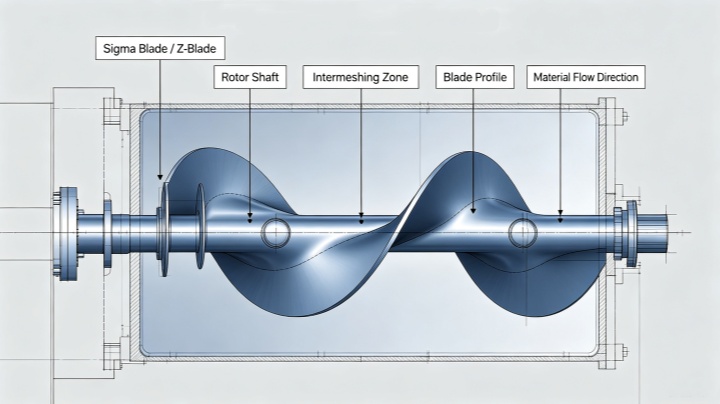
The blade geometry determines how the mixer interacts with your material. For high‑viscosity silicone rubber, the most common and effective design is the sigma blade (also called Z‑blade) mixer.
Sigma Blade Mixers
Sigma blade mixers feature two ∑‑shaped blades that rotate toward each other at different speeds. This creates a kneading action that scrapes, stretches, folds, and squeezes the material between the blades and the chamber wall. The tangential rotation ensures no dead corners, making these mixers ideal for high‑viscosity elastoplastic materials.
Key advantages for silicone rubber:
High shear force for uniform dispersion of fillers such as silica
Handles viscosities up to 5000 Pa·s (and some models up to 6 million cP)
Proven performance in HTV silicone rubber production
Batch processing capability for precise control over mixing parameters
Alternative: Double Planetary Mixers
For some silicone applications, double planetary mixers with high‑viscosity blades offer an alternative. Ross Mixers notes that their heavy‑duty double planetary mixers can handle peak viscosities up to 6 million cP and provide advantages in cleanability and discharge. However, sigma blade mixers remain the industry standard for most high‑viscosity silicone rubber compounding due to their robust kneading action.
Temperature control is arguably the most critical factor when processing silicone rubber. Silicone compounds are heat‑sensitive, and improper temperature management can lead to premature vulcanization, scorching, or inconsistent product quality.
What to look for:
Jacketed mixing chamber – Allows circulation of heating or cooling media (water, steam, or thermal oil)
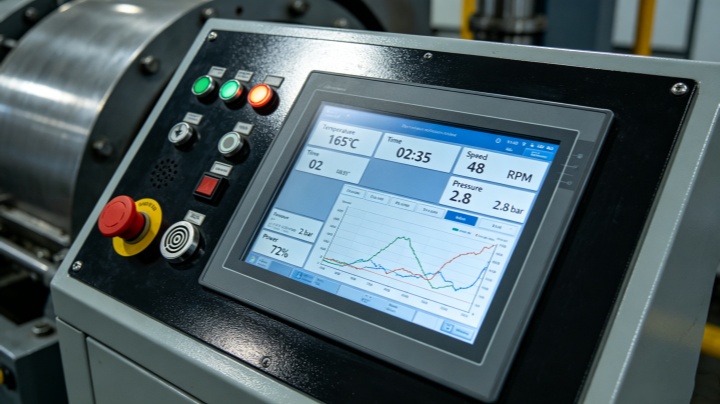
Precise temperature monitoring – PLC‑controlled systems that track and adjust temperature in real time
Rapid cooling capability – Important for temperature‑critical formulations where overheating must be avoided
According to Dow Corning research, heating and cooling of silicone rubber is a non‑value‑added step that significantly impacts cycle time and production capacity. CFD modeling has shown that selecting the right mixer sizing and thermal management approach can optimize both heating/cooling conditions and overall productivity.
For many silicone rubber applications, especially RTV sealants and liquid silicone rubber, removing air bubbles is essential for product quality. Bubbles trapped in the silicone can cause defects, weak spots, and poor electrical insulation properties.
Benefits of vacuum‑equipped mixers:
Removes entrapped air during mixing
Improves product density and mechanical properties
Reduces or eliminates need for post‑mixing deaeration steps
Essential for applications requiring void‑free end products
Many sigma blade mixers can be configured with vacuum systems, making them suitable for both atmospheric and vacuum processing.
The way your mixer discharges finished product affects production efficiency, cleaning time, and material waste. Thermal mixers for silicone rubber typically offer three discharge options:
| Discharge Method | Best For | Advantages |
| Hydraulic Tilting | Multi‑purpose factories, frequent product changes | Quick unloading, easy cleaning, flexible |
| Screw Extrusion | Continuous processes, ultra‑thick formulations | Controlled pressure discharge, uniform density, minimal air entrapment |
| Ball Valve | Standard batch processing | Simple design, cost‑effective |
Important: For high‑viscosity silicone rubber that does not flow easily, a screw extrusion or hydraulic tilting discharge system significantly reduces manual handling and speeds up batch cycling.
Modern thermal mixers offer varying levels of automation. While manual control may be sufficient for small‑scale or R&D operations, production‑scale silicone rubber compounding benefits from automated systems.
Recommended control features:
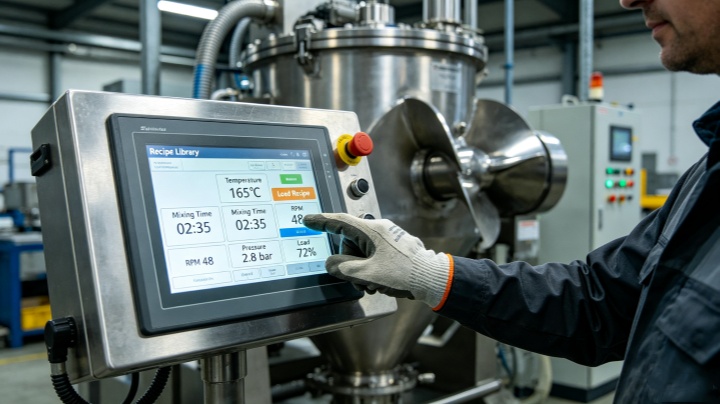
PLC with touchscreen HMI – For real‑time monitoring of temperature, time, viscosity, and torque
Recipe programming – Store and recall parameters for different formulations
Data logging – Track batch history for quality assurance and process optimization
Automatic temperature and time control – Ensures 100% mixing consistency across batches
Silicone rubber mixing places significant wear on equipment components due to abrasive fillers such as fumed silica and carbon black.
Material considerations:
Stainless steel – Standard for most applications, provides corrosion resistance and product purity
Hard chrome plating – Extends wear life on contact surfaces
Wear‑resistant alloy welding – Protects high‑wear areas
Choose a mixer built with materials compatible with your chemical formulation. For applications requiring low contamination, stainless steel chambers and blades are essential.
Thermal mixers are available in capacities ranging from laboratory scale to industrial production. JCT Machinery offers sizes from 5L experimental models to 2,000L industrial units for silicone rubber.
Selection factors:
Production volume requirements
Loading coefficient – Under‑kneading or over‑compression can affect quality
Cycle time – Typical mixing cycles for silicone rubber are 6–10 minutes per batch
Batch‑to‑batch consistency – Larger batches may require more powerful motors and reinforced gearboxes
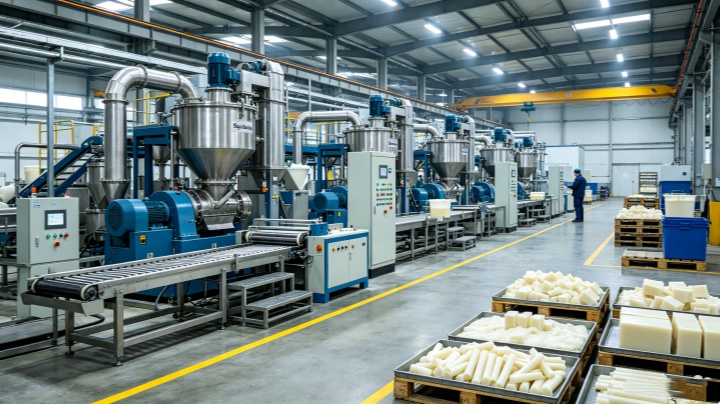
Choosing the right thermal mixer for high‑viscosity silicone rubber requires careful evaluation of your material type, viscosity range, temperature control needs, discharge workflow, and automation requirements. Sigma blade mixers remain the industry standard for this application, offering the shear force, thermal management, and versatility needed for consistent, high‑quality silicone rubber production.
When evaluating equipment suppliers, look for manufacturers with proven experience in silicone rubber applications, customizable configurations, and comprehensive after‑sales support—including installation guidance, technical training, and spare parts availability.


Address:China,Yanjin county forest park gate to the west 1000 meters north road.


 Online Chat
 Email
Email