


When sourcing mixers for high-fat pork powder, there are three reference directions worth attention: 304 or 316L wetted contact surfaces, mixing uniformity within a reference CV range, and quick-release conveying structures. These features help reduce adhesion and oxidative rancidity of animal fat. Pork powder contains free animal fat and active protein, and it brings different requirements on shearing conditions and surface hygiene compared with common dry powders such as grain and seasoning blends.
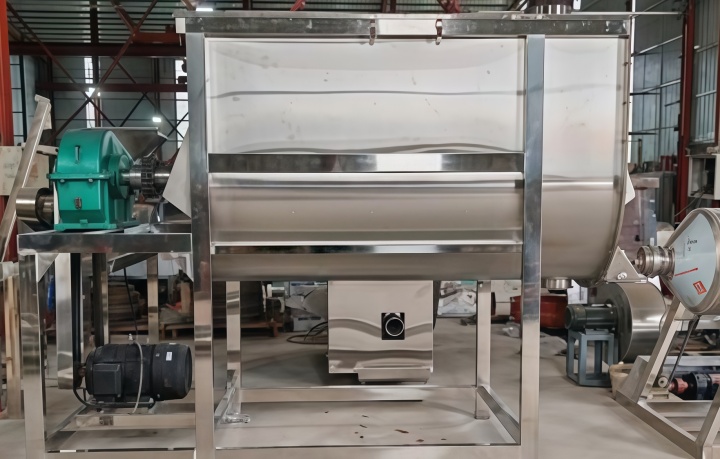
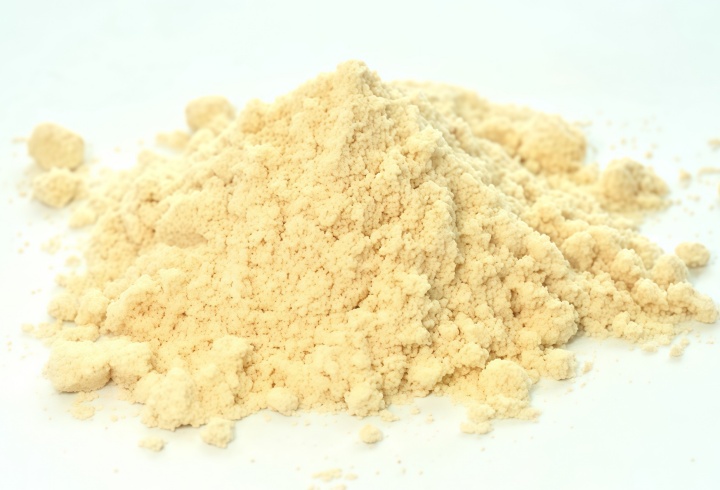
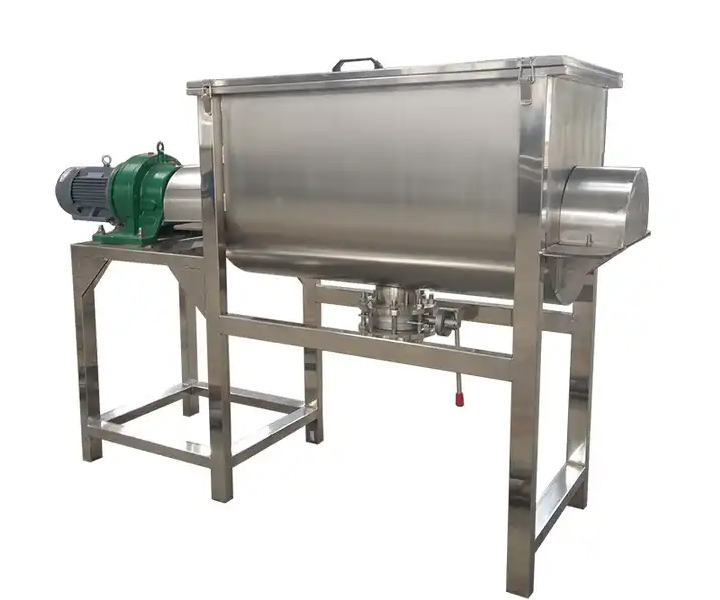
Pork powder acts as an ingredient for deep-processed meat products and is widely used in seasoning blends, ready-to-eat meals and pet nutrition formulas. Stainless steel belt mixers rely on low-speed belt blade movement to tumble materials. Their low-shear nature suits high-fat powder and helps maintain consistent mixing status while slowing lipid deterioration. Many equipment specifications on the market are designed for ordinary dry powders, and direct adoption for pork powder processing may bring quality risks. Learning the evaluation framework helps sourcing teams build practical assessment criteria when you Select a Stainless Steel Belt Mixer for Pork Powder.
Free fat continuously touches equipment contact areas. Rough surfaces and unsuitable sealing materials may trap lipid residues, which gradually oxidize and affect later batches. The following checkpoints support better hygiene control.
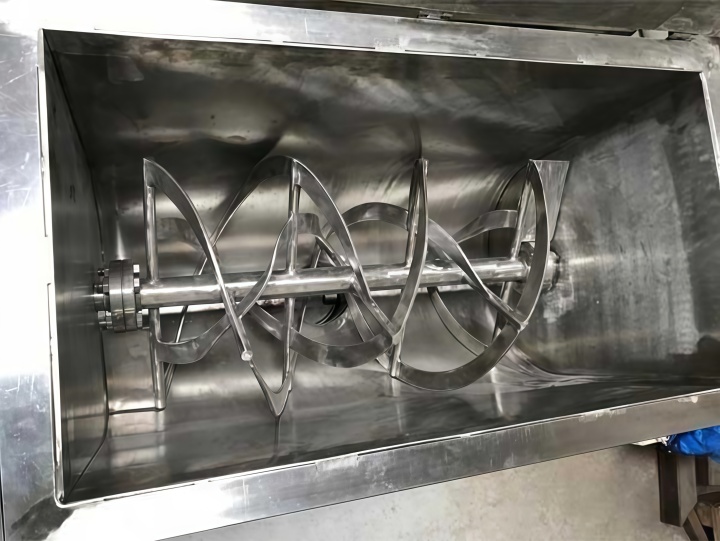
Wetted components adopt 304 or 316L stainless steel, with surface roughness within a referenced range, aligned with FDA 21 CFR, 3‑A Sanitary Standards and EHEDG design guidelines;
Seal gaskets use fat-resistant silicone rubber or EPDM to reduce swelling and substance migration triggered by animal fat;
Continuous polished welds remove micro-gaps and limit fat accumulation sites.
Pork powder carries natural stickiness. Uneven mixing leads to local fat enrichment and faster rancidification. Sourcing teams may refer to the following parameters to coordinate with production rhythm.
Batch handling scale coordinates with downstream packaging steps and limits long residence and heat build-up;
Mixing uniformity CV follows a referenced range, and tighter ranges can apply for formulas with minor nutrient additives;
Shaft speed stays within the 20–30 rpm range. Lower running speed reduces fat separation from the powder matrix.
Simple flushing often cannot fully remove fat residues. Remaining lipids keep oxidizing and raise cross-contamination risks. Review the following structural features when checking equipment cleanability.
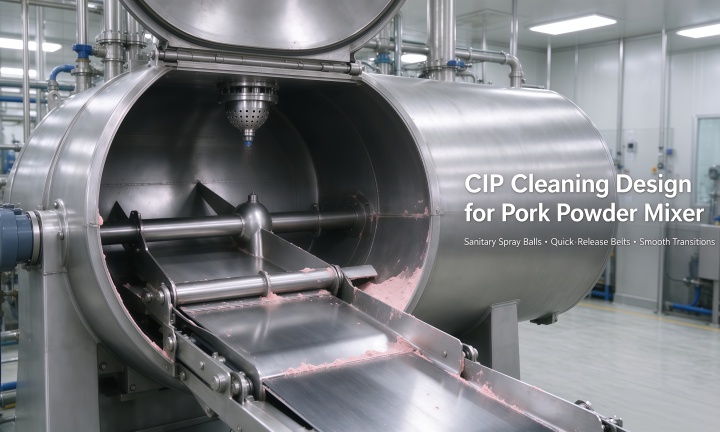
Compatible with CIP arrangements to reduce missed zones during manual cleaning work;
Conveying assemblies support quick disassembly for brushing areas prone to fat attachment;
Rounded transitions inside the tank reduce areas where fat deposits build up.
Mechanical shear and friction heat may release fat wrapped inside protein structures and lead to oil leakage, caking and colour shift. The following design points ease such quality issues.
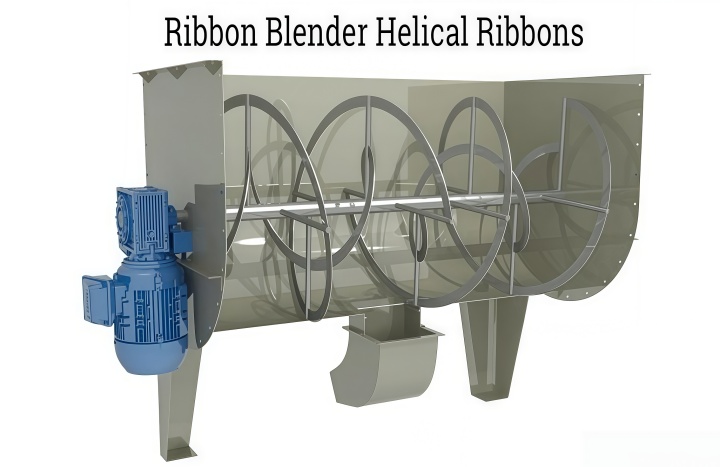
Blades adopt low-shear tumble displacement instead of cutting or grinding materials;
Optional jacket arrangements help moderate temperature rise from friction;
Sampling ports can be reserved to track temperature changes and oil separation during trial runs.
High-fat working conditions accelerate wear part ageing. Comparing only upfront purchase value makes it hard to estimate later operational spending. Confirm these service items in the sourcing phase.
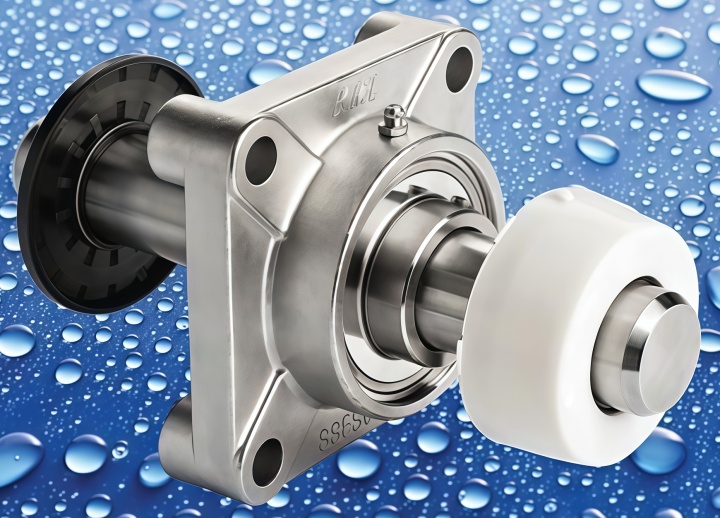
Warranty terms for core assemblies including main bearings and reducers;
Supply lead time and replacement spending for consumables such as belts and seals;
Availability of technical guidance for machine commissioning and hygiene validation.
Different designs create varied pressure on fat release and cleaning workload for high-fat pork powder. Match the unit with the fat share of target formulas.
| Comparison Item | Belt Mixer | Ribbon Mixer | Paddle Mixer | Reference Checkpoint |
| Shear Level | Low, tumble movement | Moderate, inner-outer ribbon circulation | Relatively high, paddle sweeping | Prefer low-shear options for high-fat recipes |
| Suitable Fat Share | Above 20% fat content | 10% – 20% fat content | Below 10% fat content | Cross-check formula fat proportion |
| Cleaning Effort | Moderately low, removable belt | Moderate, complex ribbon profile | Moderately high, narrow paddle gaps | Prioritise quick-release structures |
| Mixing Uniformity | Acceptable, CV ≈5% | Acceptable, CV ≈3% | Acceptable with local high shear | Request third-party test documentation |
| Shaft Speed | 20 – 30 rpm | 15 – 25 rpm | 30 – 60 rpm | Lower rpm helps reduce oil separation |
| Investment Level | Moderately high | Moderate | Moderately low | Include ongoing service spending in assessment |
| Application Fit | Pork powder, meat floss and similar fat-prone powders | Regular seasoning powder, starch blends | Low-fat dry powder blends | Align with existing workshop layout |
Many production facilities reuse selection experience from dry powder equipment and overlook unique hazards from free fat. The points below cover frequent issues seen after commissioning.
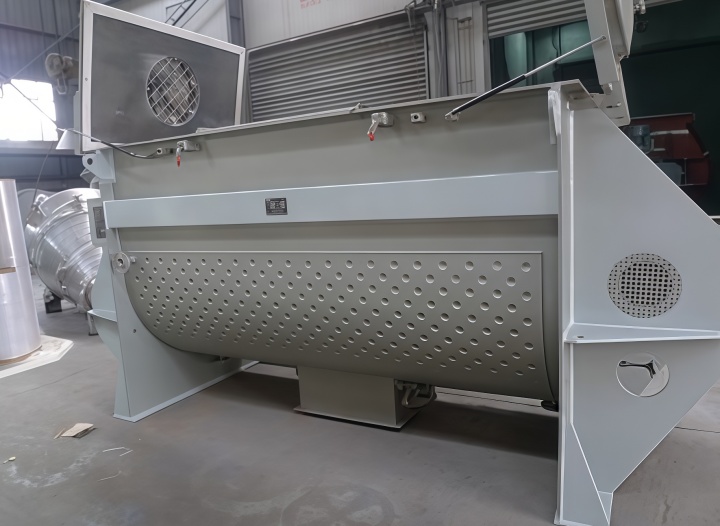
Only verifying material certificates while ignoring weld polishing; trapped fat inside gaps gradually develops rancid odour;
Adopting parameter sets from dry powder applications without accounting for sticky flow slowdown; real output differs from labelled figures;
Choosing belts with weak fat resistance. Contact with animal fat causes swelling and ageing and raises downtime frequency.
A: Many units support signal interfacing and coordinate start-stop rhythm with feeding and packaging devices. Confirm protocol details in advance to reduce manual handling losses.
A: Arrange production runs from lower-fat recipes toward higher-fat ones. Purge arrangements can be applied to reduce cross-contamination.
A: Noise levels stay within common acceptable ranges under regular load. Focus on transmission damping. Damping bases can be fitted for sites with stricter noise expectations.
A: Maintenance cycles differ. Belt units allow easier disassembly and cleaning and suit lines with frequent formula switching. Ribbon units contain narrow gaps and take longer cleaning time.
Sourcing suitable mixers for high-fat pork powder calls for combined assessment of process performance, hygiene standards and service arrangements. Carry out multi-dimensional assessment when you Select a Stainless Steel Belt Mixer for Pork Powder. Clarify formula fat proportion and target batch scale beforehand and rely on trial test results to judge performance, which helps reduce quality challenges after commissioning.


Address:China,Yanjin county forest park gate to the west 1000 meters north road.


 Online Chat


 Email