


PVC Plastic High Speed Mixer is a mixing device in PVC plastic product processing production lines. Utilizing a specially designed high-speed rotating impeller to agitate the material, it rapidly disperses and mixes PVC plastic with stabilizers, lubricants, fillers, masterbatches, and other additives. The internal components are made of high-quality stainless steel, offering wear resistance, non-stick properties, and corrosion resistance. Combined with a sealed design, it effectively prevents material loss and dust pollution. Compared to traditional mixing equipment, the PVC high-speed mixer offers faster mixing speeds and higher material uniformity. It can achieve pre-plasticization of materials, significantly improving the stability of subsequent extrusion and molding processes, and effectively solving industry problems such as uneven material ratios, color differences in finished products, and inconsistent performance.
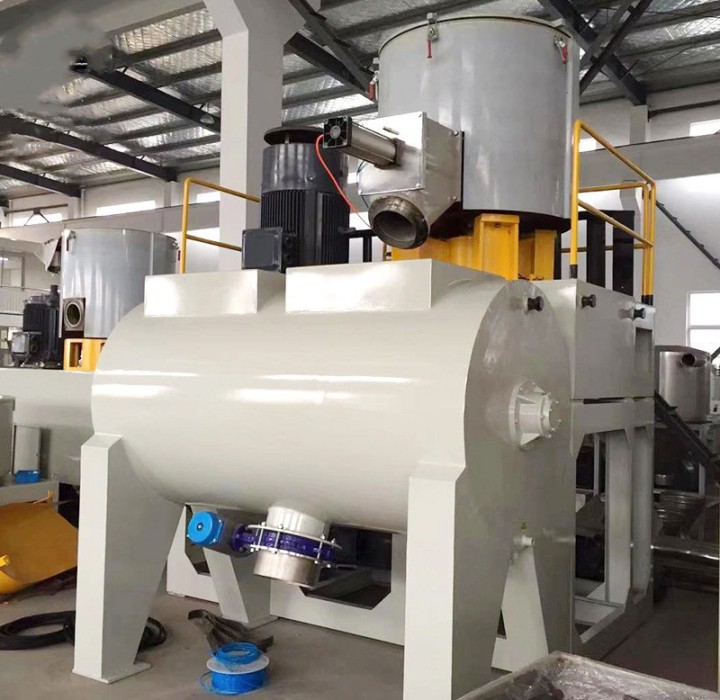
The PVC plastic high speed mixer features fast mixing speed and high mixing uniformity, utilizing material self-friction heating to achieve automatic pre-plasticization. The machine has a compact structure, low energy consumption, excellent dustproof sealing, stable operation with low noise, and simple and durable maintenance.
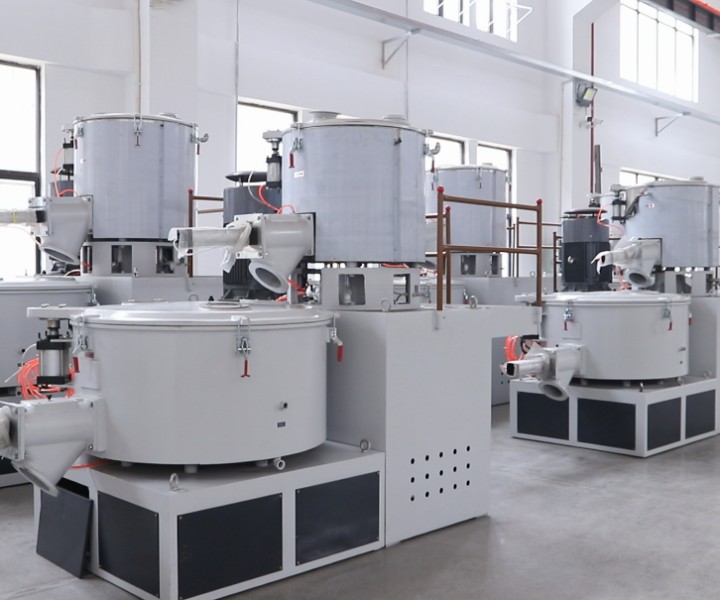
Rapid Mixing: Through high-speed mixing, PVC resin and additives can be quickly and uniformly mixed together, thereby improving mixing efficiency.
Uniform Distribution: The design and rotation of the agitator ensure the uniform distribution of various components in the PVC mixture, thereby improving product quality.
Easy Operation: The equipment has a simple structure, is easy to operate, and is easy to control and maintain.
Reduced Labor: The product supports 24-hour uninterrupted operation and can easily adapt to the normal operation of a production line.
The PVC Plastic High Speed Mixer features a compact and rational design, primarily composed of a mixing host, transmission system, unloading mechanism, and electrical control system. All components are neatly arranged and operate seamlessly together, supported by a sturdy frame for reliable machine support. A motor provides the power source, driving the equipment at high speed. The built-in agitator, including mixing blades and a mixing chamber, thoroughly mixes PVC resin and various additives. A dedicated hopper is used for loading raw materials and auxiliary materials, while the electrical control system manages equipment start-up, shutdown, and various operating parameters. The machine is easy to assemble and disassemble, and simple to maintain, continuously achieving high-speed mixing and uniform blending of materials to meet the batching production needs of the PVC processing industry.
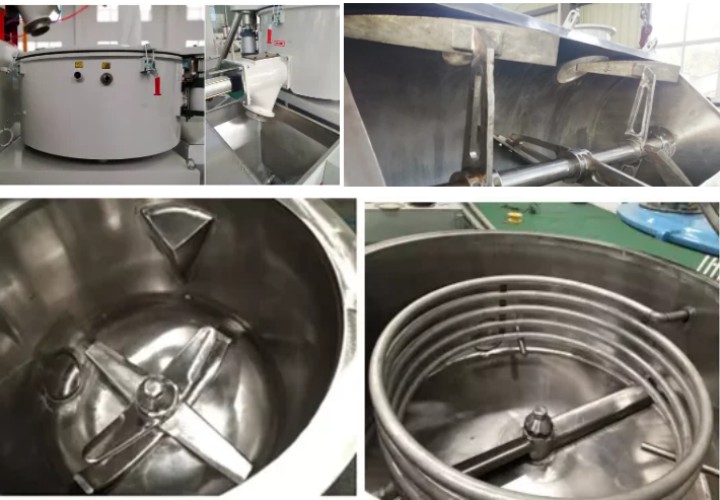
PVC plastic high speed mixer uses a high-speed rotating mixer to mix PVC resin and other additives through the high-speed rotation of the mixer and the design of the mixing blades. During the mixing process, the mixer produces strong cutting, shearing and squeezing effects to fully mix the PVC resin and additives and form a uniform PVC mixture.
| Model | Volume(L) | Effective Volume(L) | Motor Power(kw) | Discharging Method | Heating Method |
| SHR-10 | 10 | 7 | 3 | Manual | Self Friction or Electric Heating |
| SHR-50 | 50 | 35 | 7/11 | Manual | Self Friction or Electric Heating |
| SHR-100 | 100 | 70 | 11/22 | Pneumatic | Self Friction or Electric Heating |
| SHR-300 | 30 | 210 | 40/55 | Pneumatic | Self Friction or Electric Heating |
| SHR-500 | 500 | 350 | 55/75 | Pneumatic | Self Friction or Electric Heating |
| SHR-1000 | 1000 | 700 | 110/160 | Pneumatic | Self Friction or Electric Heating |
| SHR-1500 | 1500 | 1050 | 220 | Pneumatic | Self Friction or Electric Heating |
The PVC Plastic High Speed Mixer is an essential piece of equipment in the plastics processing industry. It is mainly used for the rapid mixing, uniform blending, and pre-plasticization of PVC resin powder with stabilizers, lubricants, color masterbatches, fillers, and other additives It is widely used in the production of plastic pipes, profiles, sheets, fittings, and plastic granules.
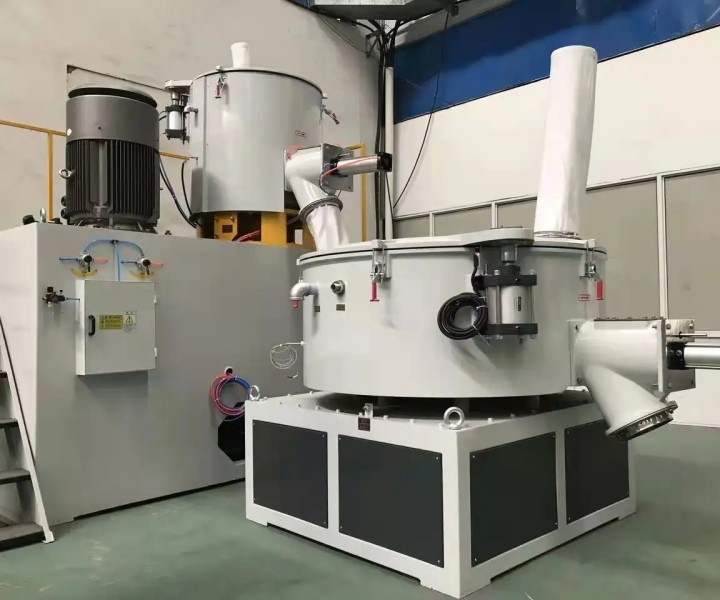
PVC product production: such as the preparation process of PVC pipes, PVC sheets, PVC profiles, etc.
PVC composite material production: The process of mixing PVC resin with other materialsto prepare PVC composite materials.
PVC granule preparation: Mix PVC resin with additives to form a uniform PVC mixture, providing high-quality raw materials for subsequent melt extrusion.
The main function of the PVC plastic high speed mixer is to uniformly mix PVC resin and other additives to ensure the uniform distribution of various components in the PVC mixture.
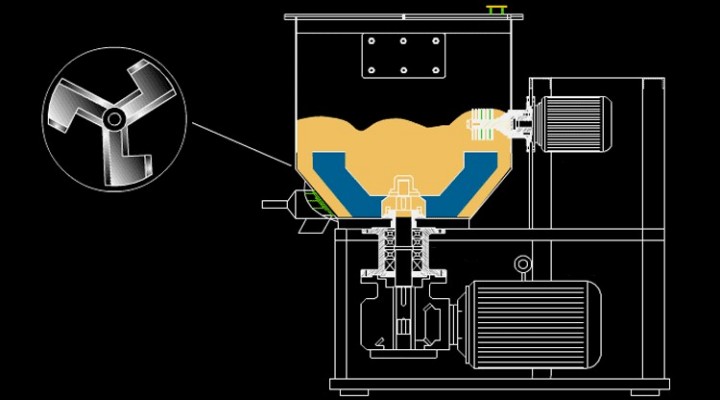
Improve mixing efficiency: Through the action of the high-speed rotating agitator, plastics with different components can be quickly and evenly mixed together.
Improve product quality: through uniform mixing, ensure the uniform distribution of various ingredients in the PVC mixture, thereby improving the physical properties and appearance quality of the final product.
Improve production efficiency: plastic high speed mixer can efficiently complete the mixing process, improve production efficiency, and reduce production costs.
There are many types of PVC plastics. The physical and chemical properties, processing performance and requirements for mixed materials of different types of PVC plastics are different, so when choosing a mixer, you need to choose according to the specific situation.
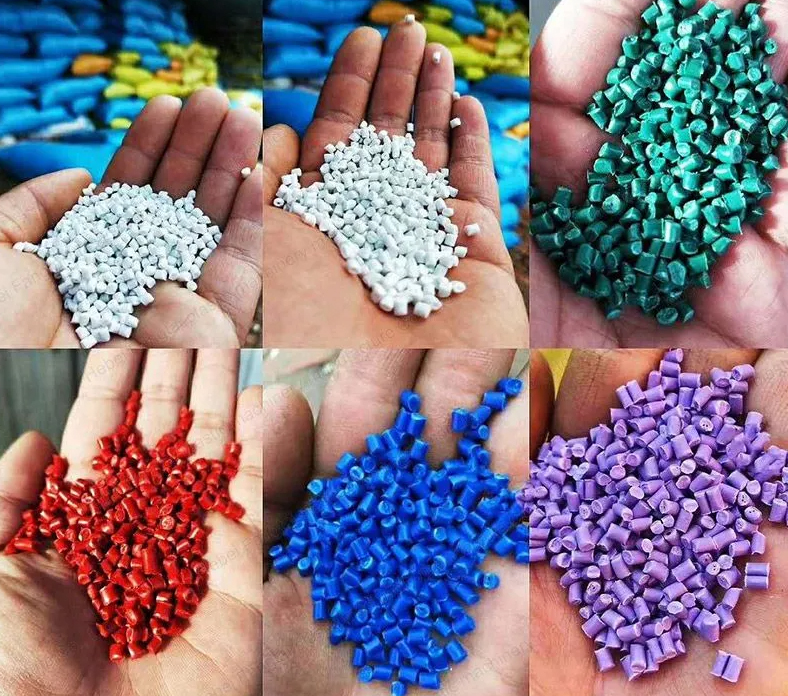
Hard PVC: High hardness, high strength, good weather resistance, but narrow processing temperature range and poor thermal stability. It is recommended to choose a high-speed hot mixer + low-speed cold mixer. The high-speed hot mixer can quickly heat the material to the plasticizing temperature, shorten the mixing time and reduce thermal decomposition. The low-speed cold mixer can effectively cool the mixture to prevent agglomeration and improve fluidity.
Soft PVC : Soft, elastic, easy to process, but high in plasticizer content and relatively good thermal stability. You can choose a high-speed hot mixer, which can quickly mix the plasticizer with PVC resin and improve mixing efficiency.
Chlorinated PVC : Excellent heat resistance, corrosion resistance, and flame retardancy, but difficult to process and high melt viscosity. You can choose a high-speed hot mixer + a low-speed cold mixer. The high-speed hot mixer can provide stronger shear force to promote the plasticization of CPVC resin, and the low-speed cold mixer can effectively reduce the temperature of the mixture to prevent agglomeration.
PVC Paste Resin: Fine particles, easy to form a paste, used in the production of artificial leather, wallpaper, etc. You can choose a mixer with good sealing to prevent paste leakage.
Dahan Machinery is a professional PVC plastic high-speed mixer manufacturer integrating R&D, production, sales and service. We have many years of industry experience and technical accumulation, and are committed to providing customers with efficient, stable and durable mixing equipment to help PVC plastic products companies improve production efficiency and product quality.
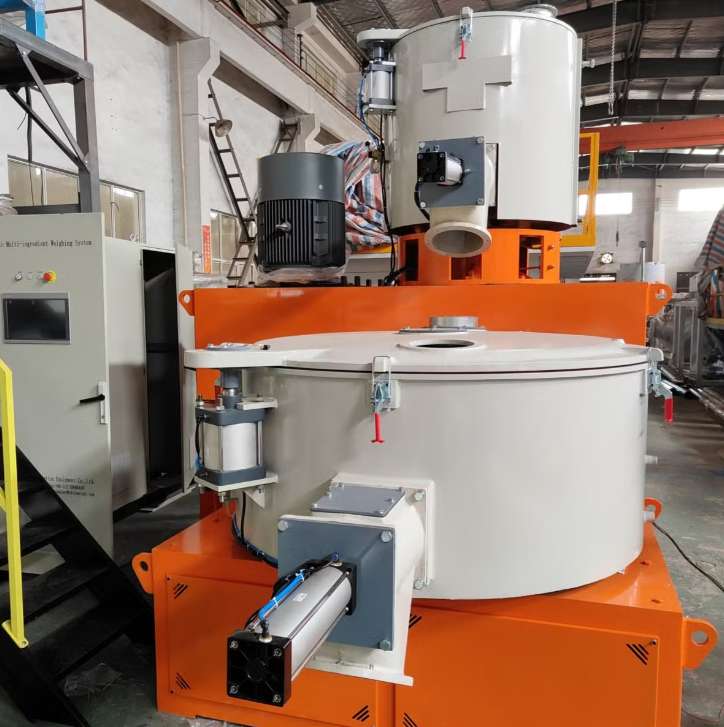
Our advantages
Advanced technology: Using advanced mixing technology and manufacturing processes to ensure excellent equipment performance, high mixing uniformity and good plasticization effect.
High-quality materials: Key components are made of high-quality alloy steel and wear-resistant materials, which are durable and have a long service life.
Customized service: Provide customized services according to customer needs to meet the special requirements of different materials and processes.
Perfect after-sales: Provide perfect after-sales service, including equipment installation and commissioning, operation training, repair and maintenance, etc., to ensure that customers have no worries.
Our customers
Our products are widely used in PVC pipes, profiles, plates, films, cable materials and other fields, and are deeply trusted and praised by domestic and foreign customers.
If you are looking for a reliable PVC plastic high-speed mixer supplier, please feel free to contact us. We will wholeheartedly provide you with quality products and services!
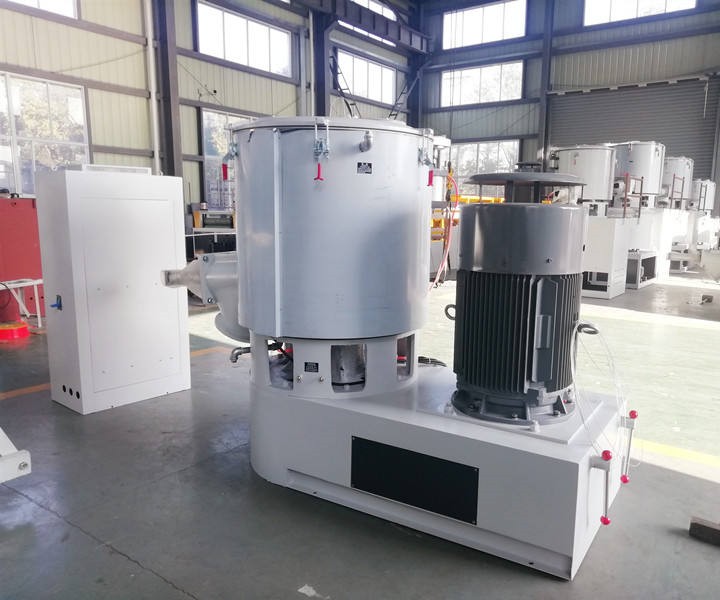
PVC plastic high speed mixer uniformly mixes PVC resin and other additives through a high-speed rotating mixer to improve the quality and consistency of PVC mixtures. It is widely used in the fields of PVC product production, PVC composite material preparation and PVC granule preparation.


Address:China,Yanjin county forest park gate to the west 1000 meters north road.


 Online Chat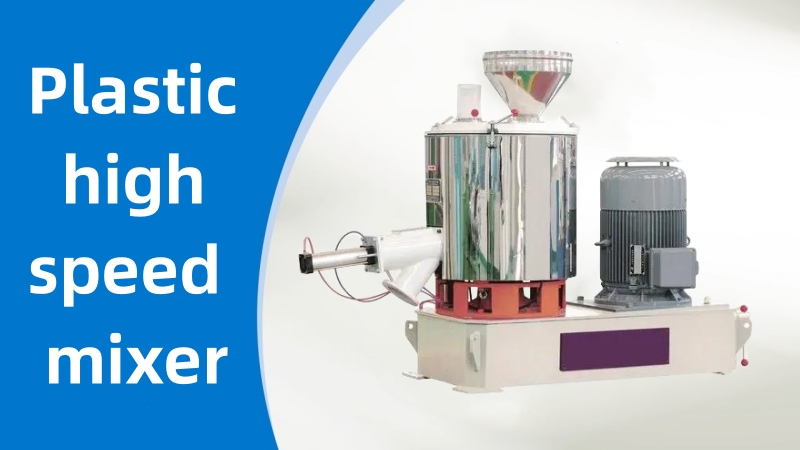
 Email
Email