


A new die that won't discharge, clogging within two weeks, or the same batch producing pellets one day and powder the next—these problems often stem not from the equipment itself, but from the die selection of the Feed Pellet Machine.
The die is the core consumable component, enduring high compression pressure and continuous friction wear. Choose the right die, and your production line runs stably with manageable energy consumption and uniform pellets. Choose the wrong one, and clogging, low output, and frequent downtime become daily headaches.
This guide covers five key dimensions: how to choose between flat and ring dies for your machine, which material better suits your raw materials, how to match hole diameter and compression ratio, how routine maintenance extends die service life, and common mistakes to avoid. Based on your raw material characteristics and production targets, you will find practical criteria for selecting the right die specifications.
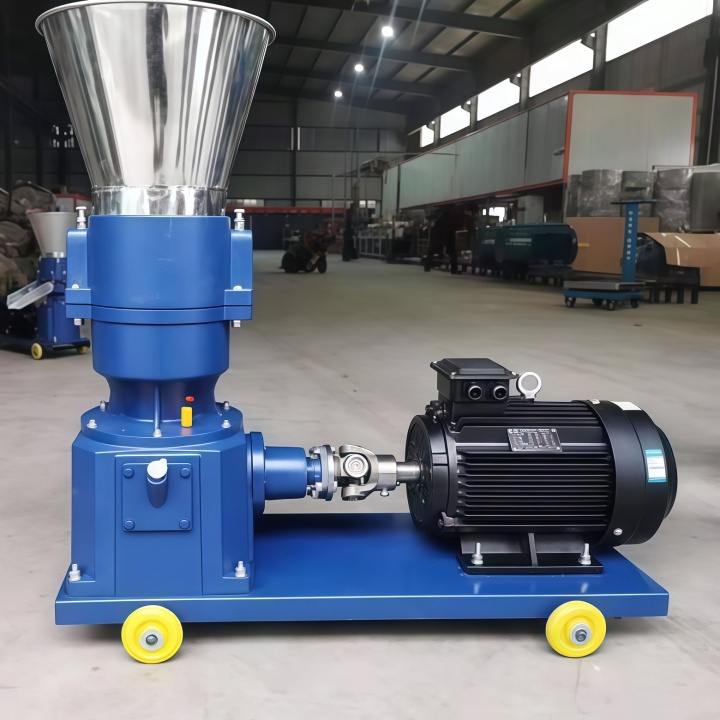
Before discussing specific parameters, three things must be done. Skipping these steps means any selection decisions are built on a faulty foundation.
First, remove the old die and measure the bolt hole spacing and locating pilot diameter on the mounting flange. Die mounting dimensions are not interchangeable across different brands—confirm these numbers before purchasing.
Second, record the hole diameter and compression ratio of the old die as a baseline reference. Also examine the wear pattern—uniform or uneven wear—as this can reveal other equipment issues.
Third, take a 500-gram sample of raw material and measure its moisture content. If moisture exceeds 16%, no die will prevent clogging—adjust the conditioning system first, not the die.
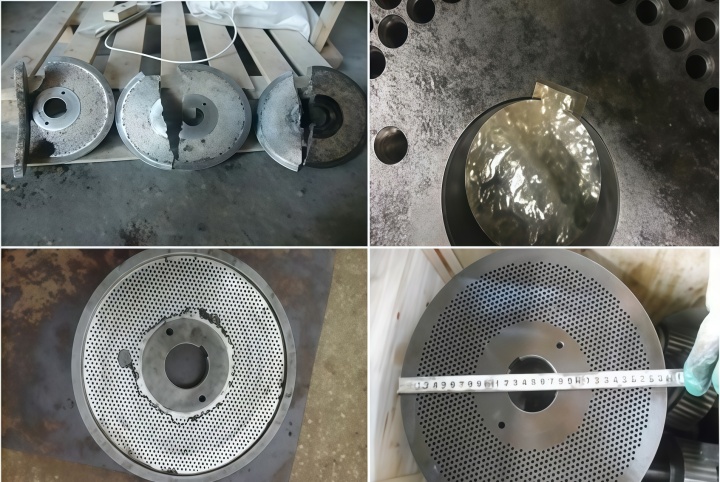
Dies are classified into two main structural types—flat die and ring die—each suited to different production scenarios.
A flat die is a horizontally positioned perforated steel plate, with rollers pressing material downward through the holes. This mechanism suits high-fiber, poor-flowability raw materials, since material falls into the die holes by gravity without forced feeding. Typical output ranges from 50 to 500 kg per hour, ideal for small-scale production or frequent formula changes.
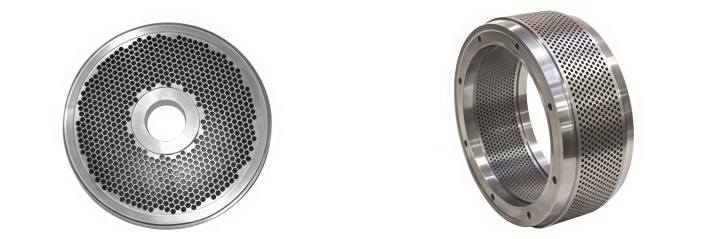
A ring die is a vertically rotating ring with internal rollers pressing material outward through radial holes. Material is evenly distributed across the inner die wall by centrifugal force. This forced feeding enables a ring die Feed Pellet Machine to achieve outputs of 1 to 20 tons per hour. In terms of Pellet Durability Index (PDI), ring die machines typically exceed 95%, while flat die machines achieve 85% to 90%. Ring die systems are standard for commercial feed mills producing over 10,000 tons per year.
For outputs under 500 kg per hour, choose a flat die—lower initial investment and simpler operation. For continuous high-volume production, choose a ring die machine—higher output and lower long-term operating costs.
Die material is a critical factor affecting service life and operating costs. Mainstream materials fall into alloy steel and stainless steel, with significant differences in hardness and application suitability.
Alloy steel dies offer good toughness and high strength, suitable for most conventional feed production. Common grades include 20CrMnTi and GCr15. 20CrMnTi, after vacuum carburizing, achieves surface hardness of HRC 58 to 62 with core hardness of HRC 45 to 50, ideal for high-wear applications. Under normal conditions, expected service life ranges from 1,500 to 2,500 hours. GCr15 bearing steel has hardness of HRC 52 to 58, offering better cost efficiency for moderate wear scenarios.
Stainless steel dies, represented by grade 440C, contain approximately 17% chromium with hardness of HRC 52 to 56. 440C offers good corrosion resistance, performing stably across a pH range of 3 to 9, suitable for acidic or high-moisture formulations such as fish feed. Stainless steel is also preferred for applications requiring frequent washdowns.
Cheap carbon steel dies may last only 300 to 500 hours in acidic environments—far shorter than quality alloy steel. When selecting die material, consider raw material chemical properties, expected runtime, and replacement frequency holistically.
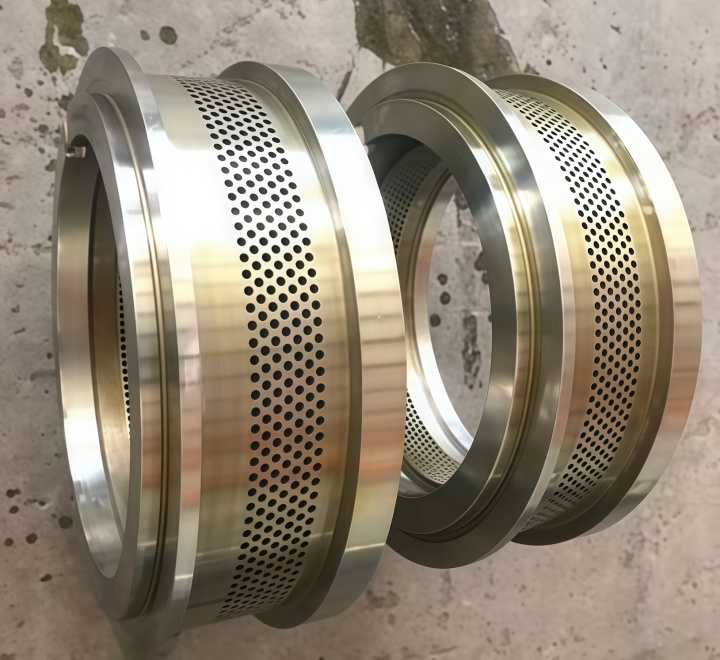
Hole diameter and compression ratio are two core parameters affecting pellet quality, and must be matched to raw material properties and finished product requirements.
Hole diameter directly determines final pellet size. Recommended hole diameters for different feed types:
| Feed Type | Recommended Hole Diameter |
| Chick starter | 1.5 − 2.0 mm |
| Poultry grower | 3.0 − 4.0 mm |
| Piglet feed | 2.5 − 3.0 mm |
| Finishing pig feed | 3.5 − 4.5 mm |
| Cattle/sheep feed | 4.0 − 6.0 mm |
| Aquatic sinking feed | 2.0 − 3.0 mm |
| Shrimp feed | 1.0 − 2.0 mm |
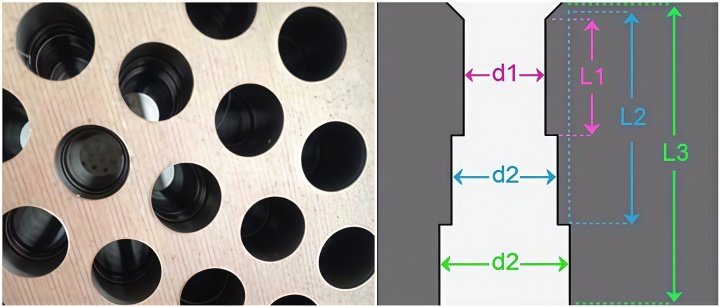
Compression ratio (L:D) measures the ratio of effective compression length to hole diameter. For every 1-unit increase, pellet density and water stability improve—but at the cost of higher motor current and die temperature. Excessive resistance can even cause die cracking. Recommended compression ratios:
| Feed Type | Recommended Compression Ratio |
| Poultry feed | 1:10 − 1:14 |
| Aquatic feed | 1:12 − 1:16 |
| Livestock feed | 1:8 − 1:12 |
| Forage/straw roughage | 1:4 − 1:6 |
Aquatic feed requires high water stability, with some shrimp feed compression ratios reaching 1:20 to 1:35. High-fiber, low-binder raw materials require larger hole diameters and lower compression ratios to prevent clogging. Die selection involves balancing pellet quality against production efficiency. Before finalizing, confirm your equipment model and die mounting dimensions to avoid purchasing an incompatible die.
Regularly maintained dies deliver extended service life, while neglected maintenance leads to premature failure. Extending die life requires attention to five areas: break-in, wear monitoring, particle size control, roller-to-die clearance, and shutdown preservation.
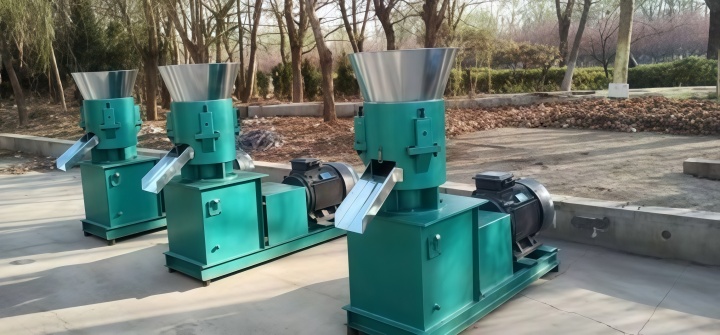
Proper break-in procedure: New dies have smooth inner walls and require a gradual ramp-up with an oil-rich formula to naturally polish the hole walls. A mixture of vegetable oil and meal at 10% to 15% ratio is typically used. This prevents pellet adhesion and clogging while creating a durable extrusion surface.
Regular wear monitoring: Inspect the die face and hole geometry periodically. Uneven wear indicates poor material distribution or foreign objects entering the system. When hole diameter increases by more than 0.5 mm due to wear, replacement should be considered.
Consistent grind particle size: Oversized or inconsistent particles create uneven pressure, accelerating localized wear. Maintain uniform particle size in the feed entering the equipment.
Roller-to-die clearance: Ring die roller-to-die clearance should be maintained at 0.1 to 0.3 mm. Excessive clearance reduces extrusion efficiency, while insufficient clearance accelerates wear on both components.
Shutdown preservation and rust prevention: Before each shutdown, flush die holes with non-corrosive lubricating oil to remove residual material. For shutdowns exceeding one week, disassemble the die and store it sealed separately, checking periodically for rust. If stored for more than six months, replace the rust-preventive filling in the die holes.
Users often fall into several typical traps due to inexperience, leading to unstable operation and shortened die life. Avoiding these mistakes requires comprehensive assessment across raw material properties, equipment condition, and die parameters.
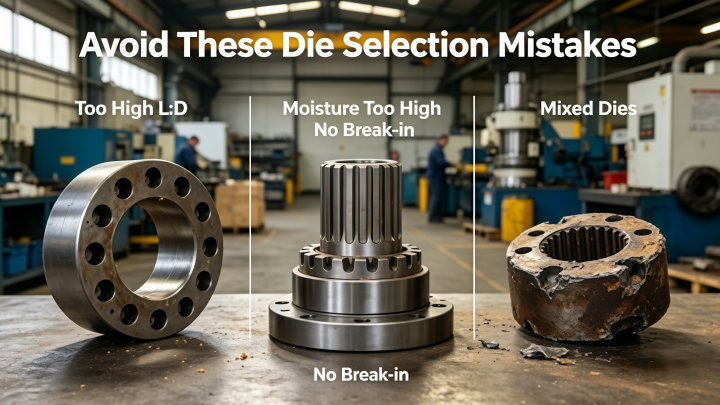
Mistake 1: Over-pursuing high compression ratios. Excessively high ratios overload equipment and accelerate wear. Match the ratio to your specific raw material rather than choosing the upper end of the range.
Mistake 2: Neglecting raw material conditioning. Improper moisture or inconsistent grind size are the most common causes of clogging. Moisture should be controlled between 13% and 16%.
Mistake 3: Skipping the break-in phase. Running a new die at full load immediately leads to clogging and premature wear.
Mistake 4: Mixing different die specifications. Never mix dies with different hole diameters or compression ratios on the same machine. When replacing, use a die with identical hole diameter, compression ratio, and mounting pattern.
Q: How do I choose the right compression ratio for my Feed Pellet Machine?
Match the ratio to your raw material. Poultry feed works well at 1:10 to 1:14, aquatic feed requires 1:12 to 1:16, and high-fiber ingredients need lower ratios around 1:4 to 1:6 to prevent clogging.
Q: Why does a new Feed Pellet Machine die fail to discharge pellets initially?
New dies have smooth inner walls lacking the friction needed to grip material. Run an oil-rich formula at reduced speed for 2 to 4 hours to complete natural polishing and break-in.
Q: What causes frequent clogging on my Feed Pellet Machine?
Clogging typically results from improper moisture content or unstable steam quality. Maintaining moisture between 13% and 16% effectively prevents most blockages.
Q: How long does a ring die for a Feed Pellet Machine typically last?
Under normal operating conditions, a typical ring die lasts 800 to 1,200 hours. Replace the die when the hole diameter increases by more than 0.5 mm due to wear.
Q: The old die works fine but the new one clogs on my Feed Pellet Machine—why?
New die holes have smoother inner walls with less friction than a broken-in old die. This is normal—run the new die at reduced speed with an oil-rich formula for 2 to 4 hours to complete break-in.
Q: Why is the outer side of my Feed Pellet Machine die more worn than the inner side?
This indicates uneven material distribution across the die face, with one side of the rollers bearing consistently higher pressure. Check the scraper angle and material feed position rather than immediately replacing the die.
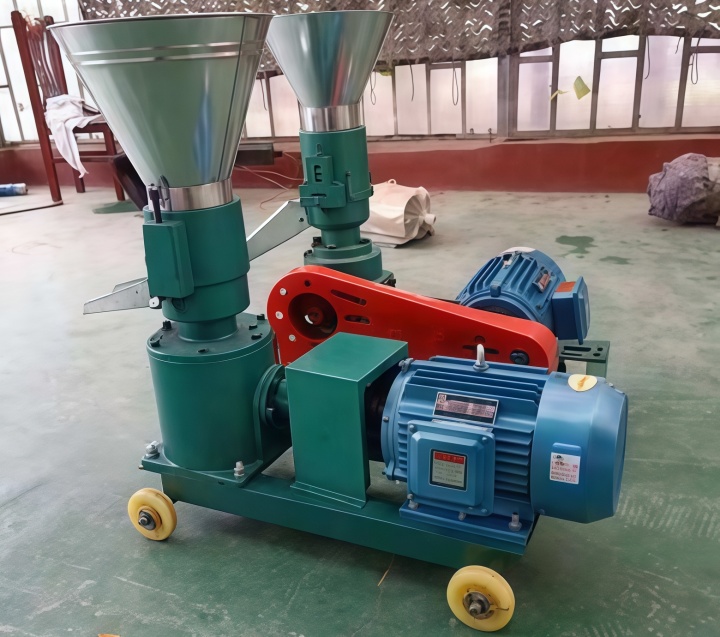
Die selection is not a one-time decision but an ongoing process requiring adjustment based on changing raw materials, production targets, and equipment condition.
From die type and material selection to hole diameter and compression ratio matching, and on to routine maintenance—each step affects operating costs and pellet quality. Understanding these core elements and avoiding common mistakes will help your equipment deliver its full value.
If you encounter specific challenges in your die selection process or need recommendations for particular feed formulations, further discussion is welcome.


Address:China,Yanjin county forest park gate to the west 1000 meters north road.


 Online Chat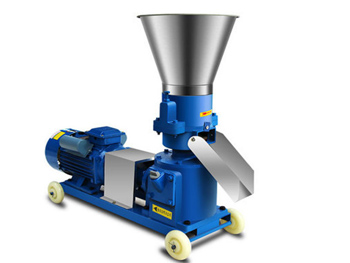
 Email
Email