Feed Pellet Machine
The Ultimate Guide to Feed Pellet Machine: Boost Your Farm's Productivity
By Dahan Mixer Technical Team | Updated: August 3, 2026
Are you tired of wasted feed, uneven nutrition, and high storage costs on your farm? The solution might be simpler than you think. A feed pellet machine is the cornerstone of modern, efficient animal husbandry. This comprehensive guide will walk you through everything you need to know about this transformative equipment, from its basic working principles to advanced selection criteria, helping you make an informed investment for your business.
What is a Feed Pellet Machine and Why Does It Matter?
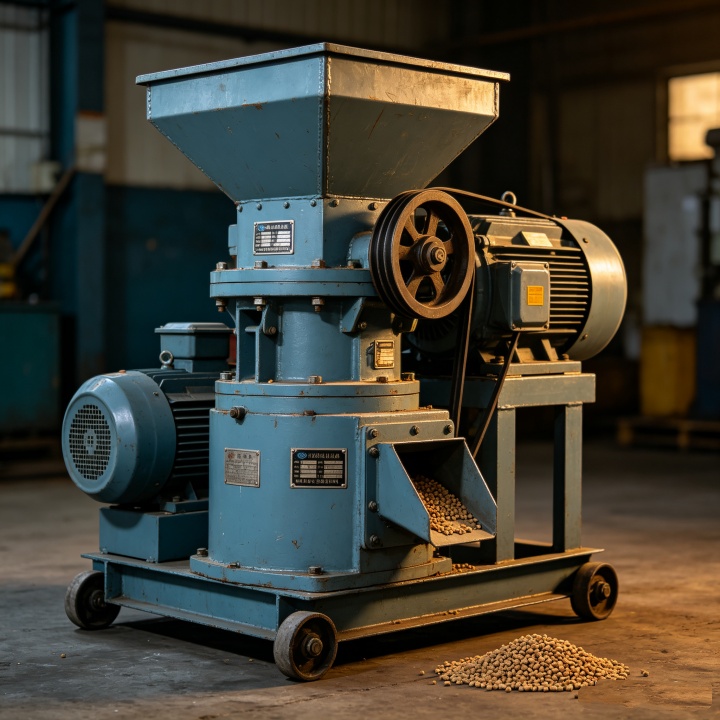
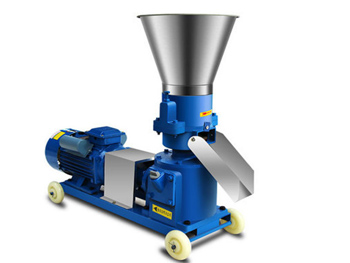
A feed pellet machine, also known as a pellet press or feed mill, is a mechanical device that compresses powdered raw materials—such as corn, soybean meal, grass, and straw—into dense, cylindrical pellets. This process, called pelleting, does more than just change the physical form of the feed. It fundamentally improves its nutritional value and handling characteristics.
In today's competitive agricultural landscape, relying on loose mash feed is no longer sustainable. Pelletized feed offers superior benefits:
-
Enhanced Nutrient Utilization: The pelleting process involves heat, moisture, and pressure, which gelatinizes starches and makes proteins more digestible. Animals absorb more nutrients from less feed.
-
Reduced Feed Waste: Pellets are uniform and compact, minimizing sorting, spoilage, and wastage caused by wind or birds.
-
Improved Feed Safety: High temperatures during conditioning can kill harmful bacteria like Salmonella, ensuring safer feed for your livestock.
-
Logistical Efficiency: Pellets have higher bulk density, reducing storage space and transportation costs by up to 30% compared to loose feed.
Exploring the Types of Feed Pellet Machines: Which is Right for You?
Choosing the right type depends on your farm size, location, and power accessibility. We break down the three main categories.
Electric Feed Pellet Machine
Ideal for indoor, stationary operations with reliable electricity.
-
Advantages: Lower operating noise, consistent performance, minimal maintenance, and very cost-effective for small to medium-scale farms (e.g., poultry, rabbit, or pig farms).
-
Best For: Processing small batches of 60-300 kg/h, perfect for family farms or small feed processing workshops.
Diesel Feed Pellet Machine
The workhorse for off-grid or large-scale production.
-
Advantages: High power output, capable of handling continuous heavy-duty operation with capacities up to 800 kg/h. Independent of the power grid, making it suitable for remote areas.
-
Best For: Large farms, commercial feed plants, or areas with unstable electricity supply.
Gasoline Feed Pellet Machine
The portable solution for flexibility and small-scale needs.
-
Advantages: Compact, lightweight, and easy to move between different locations on a farm. Lower initial investment.
-
Best For: Small farms, homesteads, or emergency use where mobility is key.
Inside the Process: How Does a Feed Pellet Machine Work?
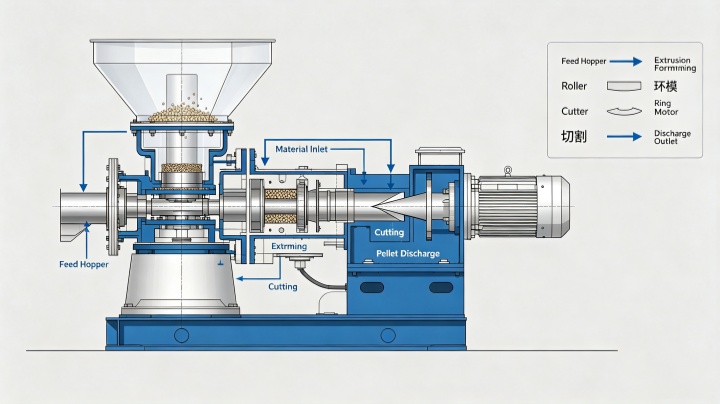
Understanding the mechanics helps in proper operation and troubleshooting. The process can be broken down into two primary stages:
-
Extrusion & Compression: Raw materials are fed into the conditioning chamber where steam or water may be added to achieve optimal moisture (12-20%). The conditioned material is then forced through the die by rotating rollers. The intense pressure generates friction and heat, causing the natural lignin in the material to act as a binding agent.
-
Cutting & Cooling: As the compressed material exits the die in a continuous column, a rotating knife cuts it into predetermined pellet lengths (usually 5-50mm). The hot, moist pellets are then transported to a cooler, where they are dried and hardened, ensuring they maintain their shape during storage and handling.
Diverse Applications: Beyond Just Poultry and Livestock
While commonly associated with farming, the versatility of a feed pellet machine extends to various industries.
-
Poultry Farms: Produce uniform chicken, duck, and goose feed for all growth stages.
-
Livestock Farms: Create high-density cattle, pig, and sheep feed, tailored for fattening or maintenance.
-
Aquaculture: Manufacture water-stable fish, shrimp, and crab feed that floats or sinks as required.
-
Pet Food Industry: Formulate premium, customized dog, cat, and rabbit food.
-
Biomass Energy: Pelletize agricultural waste (straw, husks, wood chips) into a clean, high-calorific-value biofuel for heating or power generation.
How to Choose the Perfect Feed Pellet Machine: A 5-Step Checklist
Selecting the right equipment is an investment. Follow this framework to make a confident choice.
Step 1: Determine Your Output Capacity
Calculate your total feed requirement per hour or day. Small farms may need 60-200 kg/h, while commercial plants will require 400-800 kg/h or more.
Step 2: Analyze Your Raw Materials
The density and fiber content of your primary ingredients matter. Corn and grains are easier to pelletize than high-fiber materials like straw or hay, which may require a machine with a higher compression ratio.
Step 3: Select the Right Pellet Diameter
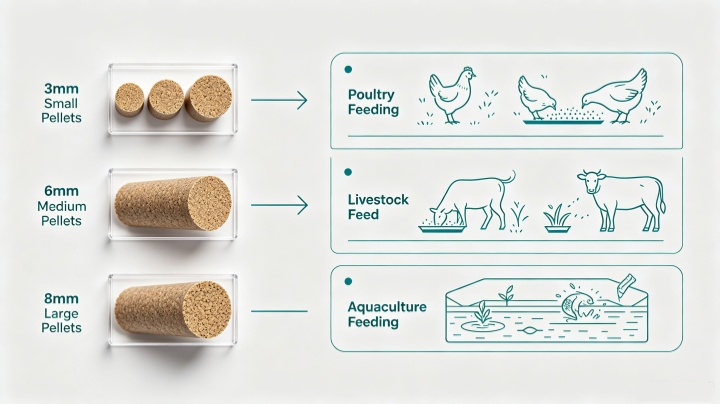
This is critical for animal performance.
-
3mm-5mm: For young poultry, piglets, and small pets.
-
6mm-8mm: For growing pigs, beef cattle, and adult poultry.
-
8mm+: For large adult ruminants like dairy cows and horses.
Step 4: Evaluate the Roller Configuration
-
Double Roller: Suitable for soft materials and lower output.
-
Triple or Four Roller: Provides higher production efficiency, better pellet quality, and is ideal for hard, high-fiber materials. More rollers mean a more uniform compression force.
Step 5: Consider Material of Construction
-
Carbon Steel: Cost-effective, durable, and perfect for standard feed processing.
-
Stainless Steel: Corrosion-resistant and hygienic, essential for moist or acidic materials like fish meal or for meeting strict sanitary standards in pet food production.
Maximize Machine Lifespan: Essential Maintenance Tips
Proper care ensures your feed pellet machine operates efficiently for years.
-
Regular Lubrication: Grease gears and bearings regularly to prevent wear.
-
Monitor Material Moisture: Always check moisture content before operation. Too dry (<12%) and pellets fall apart; too wet (>20%) and you risk clogging the die.
-
Periodic Die and Roller Inspection: These are wear parts. Replace them when the roller shell is worn or the die holes are enlarged to maintain pellet quality.
-
Clean After Use: Run a small amount of oilseed meal through the machine after each session to lubricate and clear the die, preventing corrosion.
Why Choose Dahan as Your Feed Pellet Machine Manufacturer?
With years of expertise in feed processing equipment, Dahan is a name trusted by farms and plants worldwide. We don't just sell machines; we provide complete solutions. Our range, from the compact ZLSP 120B to the high-capacity ZLSP 300B, is built with premium core components (gears and motors) and rigorously tested for quality.
We offer flexible customization (voltage, dimensions, die size) to meet your unique operational needs. Backed by a commitment to free shipping, timely delivery, and responsive after-sales support, we make investing in quality equipment seamless and secure.
Ready to elevate your feed production? Contact our team today for a personalized consultation and a quote tailored to your farm's requirements.


 Online Chat
 Email
Email