


Double ribbon mixer employs a unique reverse dual-belt three-dimensional mixing technology. It is engineered for high-efficiency blending of powders, granules, and pastes with viscosities exceeding 50,000 cP. From 50-liter lab models to 20-ton production lines, our double ribbon blenders deliver 30% higher efficiency and lower energy consumption than standard paddle or single-ribbon mixers, making them the ideal choice for chemical, pharmaceutical, and food processing applications.
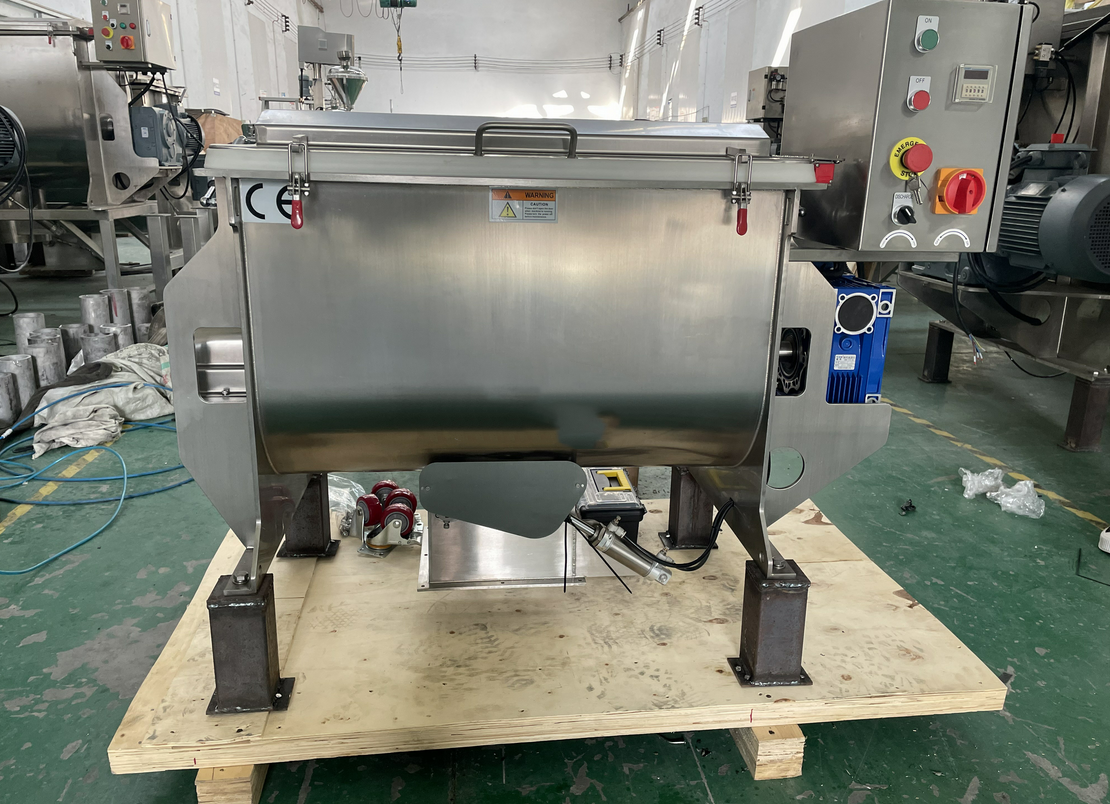
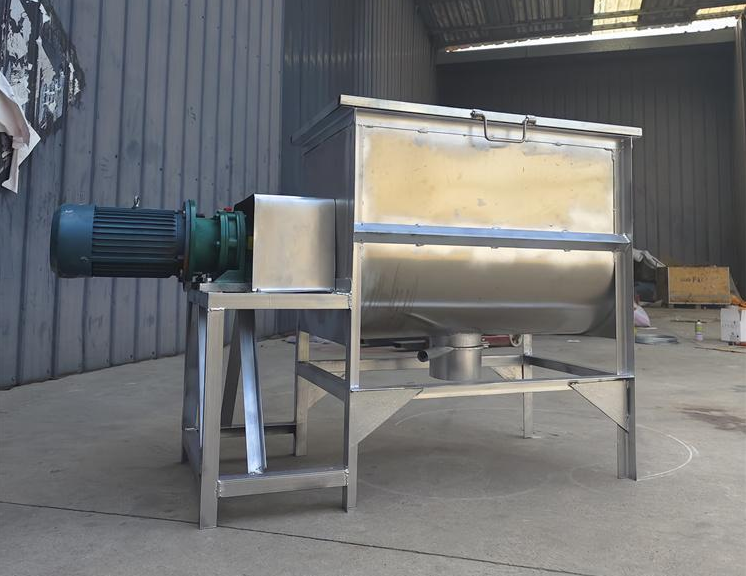
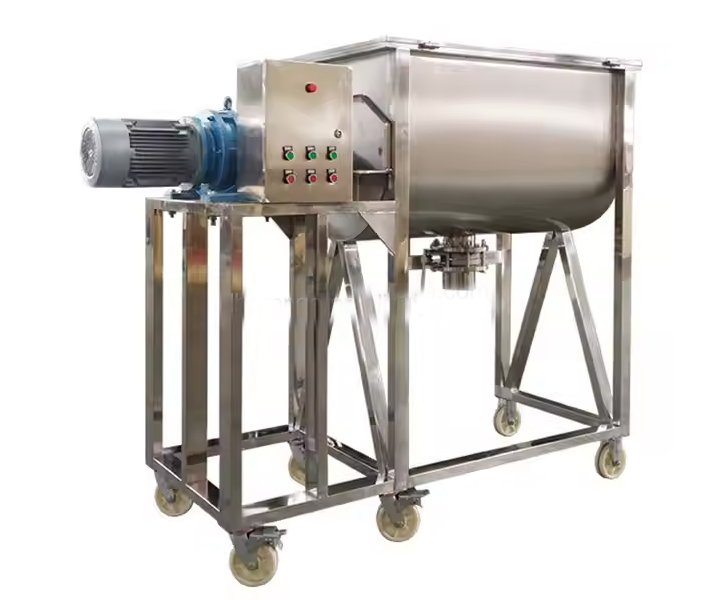
Double-ribbon mixers are divided into vertical and horizontal types. The vertical type takes up little space and is suitable for laboratories or small batch production; the horizontal type is a common type, with a U-shaped barrel and double-ribbon reverse rotation.
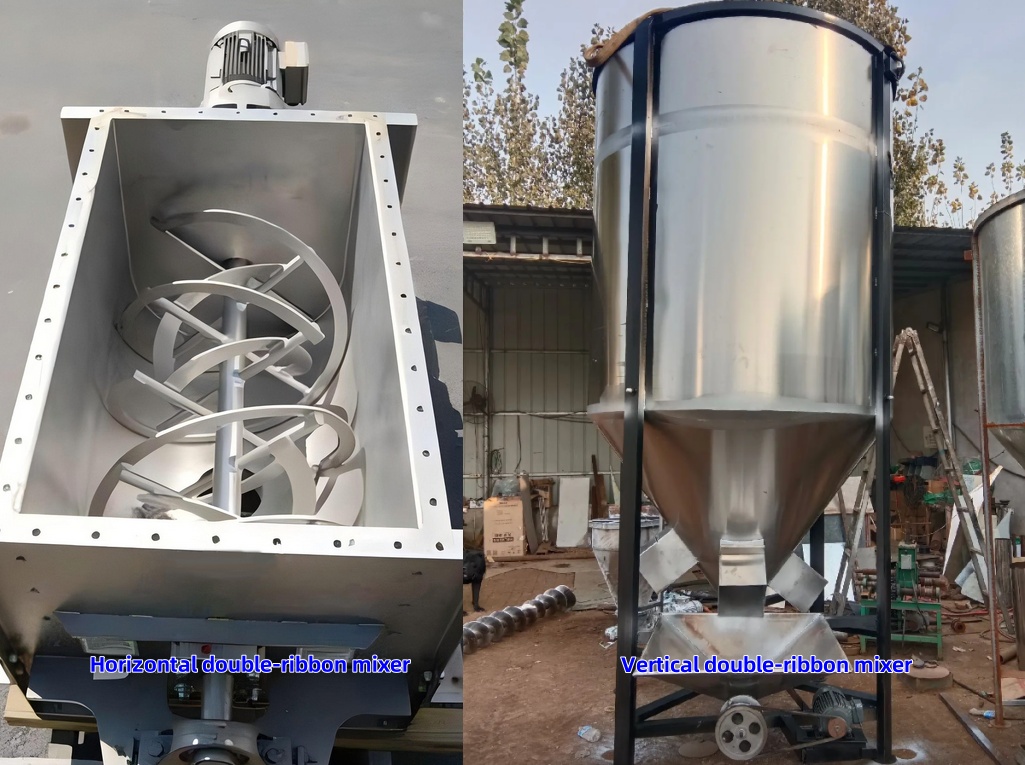
Vertical double-ribbon mixer: The vertical design is compact and occupies a small area, which is suitable for laboratories or small and medium-sized production lines with limited space (capacity 50L-2 tons). The material circulates vertically through the central spiral lifter, and the mixing time is 5-10 minutes. It is especially suitable for light powders (such as milk powder, medicine powder) and fragile particles that need gentle handling.
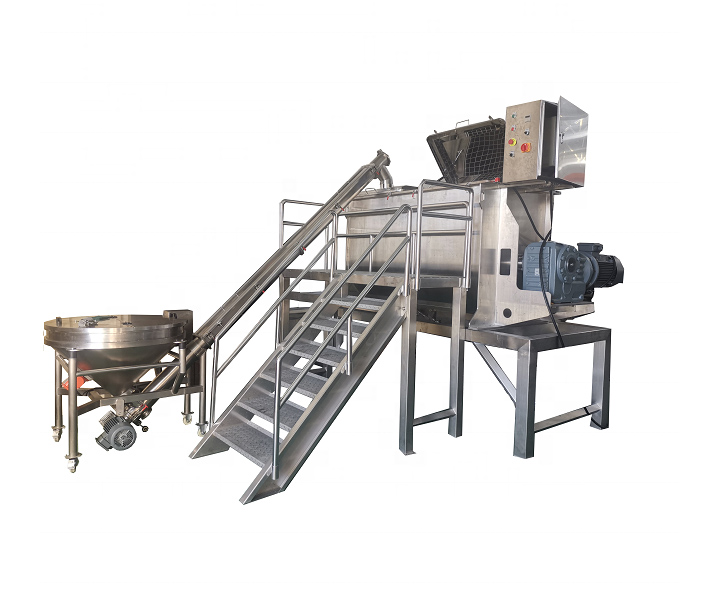
Horizontal double-ribbon mixer: The horizontal structure has a large processing capacity (1-20 tons), and the double-ribbon reverse rotation forms a three-dimensional mixing, which is suitable for industrial continuous production. The outer ribbon promotes the axial movement of the material, and the inner ribbon reverses the shearing, and the mixing efficiency is 30% higher than that of the vertical type, which is suitable for high-viscosity pastes or high-density materials.
The advantages of double-ribbon mixer are significant: the double-ribbon reverse rotation forms a three-dimensional mixing field, which can handle complex materials such as high viscosity and multi-components with high efficiency.
Low energy consumption and high output: The continuous pushing action of the ribbon blades reduces the ineffective friction between the material and the equipment. Under the same mixing effect, the unit volume power consumption of the double-ribbon mixer is 30% lower than that of the paddle mixer, and the single batch processing time is shortened by 20%-50%.
Mixing effect without dead angles: The double-ribbon with scraper setting can effectively avoid uneven mixing of materials.
High mixing uniformity: Compared with a single ribbon, the double-ribbon can better and more fully mix different types of materials such as powders, slurries, and particles.
Can handle high-viscosity materials: For paste materials with a viscosity of more than 50,000 cP, the "scraping-pushing" mechanism of the double ribbon shows significant advantages.
The working principle of a double ribbon mixer revolves around efficient 3D mixing. The outer ribbon pushes material in one axial direction, while the inner ribbon reverses and shears it. This action generates a complex three-dimensional flow:
This process results in a highly uniform mixture (CV≤1.5% for most materials) in just 5-15 minutes per batch, significantly reducing processing time.
>
The double ribbon mixer is suitable for high-viscosity materials, multi-component complex systems, materials with large differences in density and particle size, highly abrasive materials and liquid-solid mixing systems.
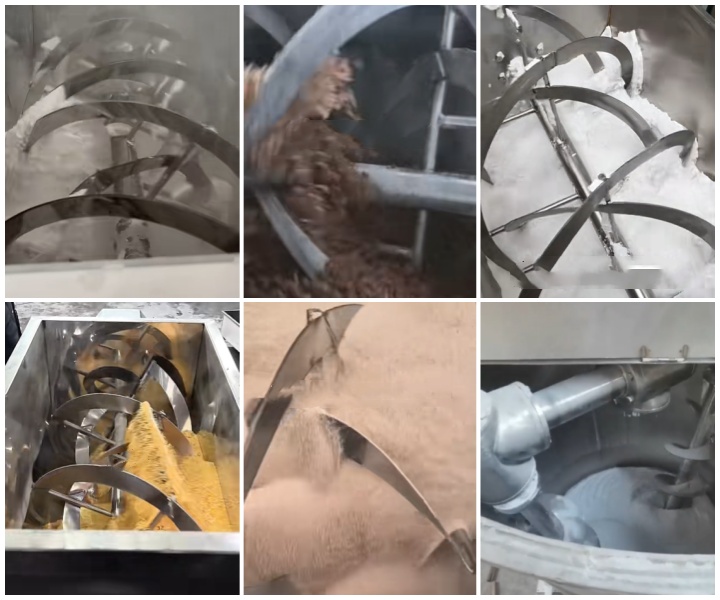
Our industrial ribbon blenders are trusted across multiple sectors for their reliability and precision. Key applications include:
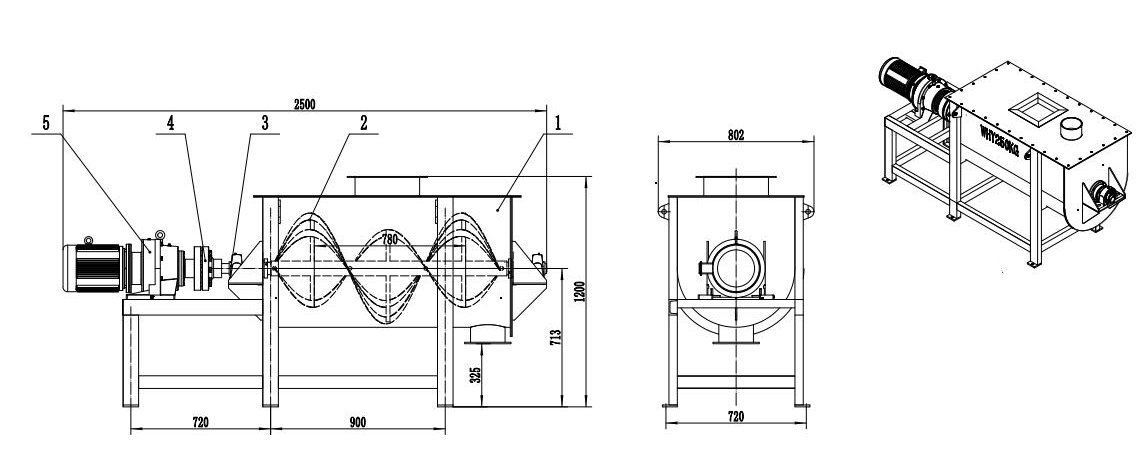
| Model | LHY-0.25 | LHY-0.5 | LHY-1 | LHY-1.5 | LHY-2 | LHY-3 | LHY-4 | LHY-6 | LHY-8 | LHY-10 |
| One-time mixing (kg) | 100-150 | 200-300 | 400-600 | 600-900 | 800-1000 | 1200-1800 | 1600-2400 | 2400-3600 | 3200-4800 | 4000-6000 |
| Mixing time (min) | 8-20 | 8-20 | 8-20 | 8-20 | 8-20 | 8-20 | 8-20 | 8-20 | 8-20 | 8-20 |
| Mixing speed (r/min) | 60 | 55 | 45 | 40 | 35 | 25 | 25 | 20 | 15 | 15 |
| Motor power (kw) | 3-5.5 | 4-11 | 7.5-15 | 11-18.5 | 15-22 | 18.5-30 | 22-37 | 37-55 | 37-55 | 45-75 |
| Weight (kg) | 500 | 900 | 1800 | 2500 | 3200 | 4100 | 5100 | 6300 | 7500 |
|
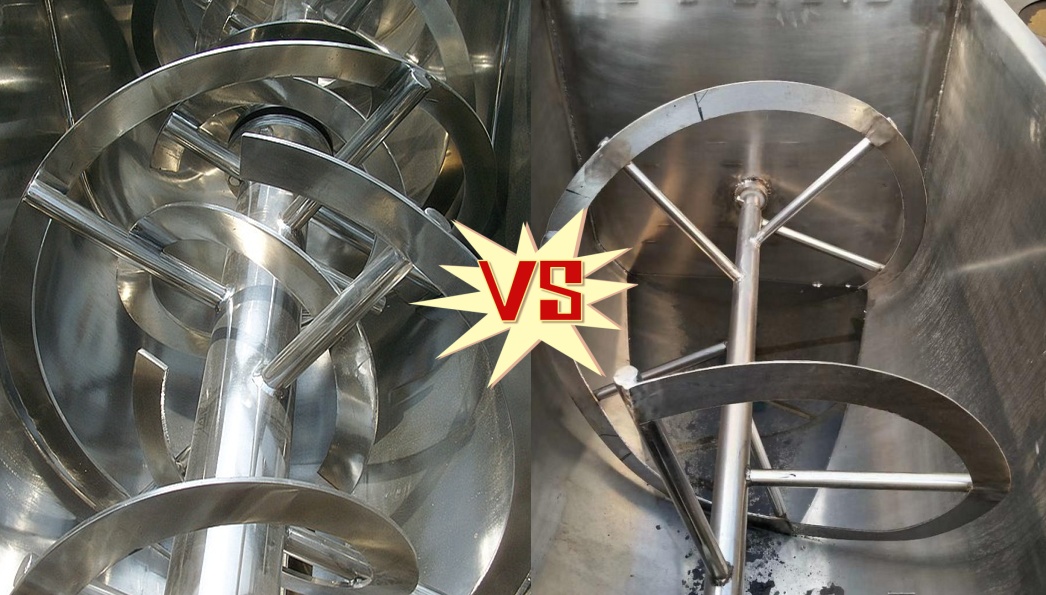
Comparison Dimension |
Double-Ribbon Blender |
Single-Ribbon Blender |
|
Structural Design |
Horizontal U-shaped cylinder with coaxial inner/outer reverse helical ribbons, forming 1:1.2-1:1.5 speed ratio difference |
Horizontal cylinder with single helical ribbon, relatively simple structure |
|
Working Principle |
Outer ribbon pushes materials, inner ribbon pulls back reversely, creating 3D mixing motion of "circular convection + cross-shearing" |
Mainly relies on single ribbon to drive axial material movement, with simpler mixing mode |
|
Mixing Uniformity |
For materials with density difference up to 3:1, uniformity reaches CV≤1.5%; excellent performance for large particle size differences |
Typically CV≤3% in uniformity, with relatively lower mixing effect and efficiency |
|
Mixing Efficiency |
Single cycle time: 20-40 seconds, short mixing time and high efficiency; case study shows 40% shorter mixing time than paddle blenders in chemical industry |
Relatively longer mixing time, lower efficiency |
|
Suitable Materials |
More suitable for high-viscosity, multi-component materials with large density/particle size differences, such as sealants and lithium battery cathode materials |
Suitable for materials with good fluidity, low mixing requirements, or single/few components |
|
Energy Consumption |
Unit power consumption: 0.8-1.2kWh/ton for dry mortar, 30% lower than gravity mixers; optimized hydrodynamic design ensures uniform torque |
Relatively higher energy consumption, possible power fluctuation during operation |
|
Equipment Cost |
Complex structure with higher manufacturing cost; long-term advantage in comprehensive cost due to high efficiency and extended maintenance cycle |
Simple structure with lower initial cost, but potential late-stage cost increase due to insufficient efficiency and durability |
With its unique "annular convection + cross shear" three-dimensional mixing structure, the double-screw ribbon mixer performs well in a variety of complex material mixing scenarios. The specific applicable material types and scenarios are as follows.
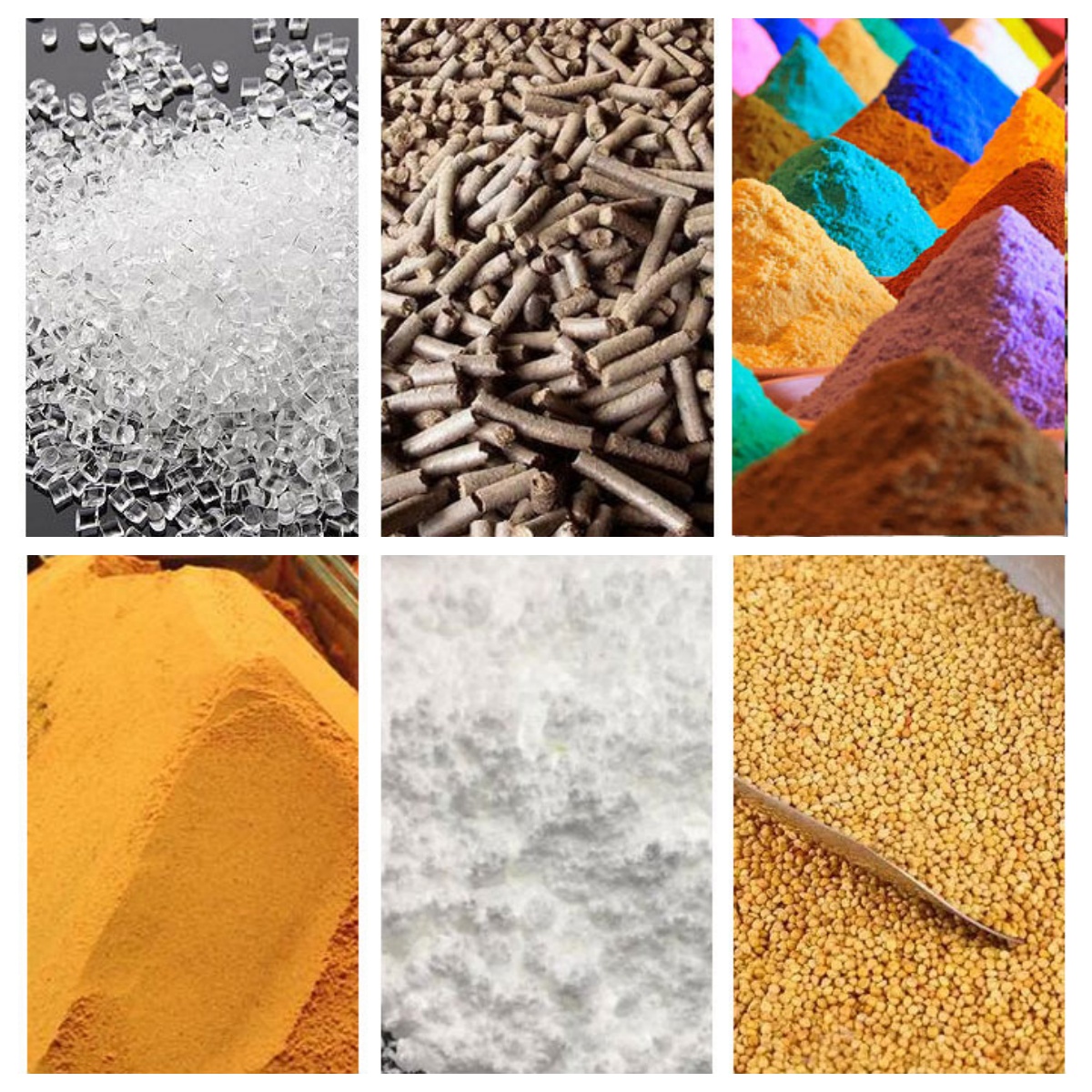
High-viscosity materials: Double-screw ribbon mixers are good at handling high-viscosity materials such as sealants and silicone rubber. The strong shear force generated by the reverse rotation of the inner and outer ribbons can effectively break the intermolecular forces and avoid material agglomeration.
Multi-component complex system: In response to the multi-component mixing needs of the chemical, pharmaceutical, and food industries, the double-ribbon mixer can quickly balance the distribution of each component with its three-dimensional mixing trajectory.
Materials with large density differences: For materials with significant density differences such as metal powders and plastic particles, positive and negative electrode materials of lithium batteries, the double-ribbon mixer pushes the outer ribbon and reversely shears the inner ribbon to form convection to offset the stratification phenomenon.
Materials with significant particle size differences: In the face of materials with large particle size differences such as nano-scale fillers and micron-scale matrixes, the cross-shear force of the double-ribbon mixer can both disperse and agglomerate fine particles and avoid excessive crushing of large particles.
Liquid-solid mixing system: In the process of liquid-solid mixing such as feed additives and moisture-proof agents, pesticide powders and additives, the double-ribbon mixer uses the movement of the ribbon to promote the liquid to evenly wrap the solid particles and prevent the liquid from agglomerating.
Combined with customer feedback and market needs, we have improved the mixing requirements in different aspects, and can be installed and upgraded according to the customer's mixing needs.
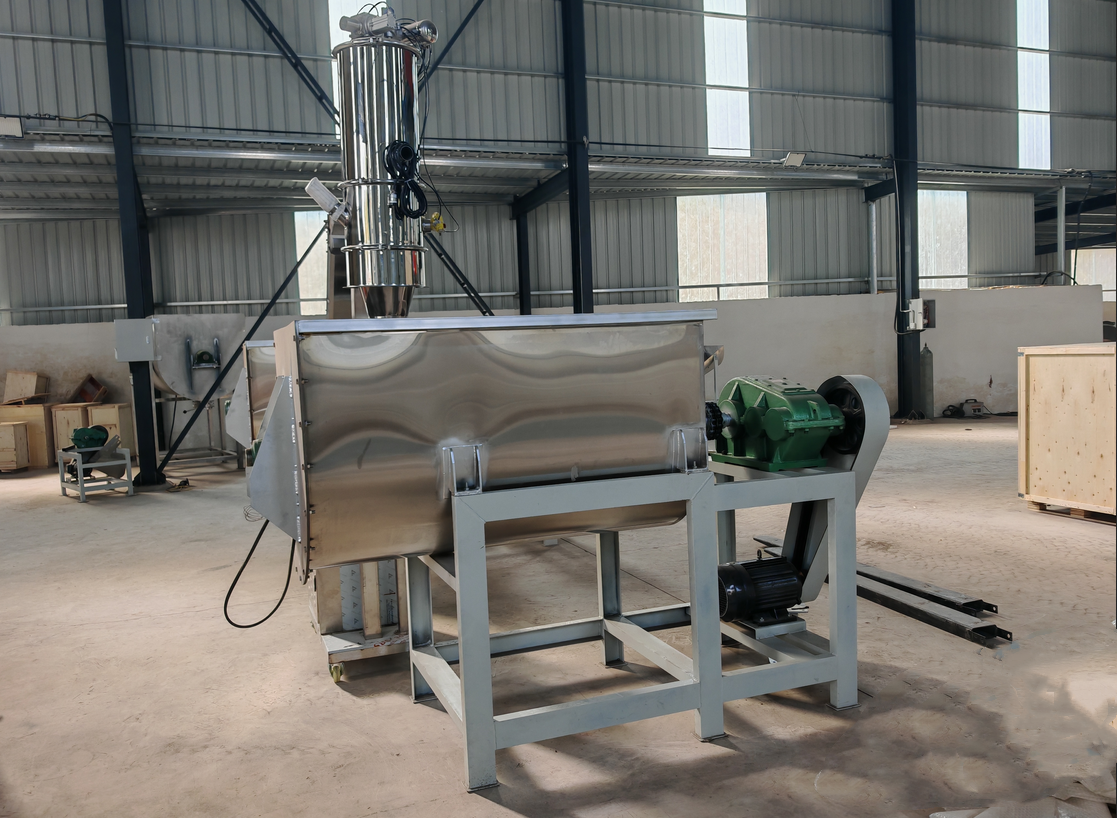
Material and heating system: The main body of the equipment adopts 304/316L stainless steel or carbon steel rubber lining process, which can withstand corrosive media with a pH value of 2-12. For heat-sensitive materials, electric heating or thermal oil jacket system can be selected, and the temperature difference can be controlled within ±2℃ through the PID temperature control module.
Drive and transmission optimization: The small-sized equipment adopts direct drive of the reducer, and the transmission efficiency reaches 98%; the large-sized equipment is equipped with a pulley buffer device, which automatically slips when overloaded by 150%.
Discharge system innovation: The pneumatic large-opening door structure is combined with a plum blossom-shaped offset valve to achieve a material emptying rate of more than 98%.
As a professional manufacturer of double-screw ribbon mixers with more than ten years of industry experience, Dahan Machinery has become the preferred supplier of more than 3,000 companies in more than 50 countries around the world with a number of patented technologies and ISO/CE/GMP full system certification. We provide a full range of vertical and horizontal twin-screw mixers from 50L to 20 tons. We use precision processing technology and tungsten carbide wear-resistant spiral ribbons to achieve high uniformity mixing with CV≤3%. We are equipped with an intelligent PLC control system, provide free industry customized solution services, and full pre-sales, mid-sales, and post-sales services.
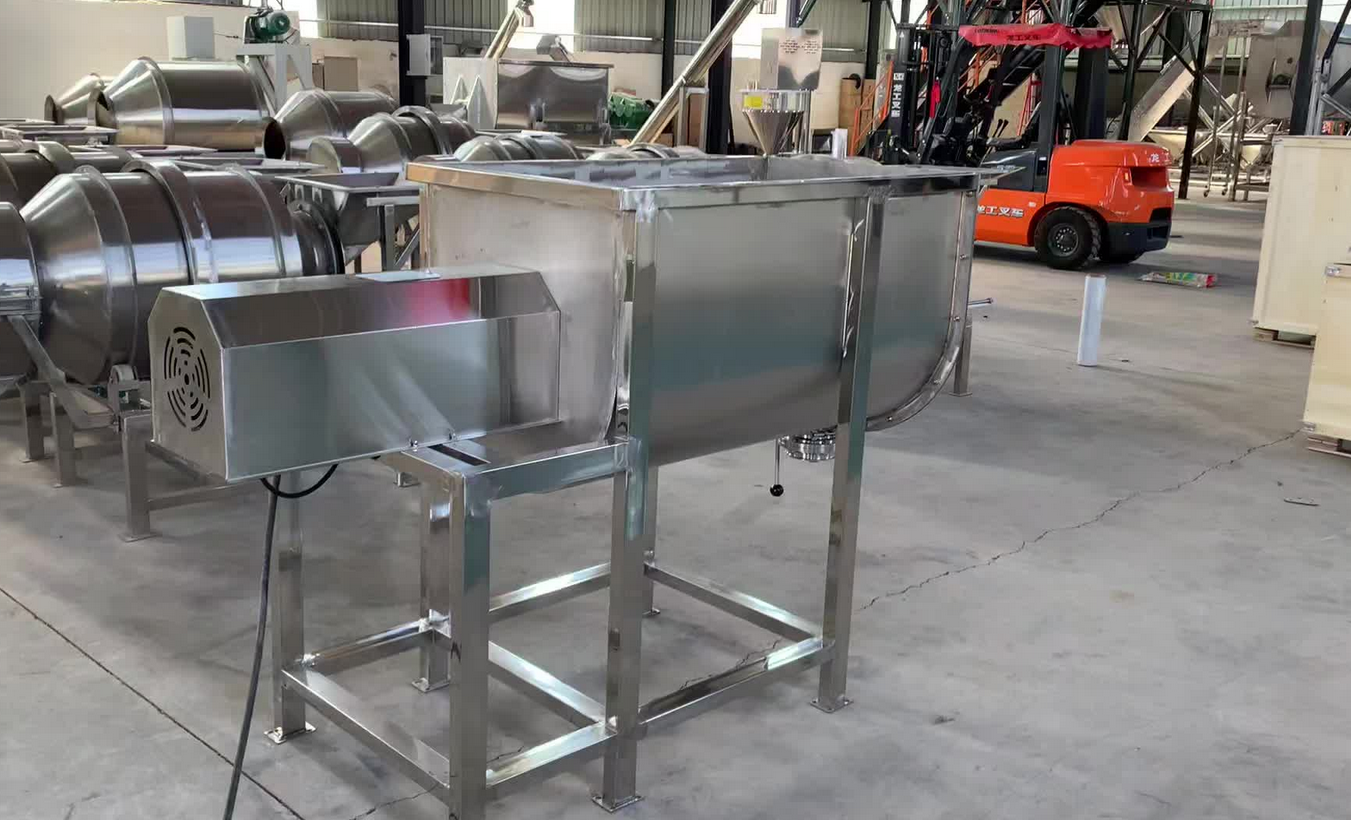
From the laboratory to large-scale production, the twin-screw mixer is reshaping the industrial mixing standard with technological innovation. Its core value lies not only in improving mixing efficiency, but also in providing guarantees for product quality consistency through precise process control. With the deep integration of materials science and intelligent manufacturing, this equipment will surely demonstrate its irreplaceability in more high-end manufacturing fields and become a key equipment to promote industrial upgrading.


Address:China,Yanjin county forest park gate to the west 1000 meters north road.


 Online Chat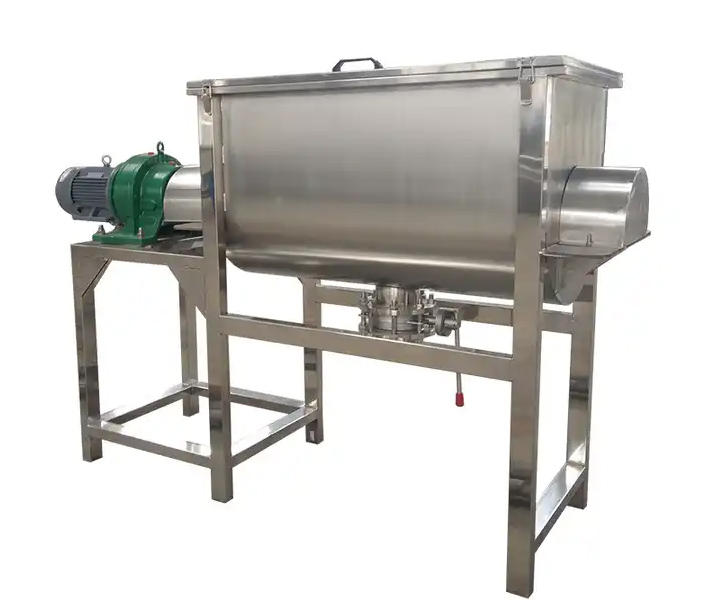
 Email
Email