


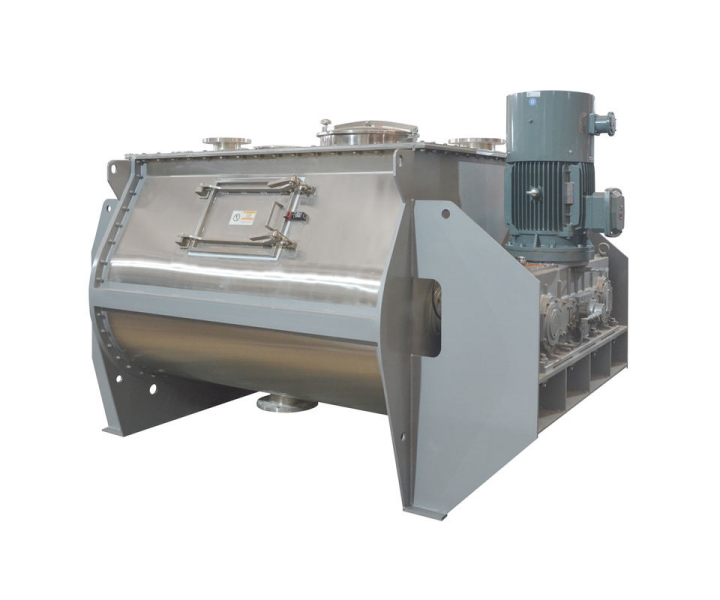
Perlite Paddle Mixer is a horizontal mixing device designed for mixing perlite and various powders and granules. Its core component is a paddle, driven by a horizontal shaft to rotate at high speed, creating strong convection and tumbling effects. This allows for thorough mixing of perlite with other powders and additives. The mixing capacity per batch can be flexibly customized according to specifications, ranging from hundreds of kilograms to tens of tons, suitable for both small-batch trials and large-scale production. A single mixing cycle takes only 3-8 minutes, and the efficient mixing of the paddles ensures rapid material blending, significantly improving production efficiency. The equipment is available in both carbon steel and stainless steel, featuring a robust structure and easy operation. We support custom-made solutions to meet your mixing needs and production site requirements.
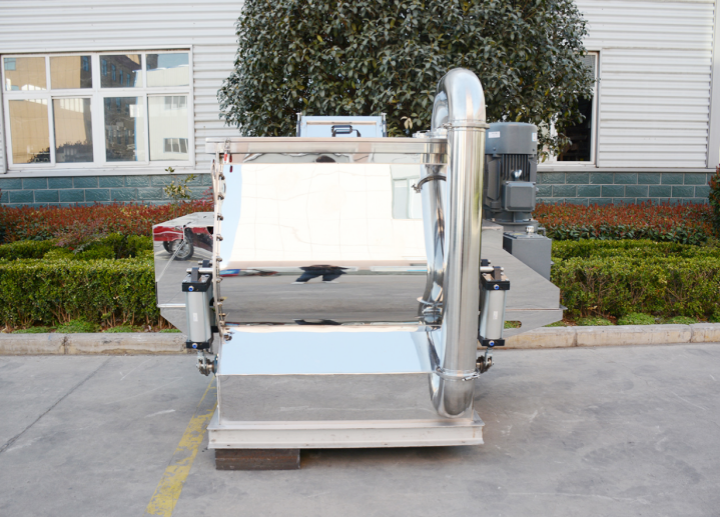
Our factory produces two main types of Perlite Paddle Mixers: single-blade and double-blade, designed specifically for the lightweight and easily floating characteristics of perlite. The single-blade model features a simple structure, low energy consumption, and is suitable for small-batch processing; the double-blade model creates bidirectional convection, resulting in higher mixing efficiency and uniformity.
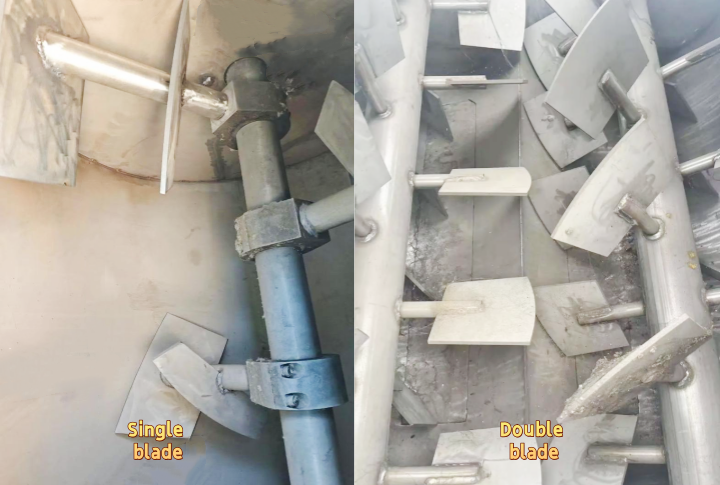
Single-blade: The single-blade perlite paddle mixer uses a single-unit integrated paddle mixing structure, driven by a horizontal shaft to perform circumferential tumbling motion. It can achieve basic mixing of perlite and lightweight powder additives. The overall structure is simple and compact, with low energy consumption. Its moderate mixing force is suitable for small-scale processing plants and laboratory applications requiring small-batch perlite mixing.
Dual-blade: The dual-blade perlite paddle mixer features two sets of symmetrically linked blades. The counter-rotating blades create a bidirectional convection vortex, allowing perlite to fully collide and blend with materials of different specific gravities and particle sizes. This results in thorough mixing without dead zones and higher uniformity, effectively avoiding the uneven mixing problems caused by the lightweight and easily floating nature of perlite. It is suitable for large-scale, continuous perlite mixing production in medium to large-scale processing plants.
The Perlite Paddle Mixer's paddle agitation creates strong convection, resulting in uniform mixing without damaging particle morphology. It can adapt to different production capacity conditions, is durable, easy to operate, and has low material residue.
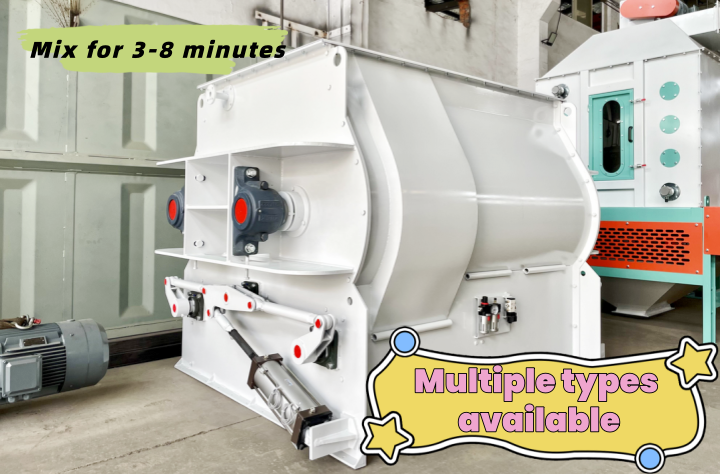
Strong mixing ability: Designed specifically for the lightweight, fluffy, and easily floating characteristics of perlite, the paddle agitation creates strong convection, fully blending perlite with powders and granular additives, effectively preventing stratification and achieving high mixing uniformity.
Controllable agitation force: The paddle speed can be flexibly adjusted, ensuring gentle agitation without crushing perlite particles, preserving their original physical properties and guaranteeing the usability of the mixed material.
Adaptable to various production needs: Single/double paddle models with multiple cylinder specifications are available, offering batch mixing capacities ranging from hundreds of kilograms to tens of tons, catering to both small-scale laboratory trials and large-scale continuous production in medium and large-sized factories.
Simple structure: The paddles and cylinder employ a modular design, eliminating complex precision components, resulting in a low failure rate. Daily cleaning and parts replacement require no specialized tools; the discharge port design minimizes material residue.
The perlite paddle mixer is a horizontal, integrated mixing device, consisting of four core components: the main cylinder, the paddle mixing system, the transmission drive system, and the discharge control system. Each component works together to complete the entire mixing process.
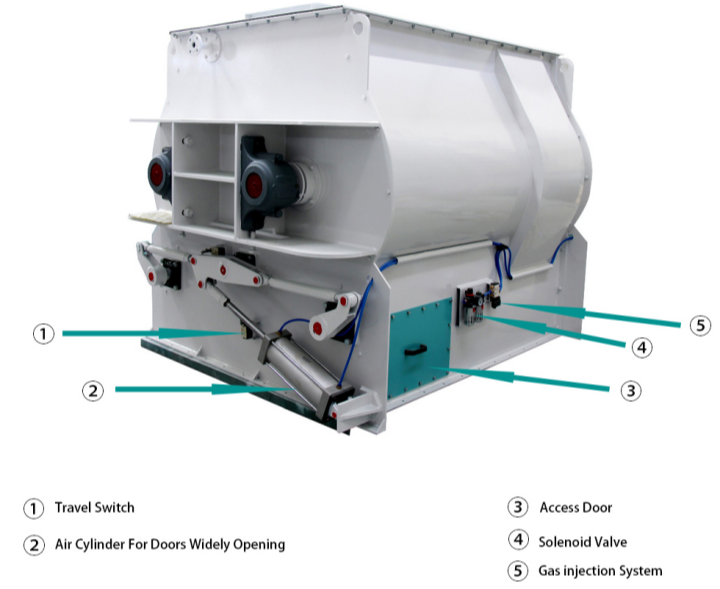
Main Cylinder: Utilizing a U-shaped, one-piece molding design, it conforms to the paddle mixing trajectory, eliminating dead corners and preventing material buildup, effectively avoiding the floating residue of lightweight perlite; the smooth inner wall is wear-resistant and easy to clean.
Paddle Mixer Shaft: The core component is a horizontal through-shaft paired with a paddle mixing assembly. The single-paddle model features a single integrated paddle, while the dual-paddle model has two symmetrically linked paddles. The paddles are made of high-strength, wear-resistant steel, creating strong convection during rotation to ensure thorough mixing of perlite and other materials.
Drive System: Composed of a variable frequency motor, reducer, coupling, and sealing cover. The motor's speed is adjustable to meet the mixing requirements of different materials; the reducer provides high torque output, ensuring stable mixing power.
Unloading System: A large-diameter, arc-shaped discharge port is located at the bottom of the cylinder, paired with manual/pneumatic discharge valves. The valves fit snugly against the arc of the tank bottom, ensuring thorough and residue-free discharge, quickly emptying lightweight perlite materials. The pneumatic version can be linked for control, adapting to automated production lines.
The Perlite Paddle Mixer uses a horizontal cylinder structure with one or more mixing shafts equipped with paddles at specific angles inside. During operation, the motor drives the stirring shaft to rotate at a constant speed via a reducer, causing the paddles to rotate accordingly, generating complex combined forces on the materials inside the drum. The paddles propel materials such as perlite back and forth along the length of the drum, achieving large-scale convection; radially, the paddles push the material from the center towards the drum wall or lift it from the bottom to the top, forming a three-dimensional circulating flow field. Simultaneously, the speed difference between adjacent paddles and the friction between the material and the paddles/drum wall generate gentle shearing and diffusion effects, effectively breaking up material agglomerations and allowing perlite particles of varying weights and sizes to fully penetrate and interweave with other powders, achieving a highly uniform mixture in a short time.
| Model | Volume(m³) | One-time mixing(kg) | Motor power(kw) | Weight |
| WZL-1 | 1 | 300-500 | 7.5-11 | 1600 |
| WZL-2 | 2 | 600-1000 | 11-15 | 2300 |
| WZL-3 | 3 | 1000-1500 | 18.5-22 | 2900 |
| WZL-4 | 4 | 1200-2000 | 22-30 | 4800 |
| WZL-5 | 5 | 1800-3000 | 30-37 | 6000 |
A building materials technology company, specializing in the production of thermal insulation materials, purchased our factory's double-paddle stainless steel perlite paddle mixer because uneven mixing of perlite with cementitious powder and lightweight aggregate resulted in poor product insulation performance. Designed specifically for the lightweight and easily floating characteristics of perlite, the equipment features dual-paddle convection mixing to ensure thorough material blending and significantly improve mixing uniformity. It can mix 2 tons per batch in just 5 minutes, meeting the daily production capacity requirement of 30 tons of thermal insulation mortar.
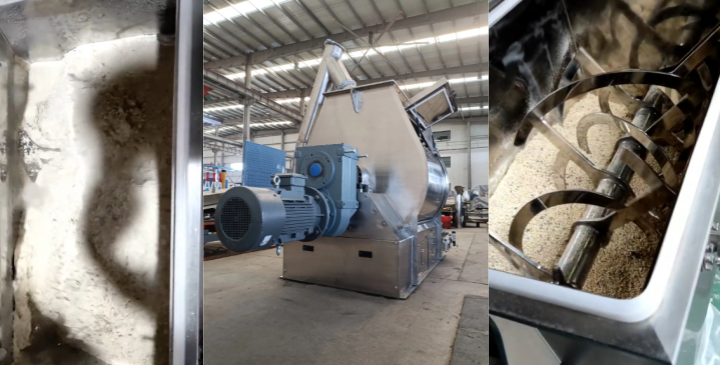
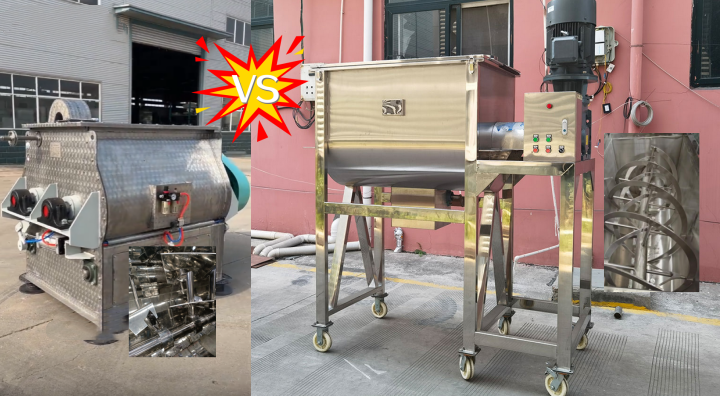
Both the Perlite Paddle Mixer and ribbon mixer are suitable for perlite mixing, but their core differences lie in their mixing structure and material compatibility. The paddle mixer relies on the rotation of the blades to create strong convection, which, given perlite's lightweight and easily floating nature, provides more impactful mixing, quickly breaking up materials to prevent clumping, resulting in higher mixing efficiency without damaging the perlite particle shape. The ribbon mixer uses a ribbon to push and mix, making it more suitable for mixing powders with similar specific gravities. However, when processing perlite, it is prone to floating and stratification, resulting in slightly weaker mixing uniformity. The paddle mixer better meets the core requirements of perlite processing, while the ribbon mixer is suitable for simple mixing of perlite with auxiliary materials of similar weight. The choice between the two can be flexible based on production conditions and material ratios.
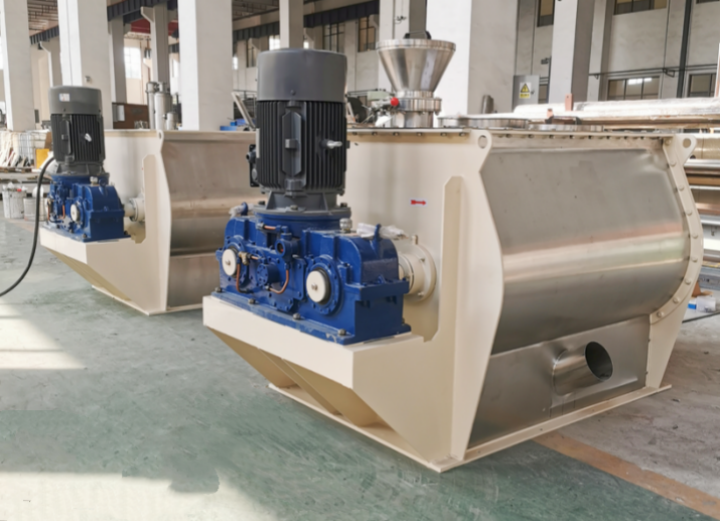
Dahan Machinery manufactures Perlite Paddle Mixers with single or double blades, customizable in carbon steel and 304 stainless steel. Production adheres to stringent quality control standards, and the mixing structure is optimized for the lightweight and easily floating characteristics of perlite, making it suitable for the production needs of industries such as building materials and insulation materials. Customized solutions are available based on production capacity and operating conditions, including customized solutions, commissioning guidance, factory testing, and lifetime spare parts supply. Our products are sold globally, with on-time delivery to ensure you receive your order within the specified time.
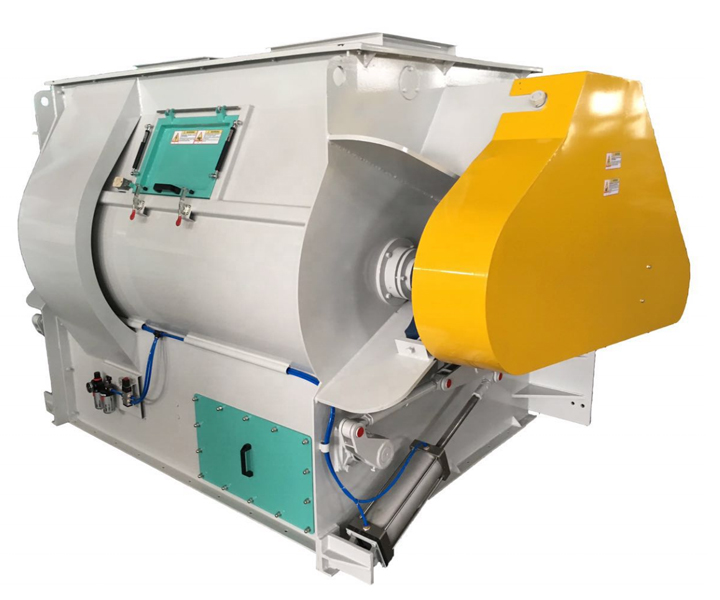
The Perlite Paddle Mixer is a mixing device for perlite processing, designed specifically for its lightweight and easily floating characteristics. It mixes quickly and evenly without damaging the particle shape. Single or double blades are available, and materials can be flexibly customized to adapt to different production capacities and operating conditions.


Address:China,Yanjin county forest park gate to the west 1000 meters north road.


 Online Chat
 Email
Email