


Feed Additive Ribbon Mixer is a mixer that achieves extremely uniform mixing of trace, high-value additives such as vitamins, minerals, and medications with basic feed ingredients. Unlike ordinary mixers that only meet the uniformity requirements of the basic diet, this equipment can precisely control the coefficient of variation of mixing uniformity to ≤5% or even lower, helping reduce the risk of uneven nutrient distribution caused by insufficient mixing. caused by uneven mixing. In terms of mixing method, it utilizes a double-layered spiral belt to generate strong yet gentle convection and shearing action, typically completing mixing within 8-20 minutes. Addressing the stringent hygiene and safety requirements of the additive industry, this equipment achieves extremely low material residue inside the machine through a fully open discharge door and a dead-angle-free structural design, reducing the possibility of cross-contamination.
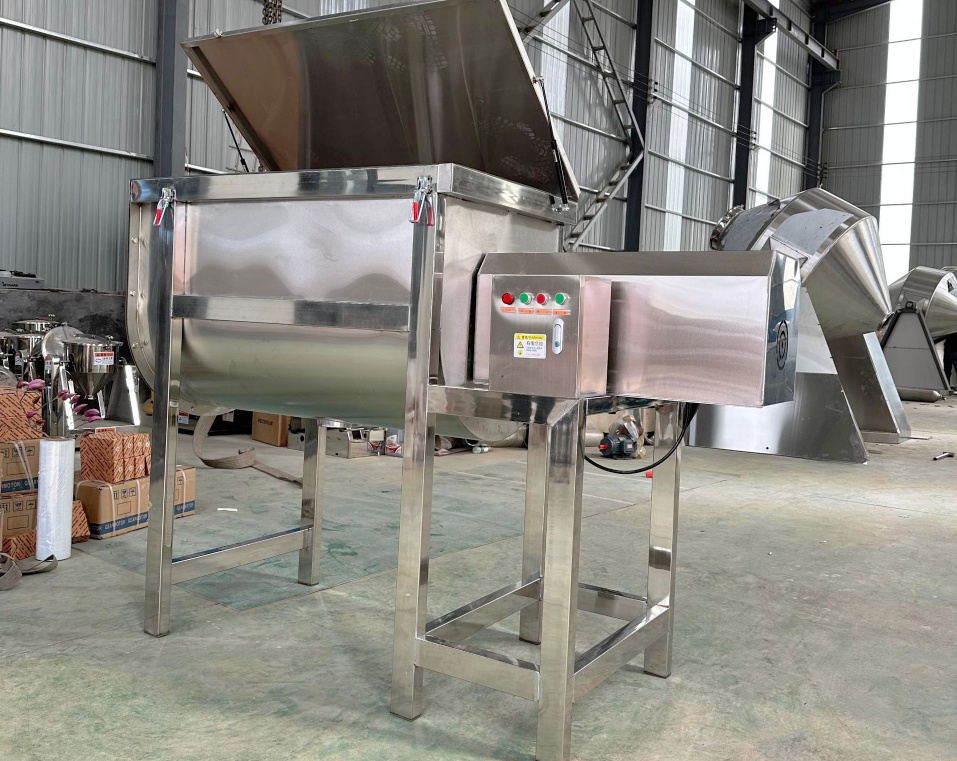
In feed production, mixing additives is far more than simple stirring. This is because additives often constitute only 0.5% to 5% of the formulation, belonging to trace or ultra-trace components. Using ordinary mixers can easily lead to serious consequences due to uneven mixing. ribbon mixer, with their unique double-ribbon rotor design, can induce omnidirectional convection and shearing motion in materials within a very short time, encapsulating and evenly dispersing trace additives into every grain of basic feed. This perfectly solves this industry pain point. This mixing method not only ensures feed safety and quality but also significantly improves production efficiency.
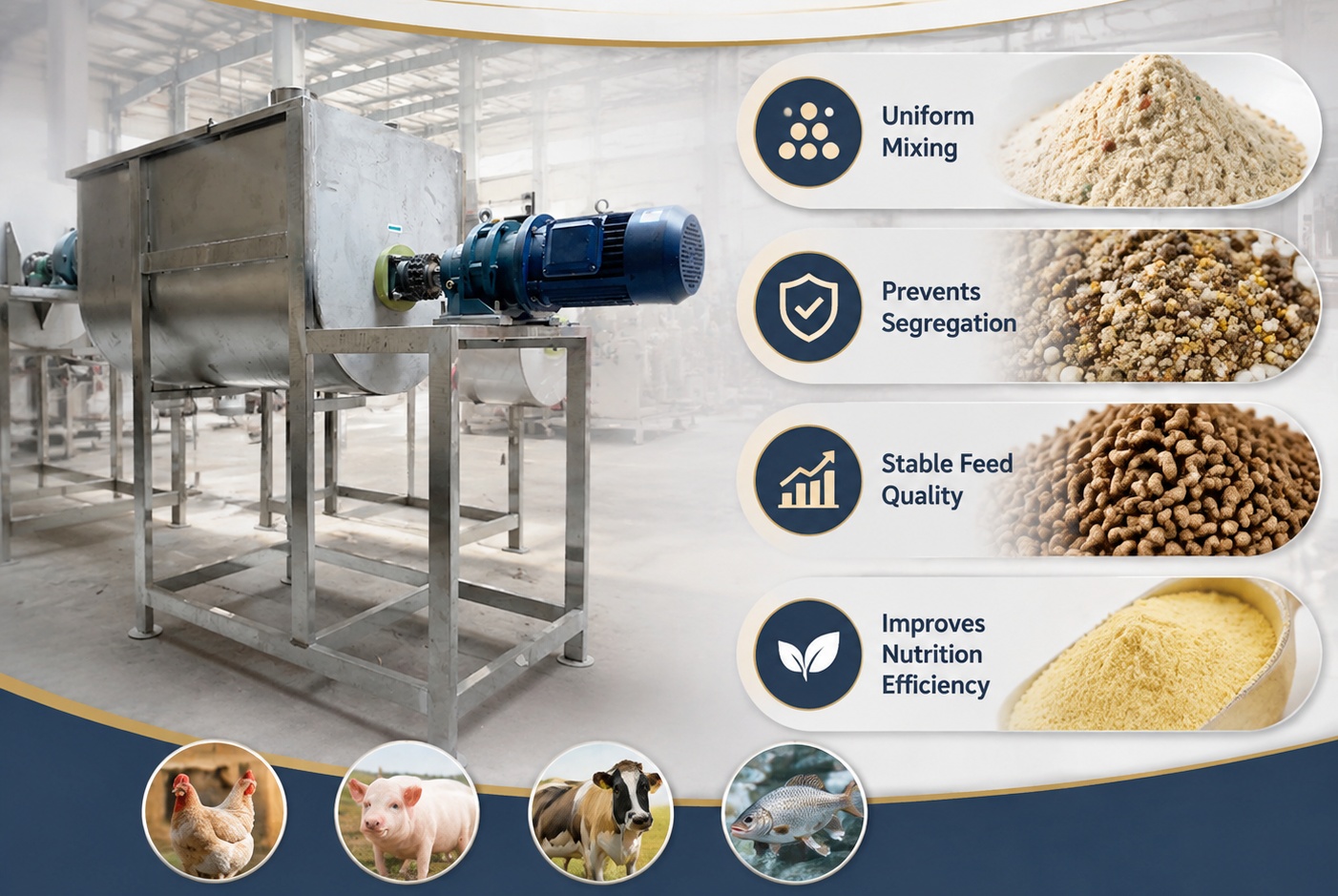
The Feed Additive Ribbon Mixer utilizes the rotation of its core component, the double-ribbon agitator, to drive forced convection and shear mixing of materials. When the mixer starts, its main shaft drives the inner and outer ribbons to rotate in a specific direction. Typically, the outer ribbon pushes the material from one end to the center, while the inner ribbon pushes the material from the center to both ends. This opposing motion creates a huge, circulating flow of material within the drum. As the material particles move with the ribbons, they continuously undergo convection, diffusion, shearing, and dislocation, achieving a high degree of uniformity of composition within 3-6 minutes.
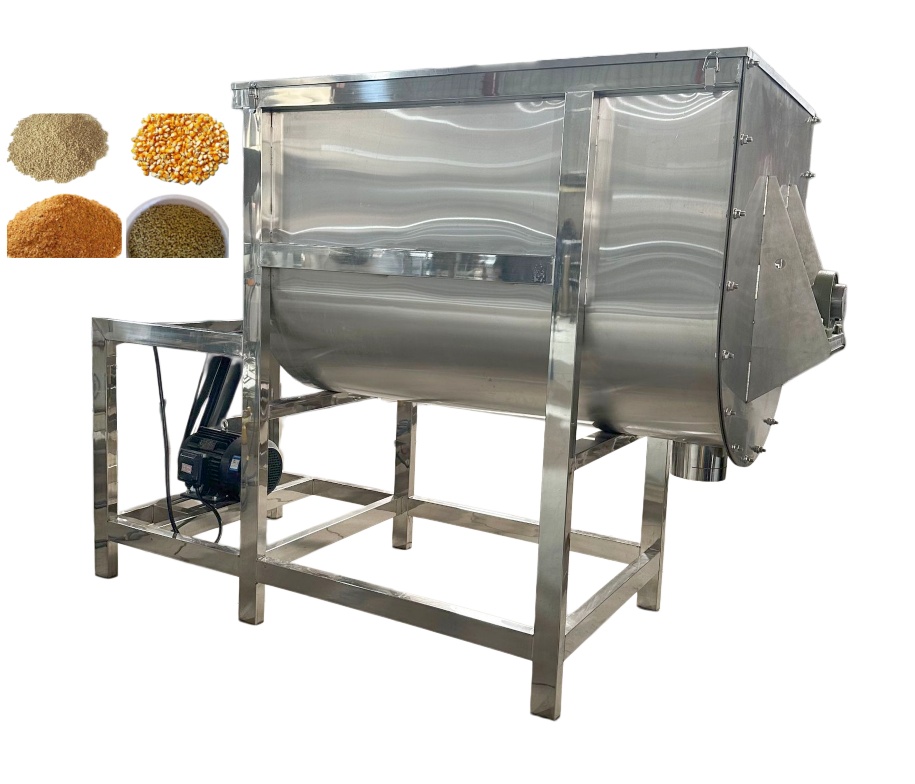
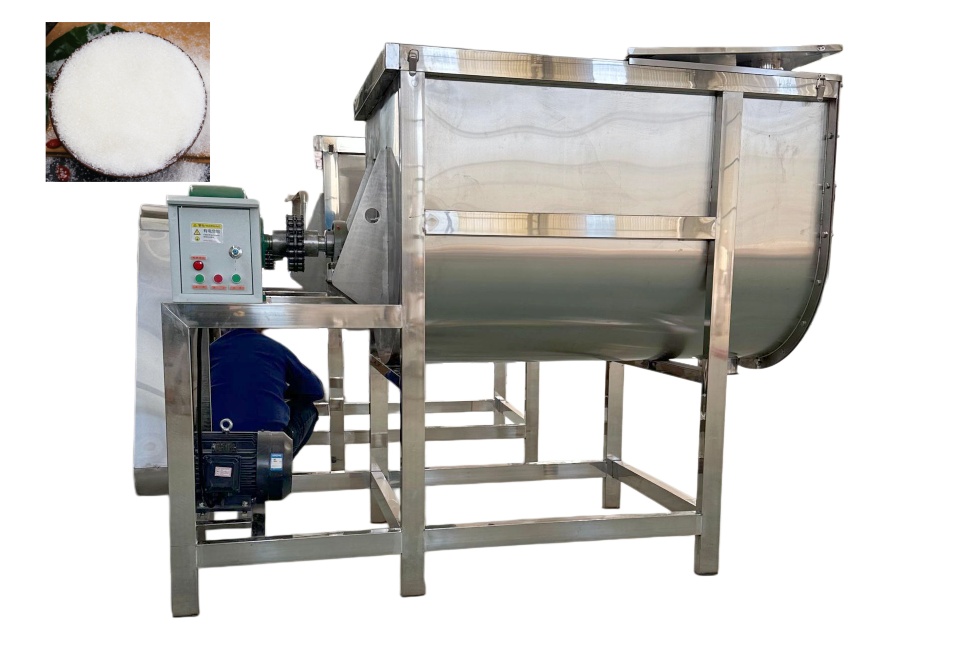
The Feed Additive Ribbon Mixer mainly consists of four core components: the drum, a double-layer ribbon agitator, a transmission device, and a discharge mechanism. The machine has a compact structure, is easy to operate, and can be equipped with stainless steel or a liquid addition system depending on the material characteristics.
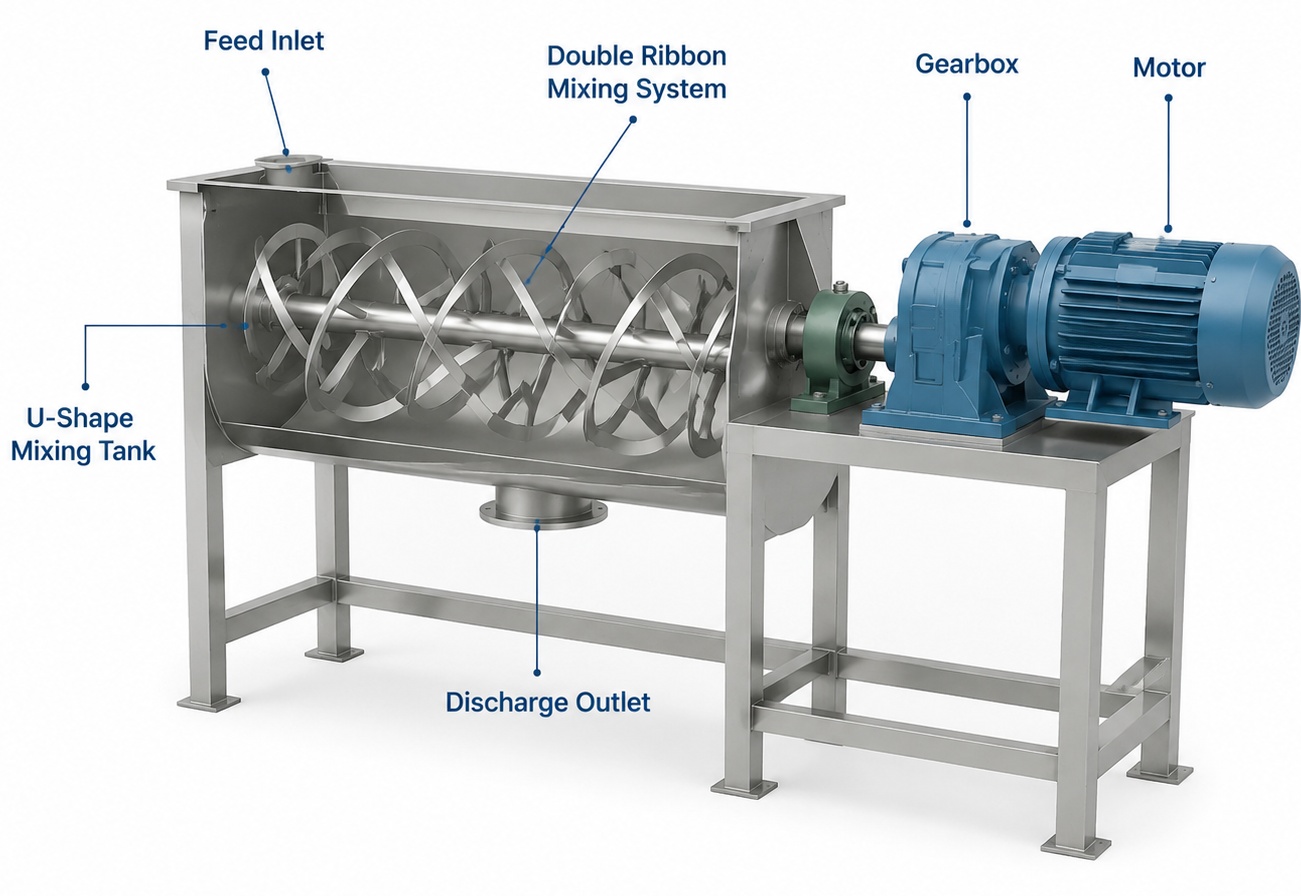
Drum: Typically a horizontal structure with a fully circular or U-shaped cross-section, it serves as the mixing container for materials. It is mostly made of carbon steel or stainless steel.
Agitator: This is the core of the equipment, consisting of a main shaft and a double-layer ribbon fixed to the shaft. The inner layer rotates left-hand, and the outer layer rotates right-hand, or vice versa, to ensure bidirectional convection of the material.
Reduction and Transmission Device: The motor transmits power to the main shaft through a reducer, providing appropriate speed and torque.
Discharge Mechanism: Mostly a pneumatically or electrically controlled full-length opening door located at the bottom of the drum, ensuring rapid and residue-free discharge of material.
Auxiliary System: Some models are equipped with liquid addition pipes for evenly spraying grease or liquid additives.
The core advantages of the Feed Additive Ribbon Mixer lie in its high precision, high efficiency, and high safety. Its unique double-layer spiral ribbon design ensures uniform distribution of trace additives within 8-20 minutes, while the gentle mixing method effectively protects active ingredients such as vitamins.
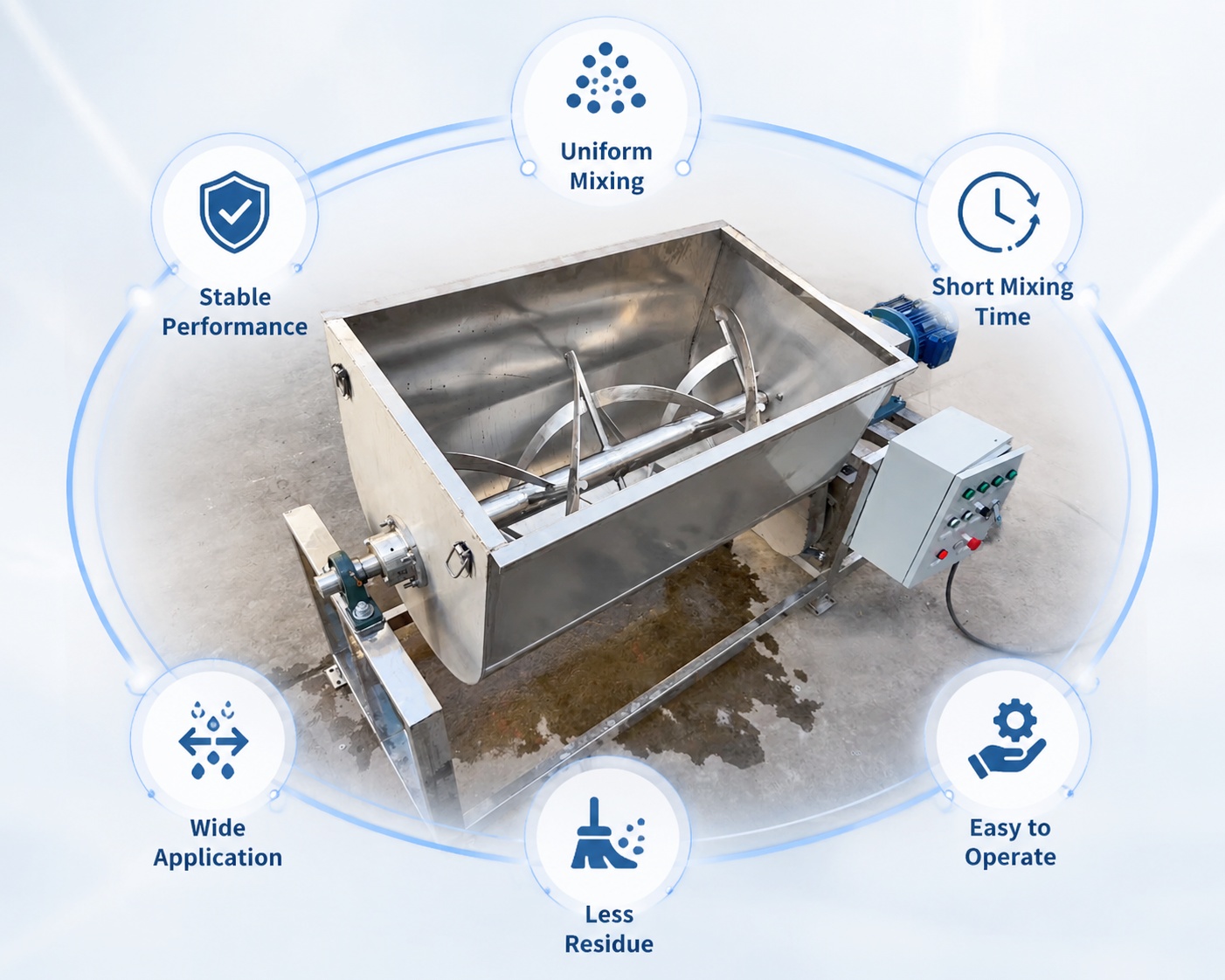
Short mixing time: Typical batch mixing time is only 2-6 minutes, significantly improving production efficiency.
High adaptability: Effectively mixes materials with significant differences in physical properties, such as powders and granules.
Low material residue: Optimized discharge gate and spiral ribbon structure ensure extremely low material residue, effectively preventing cross-contamination.
Simple structure: Horizontal body, stable structure, smooth operation, convenient maintenance, adaptable to most factory installation layouts.
Highly customizable: Different materials and spiral ribbon forms can be selected according to material characteristics, and jackets can be added for heating or cooling.
The Feed Additive Ribbon Mixer boasts exceptional material adaptability, capable of blending a wide variety of animal feed ingredients. Whether it's powdered feed, pelleted feed, or the precise premixing of trace additives and carriers, it excels.
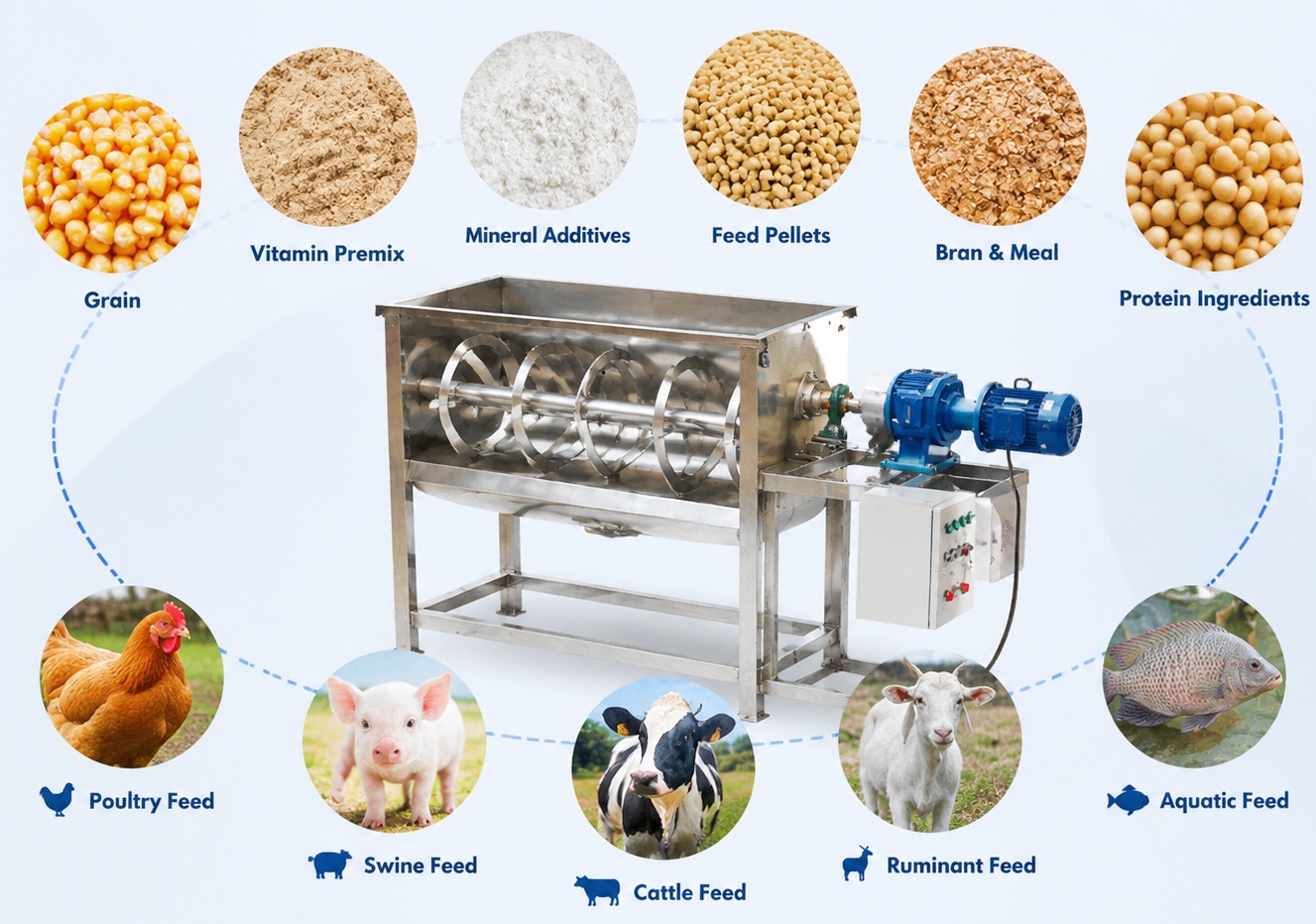
Powdered Feed: This is its primary application area, including premixed feed, concentrated feed, protein powder, and fishmeal.
Pelleted Feed: It can be mixed with powdered ingredients or blended between granular materials that do not require grinding, such as crushed corn and soybean meal pellets.
Additives and Carriers: Used for the precise premixing of trace components such as vitamins, minerals, amino acids, and pharmaceutical additives with carriers such as bran and limestone powder.
| Model | LHY-0.25 | LHY-0.5 | LHY-1 | LHY-1.5 | LHY-2 | LHY-3 | LHY-4 | LHY-6 | LHY-8 | LHY-10 |
| One-time mixing (kg) | 100-150 | 200-300 | 400-600 | 600-900 | 800-1000 | 1200-1800 | 1600-2400 | 2400-3600 | 3200-4800 | 4000-6000 |
| Mixing time (min) | 8-20 | 8-20 | 8-20 | 8-20 | 8-20 | 8-20 | 8-20 | 8-20 | 8-20 | 8-20 |
| Mixing speed (r/min) | 60 | 55 | 45 | 40 | 35 | 25 | 25 | 20 | 15 | 15 |
| Motor power (kw) | 3-5.5 | 4-11 | 7.5-15 | 11-18.5 | 15-22 | 18.5-30 | 22-37 | 37-55 | 37-55 | 45-75 |
| Weight (kg) | 500 | 900 | 1800 | 2500 | 3200 | 4100 | 5100 | 6300 | 7500 |
Choosing the right Feed Additive Ribbon Mixer requires comprehensive consideration from multiple dimensions, including material characteristics, production process, equipment performance, and budget.
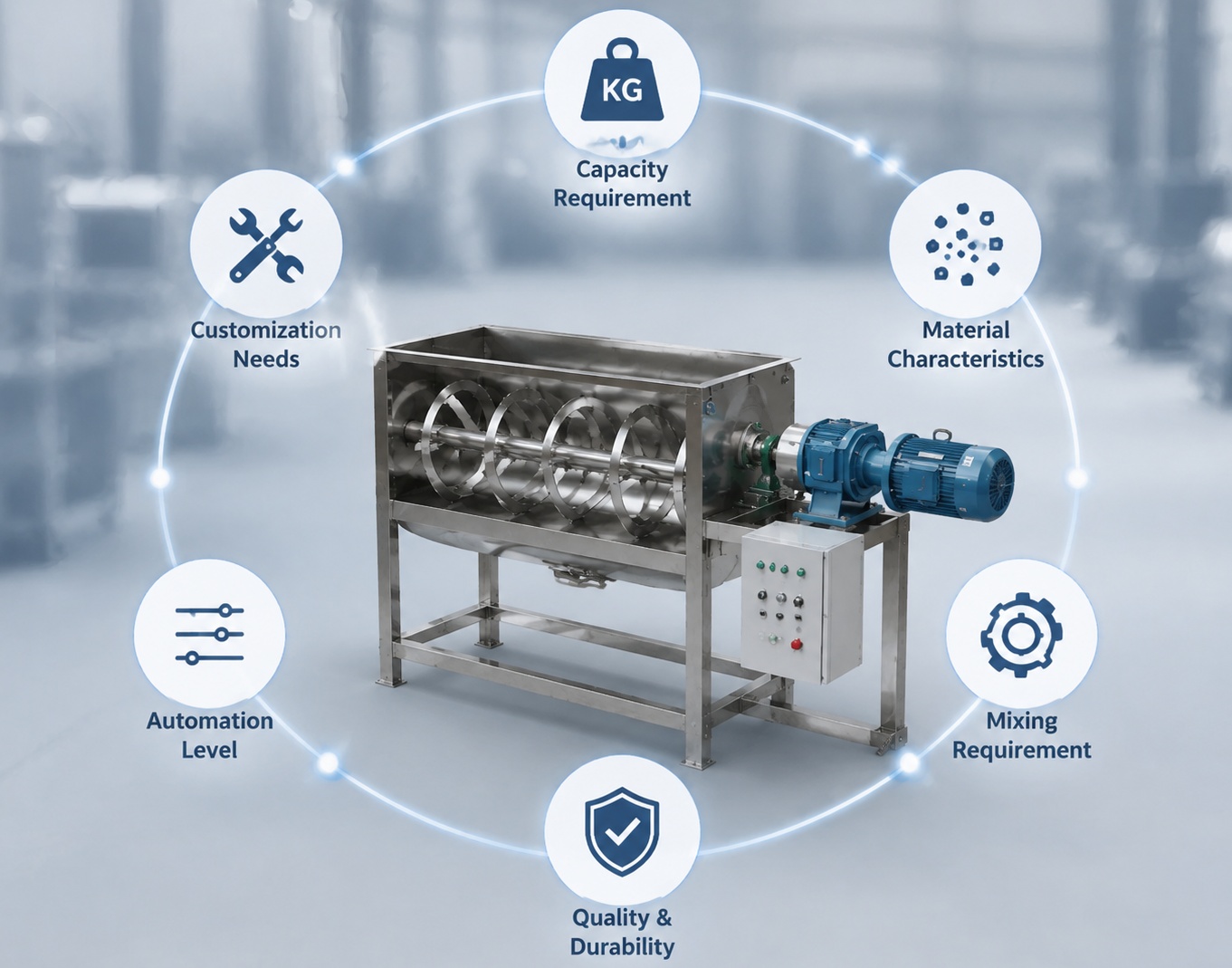
Considering Material Characteristics: Feed additives often involve powders with large specific gravity differences and easy stratification, such as vitamins, trace elements, and carriers. Evaluating mixing time, uniformity, and residual output are key indicators.
Concerning Equipment Materials: The mainstream model is the horizontal single-shaft double-ribbon mixer. Its dead-angle-free design and full-length door discharge ensure extremely low material residue. For materials, parts in contact with materials should preferably be made of 304 or 316L stainless steel to prevent corrosion and contamination.
Considering Operating Costs: Horizontal mixers have a higher initial investment, but shorter mixing time, larger batch throughput, and lower unit energy consumption result in better long-term overall benefits. It is recommended to provide detailed material samples and process parameters, and communicate with experienced manufacturers to obtain accurate selection solutions and on-site support.
We provide professional mixing solutions to numerous feed and additive companies worldwide. Whether you're a large-scale premix manufacturer, a veterinary drug raw material factory, or a specialty aquatic feed R&D institution, we can recommend the most suitable ribbon mixer model based on your specific mixing goals, production capacity requirements, and on-site conditions, and provide reliable process support.
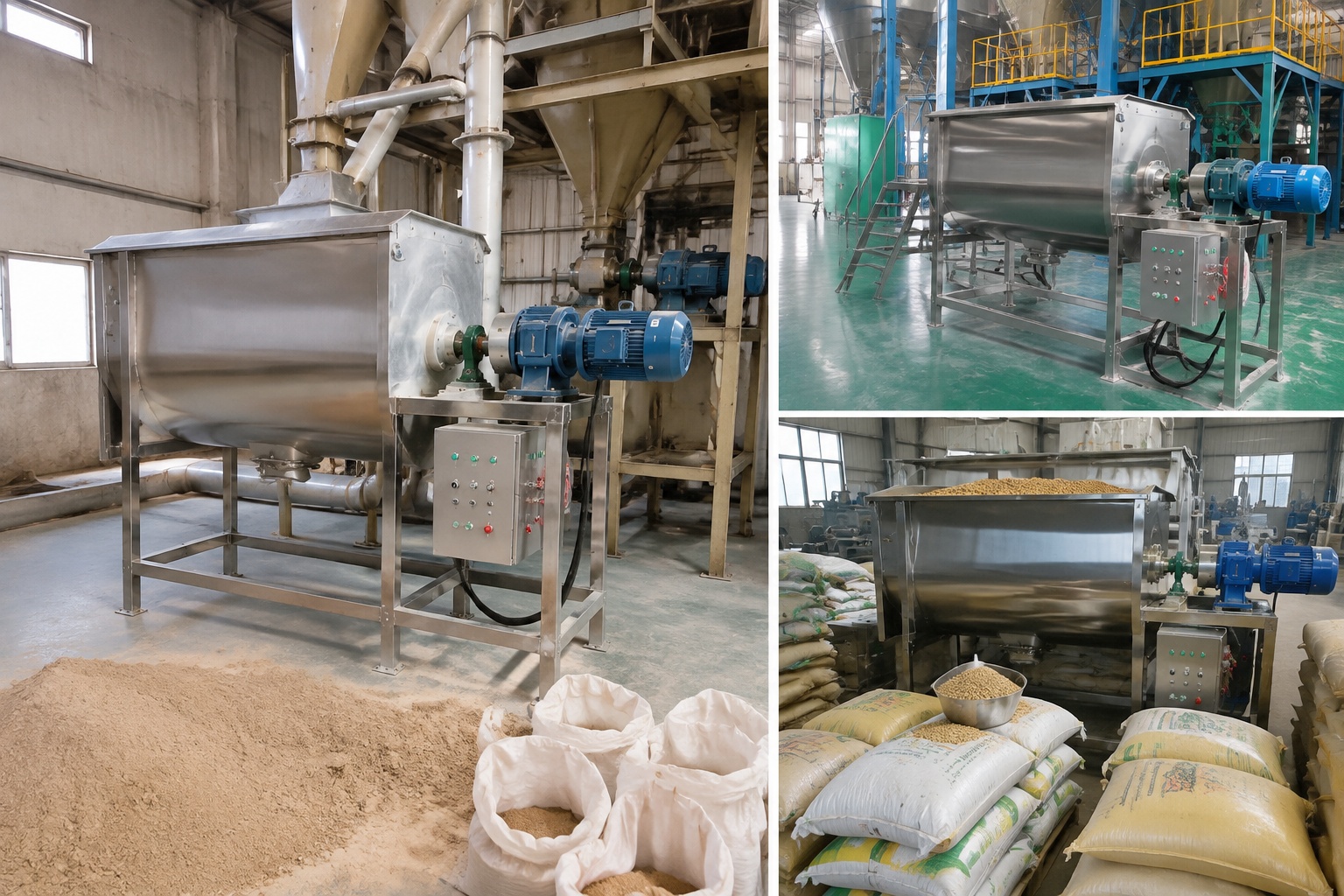
Large-scale Premix Manufacturer:This client supplies core premixes to regional farms, processing multiple vitamins and trace elements daily. The machine precisely mixes over ten components, including vitamins A, D, and E, as well as trace elements such as copper, iron, and zinc, with defatted rice bran as a carrier. Each batch mixing takes only 3.5 minutes. The main body and material contact parts are made of 304 stainless steel for corrosion resistance and purity. In their newly built GMP workshop, this equipment is integrated with an automatic batching system, achieving fully automated production.
Feed Additive Raw Material Company:This client mainly produces veterinary drug additive raw materials and needs to uniformly mix high-concentration active pharmaceutical ingredients with starch diluent. Each batch mixing takes only 4 minutes to ensure high drug dispersion and avoid excessively high local concentrations. For stringent safety considerations, the equipment's inner walls and conveyor belts are made of 316L stainless steel with a mirror-polished finish, facilitating thorough cleaning and preventing batch-to-batch cross-contamination.
Specialty Aquatic Feed R&D: The research institution focuses on developing high-value-added aquatic feeds, requiring the uniform mixing of viscous materials such as fish paste powder and squid paste powder with ultrafine powders such as spirulina powder and astaxanthin. The mixing time is 5 minutes, effectively breaking up material agglomerations and ensuring that oily particles adhere evenly to the powder surface. Duplex stainless steel, combining high corrosion resistance and high strength, is used to ensure effective mixing of special materials.
We offer customized mixing solutions for diverse feed additive and premix production needs. All models can be tailored to customer material characteristics, processing capacity, batch size, installation space, discharge requirements, and on-site operating conditions. Our engineering team can assess customer production processes and equipment layouts to develop suitable mixer configurations and support customized production for special applications. Depending on the materials and production environment, our ribbon mixer are available in carbon steel, 304 stainless steel, and 316L stainless steel. Furthermore, different surface treatments, sealing structures, feed/discharge configurations, mixing volumes, and other components can be selected based on specific requirements.
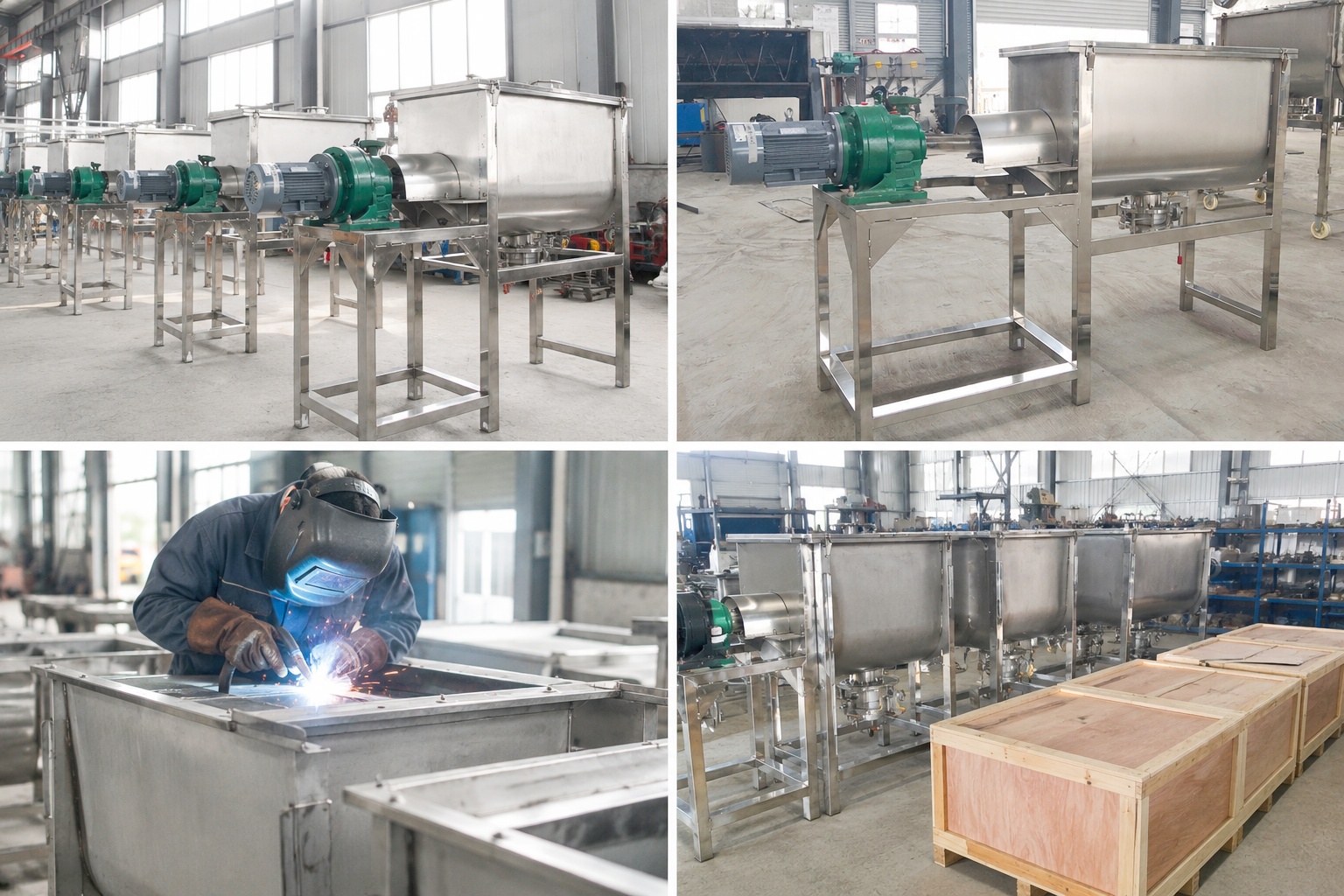
Our feed additive ribbon mixer are sold worldwide and can be adapted to various voltage, electrical, installation, and operational requirements. From equipment selection and customized design to manufacturing, testing, delivery, and after-sales support, we provide comprehensive services to help customers obtain reliable feed additive belt mixing solutions.
Will vitamin mixing in a ribbon mixer cause stratification?
No, it will not under proper operation. The ribbon mixer process is gentle and less prone to segregation. The key is the order of addition; trace components such as vitamins should be added last to avoid them falling into dead zones and causing loss and contamination. Proper equipment selection and adherence to procedures will ensure uniformity and prevent stratification.
How long does it take to mix feed additives?
Typically 2 to 6 minutes. The optimal mixing time depends on the mixer model and the properties of the raw materials. For example, a horizontal twin-ribbon mixer typically requires 8-20 minutes, while some single-shaft twin-ribbon mixers can achieve the required uniformity in just 2-4 minutes.
How much does a feed additive mixer cost?
Prices range widely. Roughly, quotes are between $1000 and $15000. Specific prices will vary significantly depending on factors such as equipment model, materials, volume, brand, and customized configurations.


Address:China,Yanjin county forest park gate to the west 1000 meters north road.


 Online Chat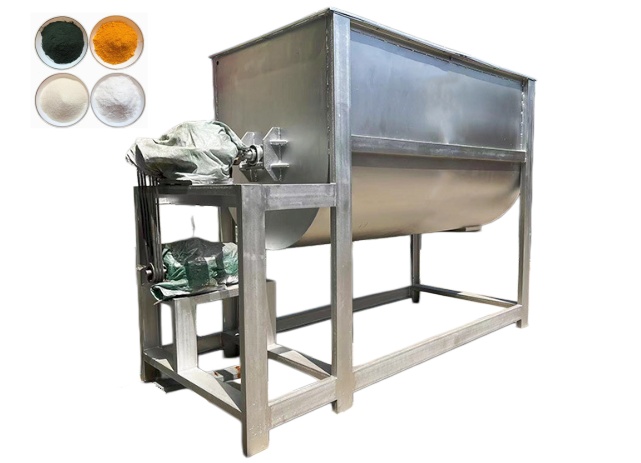
 Email
Email