


Quick Answer:Bulk Material Industrial Mixer Price starts under $1,000 for lab units and exceeds $90,000 for custom industrial systems. A standard dry powder mixer runs $3,000–$20,000. High-viscosity slurry systems fall between $7,000 and $94,000.
- Laboratory V-type dry powder mixer: $2,000–$8,000
- Industrial powder V-type mixer: $3,000–$20,000
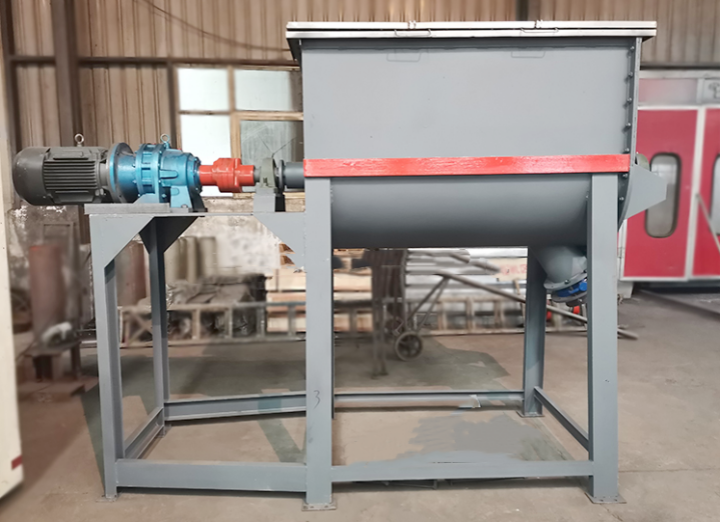
- Customizable industrial paddle mixer: $1,023–$6,150
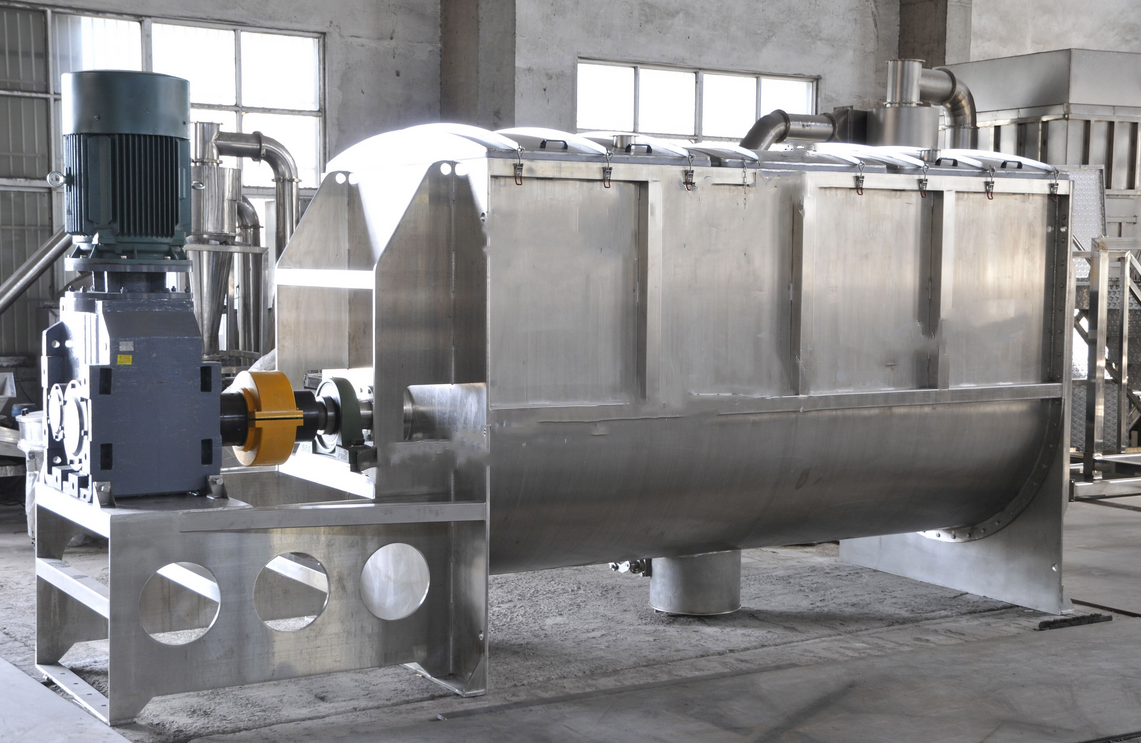
- Twin-shaft paddle mixer: $5,000–$50,000
- Conical spiral mixer: $6,969–$93,932
- Large custom systems: over $90,000
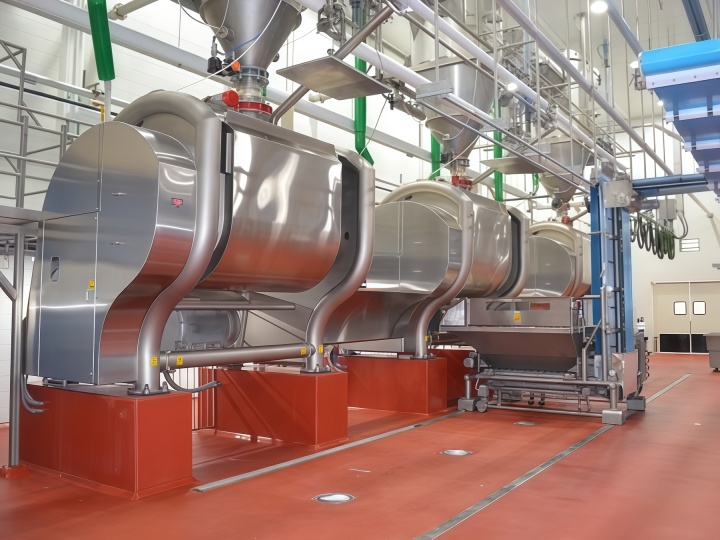
Unlike most guides that simply list price ranges, this article sources all pricing data with specific references and includes verifiable case studies. A conical spiral mixer starts at $6,969 while the premium version reaches $93,932—a 13x gap driven by five variables: capacity, material, drive, automation, and customization.
Powders have the lowest entry barrier. Laboratory V-type mixers run $2,000–$8,000. Industrial chemical powder V-type mixers range $3,000–$20,000. Customizable paddle mixers fall between $1,023–$6,150.
Granules demand greater structural strength. Twin-shaft paddle mixers for dry powder and granules are priced at $5,000–$50,000. High-performance models reach $8,000–$14,800.
Slurries require special sealing and torque, placing Bulk Material Industrial Mixer Price at a higher level. Conical spiral mixers start at $6,969 and reach $93,932 for high-spec versions. Vacuum, heating, or explosion-proof features add further cost.
The global dry bulk material mixing systems market was valued at $1.8 billion in 2025 with a 5.30% CAGR. The industrial mixer market reached $6.4 billion in 2026 and is expected to hit $9.3 billion by 2036.
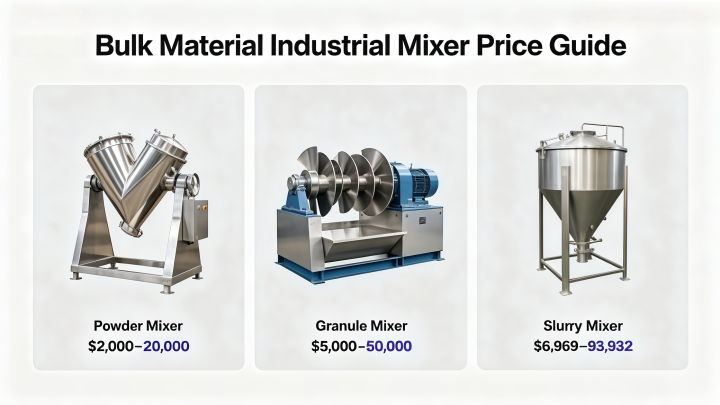
| Mixer Type | Suitable Materials | Price Range USD | Source |
|---|---|---|---|
| V-type powder mixer | Dry powder, granules | 2,000 – 8,000 | Made-in-China 2026 |
| Industrial V-type mixer | Powder, chemicals | 3,000 – 20,000 | Made-in-China 2026 |
| Paddle mixer | Powder, industrial materials | 1,023 – 6,150 | Made-in-China 2026 |
| Twin-shaft paddle mixer | Dry powder, granules | 5,000 – 50,000 | Made-in-China 2026 |
| Conical spiral mixer | Powder, slurries | 6,969 – 93,932 | Made-in-China 2026 |
Actual Bulk Material Industrial Mixer Price depends on specific configurations—always request formal quotes from suppliers.
When capacity doubles, the price increase is less than double because the drive and control architecture can be shared. But upgrading from carbon steel to 316L stainless steel adds a real 30%–80% premium.
Capacity and throughput are direct cost drivers—larger vessels require more material and larger motors. Material selection also matters: 304 is industrial standard, while 316L serves food and pharmaceutical applications. Drive and motor configuration raises cost—high-viscosity slurries need higher torque, and dual-motor designs cost more but deliver better uniformity. Automation adds 15%–25% premium but typically recovers within 12–18 months in two-shift operations. Customization—explosion-proofing, vacuum, heating jackets, sanitary polishing—adds cost at every step.
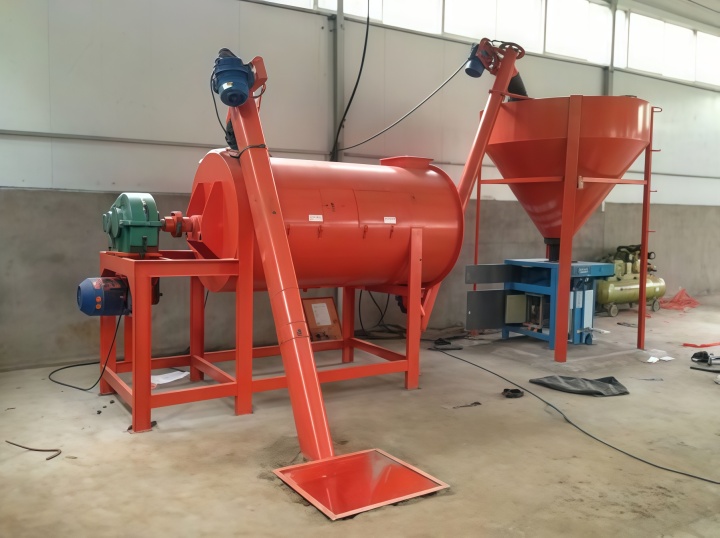
The conical spiral mixer ranges from $6,969 to $93,932—over 12x difference within the same series, driven by capacity, material, motor, and added features. Buyers should review every quote line item: capacity, contact material, motor brand, control system, and seal type. Each represents a specific cost.
Success: SeAH M&S Vietnam selected two WAM WBN 3000L mixers for a ferroalloy plant. Each handles 3,000 kg per batch, achieving 18 batches daily—perfectly aligned with upstream melting. Mixer selection must sync with whole-line capacity planning.
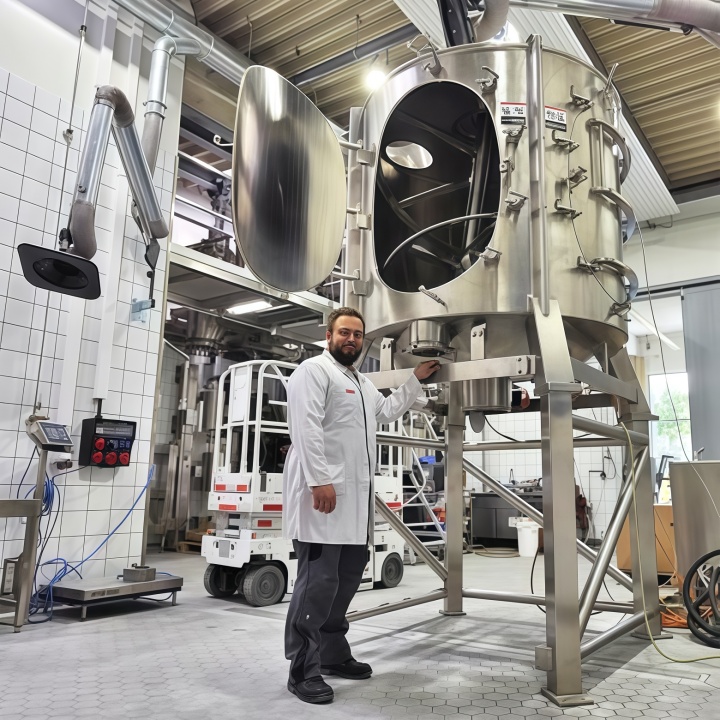
Success: amixon Germany —the Gyraton mixer received the 2025 ife Innovation Award. It mixes 1,500 kg of base material with just 15 grams of additive uniformly. Single-batch capacity reaches 100 m³. Price differences here reflect precision and uniformity requirements, not just capacity and material.
Mistake: A building materials factory purchased a ribbon mixer for dry mortar, only to find severe stratification and caking. The material needed higher shear force. The solution required replacing it with a paddle mixer, but three months and $15,000 were already lost. Price differences should be compared alongside the full sunk cost of wrong selection.
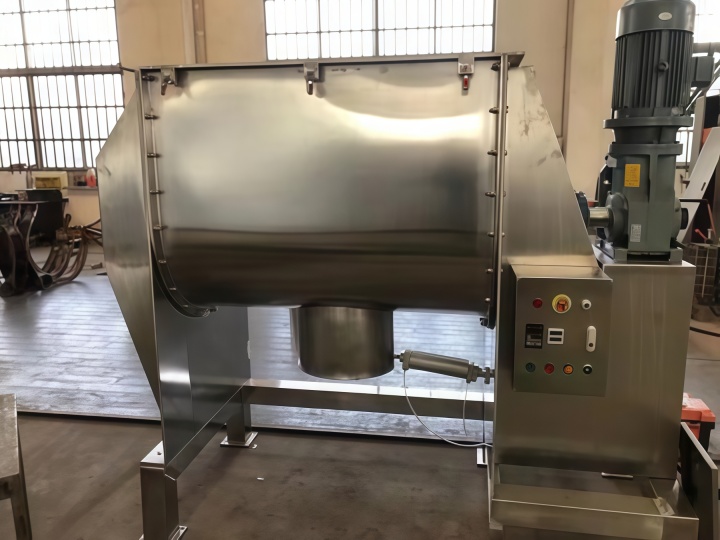
Does your material actually need that mixing method? Test bulk density, flowability, viscosity, and abrasiveness first.
Are you calculating purchase price or total cost of ownership? TCO includes maintenance, seal replacement, gearbox repairs, and downtime. A $10,000 mixer can incur a single $8,000 repair.
Does batch size match daily output? Oversized means energy waste; undersized means frequent changeovers. Calculate backward from average daily output, then compare Bulk Material Industrial Mixer Price across capacities.
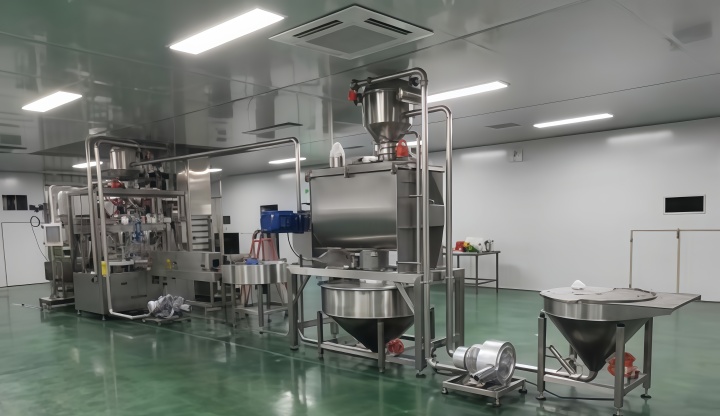
Leasing works for projects under six months or trial phases—typically 8%–15% of equipment value monthly. Refurbishment works when budget is below 40% of new—costing 30%–50% of new—but regulated industries carry compliance risks. New equipment suits production exceeding two years or highly abrasive materials.
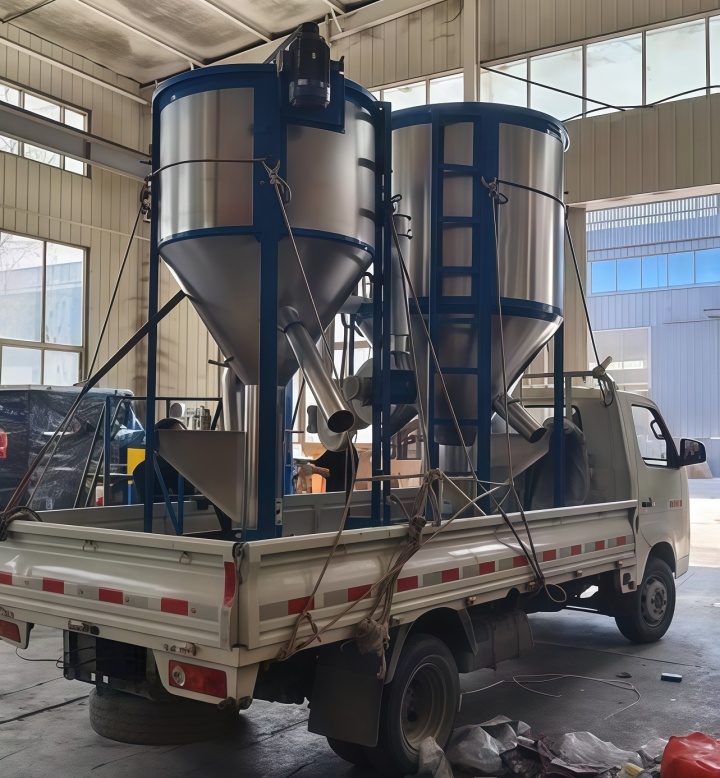
The global industrial mixer market is projected to grow from $2.88 billion in 2025 to $3.1 billion in 2026, reaching $4.48 billion by 2031 at 7.64% CAGR.
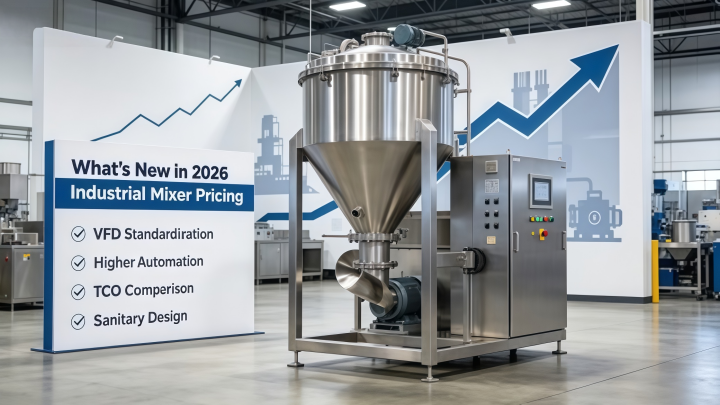
Variable frequency drives are transitioning from optional to standard. In H1 2026, inquiries requesting VFD as standard rose from 47% to 89%. Buyers must confirm whether quotes include the VFD.
Total cost of ownership is becoming the core consideration—validation rigor, contamination control, and automation readiness are redefining buyer expectations.
Q1: How does new equipment integrate with existing lines?
Confirm interface dimensions, control protocols, and facility layout match before installation.
Q2: What percentage of price is long-term maintenance?
Typically 5%–15% annually, depending on material abrasiveness.
Q3: Is used equipment worth considering?
Costs 30%–50% of new, but regulated industries carry compliance risks—inspect critical components first.
Q4: What's energy's share of operating costs?
Consumption varies widely across machine types. VFD and proper motor selection reduce electricity expenses.
1. Compile your material's parameters: bulk density, viscosity, moisture, abrasiveness
2. Request formal quotes with detailed configurations from at least three suppliers
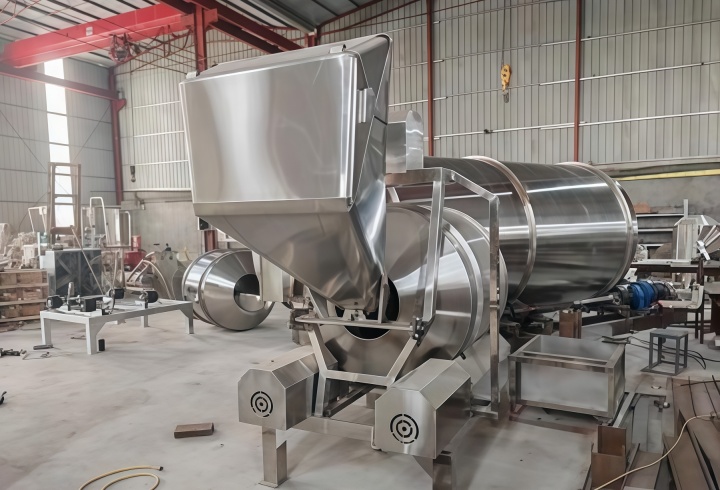
The $6,969 to $93,932 price spread reflects different combinations of five variables. The key is calculating what each extra dollar buys—higher output, lower maintenance cost per ton, or longer service life. Pricing data comes from 2026 global B2B platform quotes. Success stories come from Vietnam and Germany; the mistake story comes from building materials. Submit process parameters to multiple suppliers, obtain detailed proposals, and compare line by line. The more thorough this step, the smoother your production will be.


Address:China,Yanjin county forest park gate to the west 1000 meters north road.


 Online Chat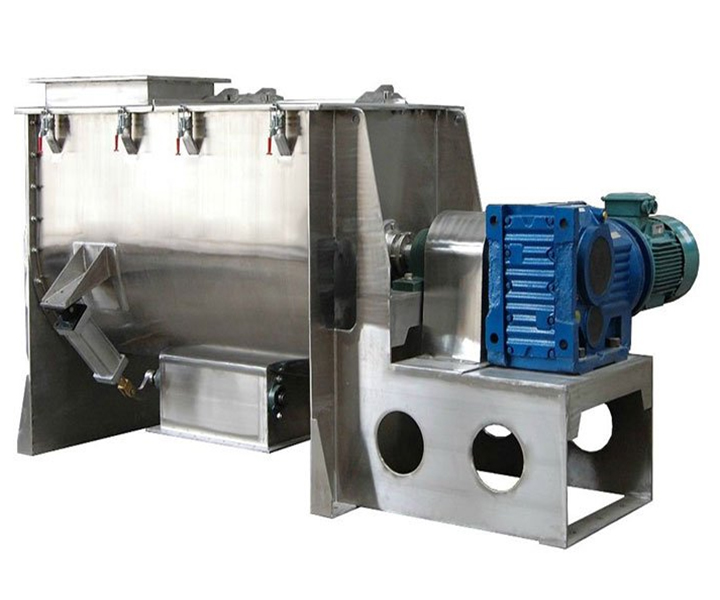
 Email
Email