


Horizontal Mixer for Building Materials from Dahan is a robust, high-performance solution for your production line. Whether you need a horizontal mixer for building materials like cement, sand, or dry mortar, our equipment ensures mixing uniformity ≤3% in just 8-20 minutes. With capacities from 500L to 10,000L and customizable ribbon or paddle designs, this horizontal mixer for building materials is the cost-effective choice for plants of all sizes.
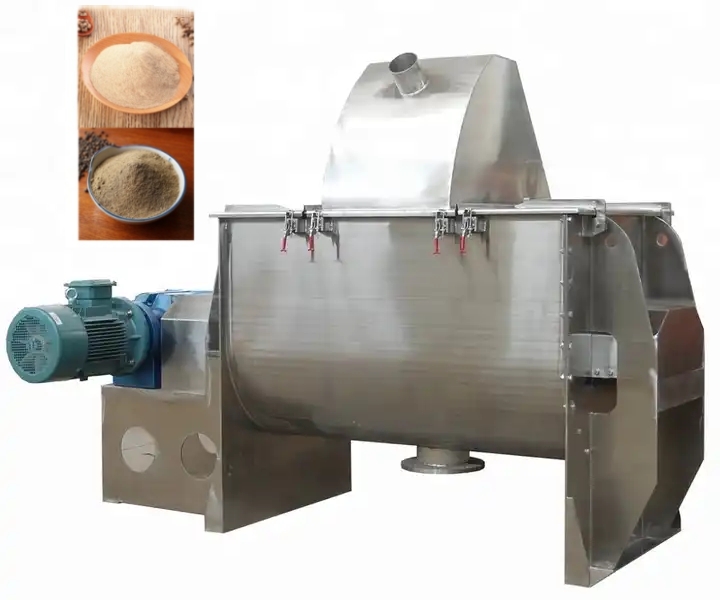
Horizontal Mixer for Building Materials features a horizontal cylinder structure, primarily constructed of carbon steel, making it durable and cost-effective. Its flexible and controllable mixing time allows for thorough and uniform mixing of various building materials within 8-20 minutes. Whether it's basic raw materials like cement and sand and gravel, or composite materials with special additives, ideal mixing results are achieved. The equipment also offers a wide range of capacities, from 500L to 10,000L, to meet the needs of production lines of varying sizes. Furthermore, we support professional customization, allowing us to tailor-make your mixing equipment based on your company's unique process characteristics, site conditions, and other factors.
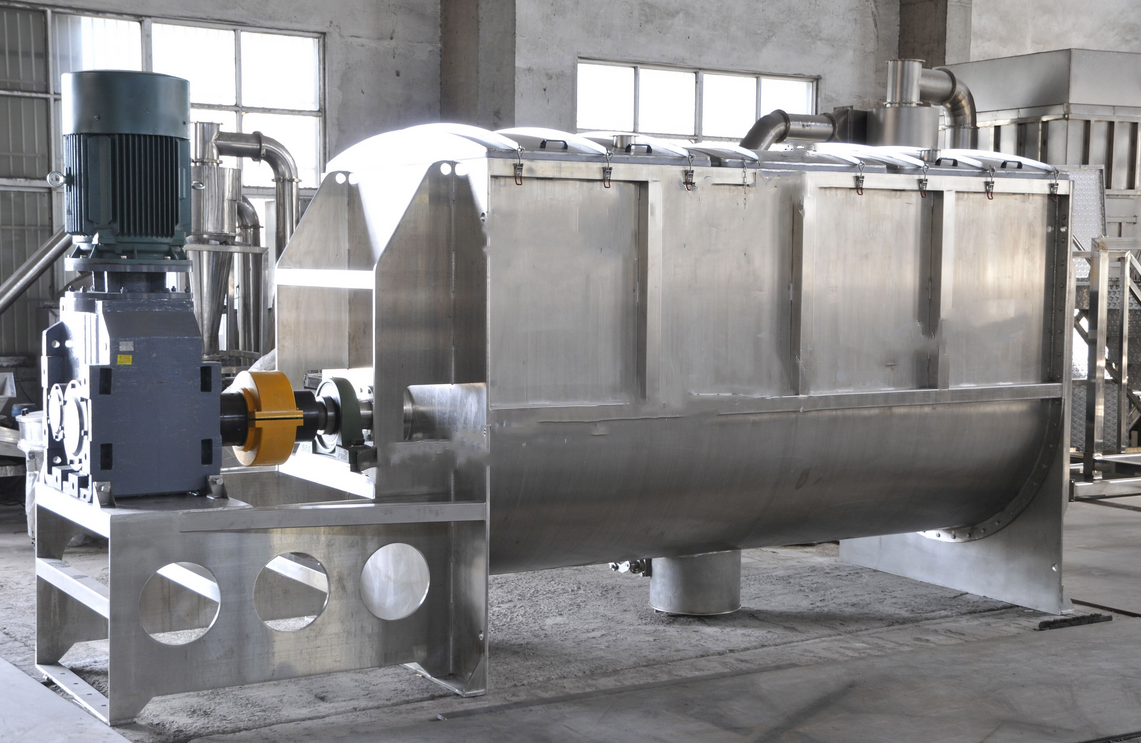
In the building materials industry, Horizontal Mixers for Building Materials are primarily categorized into two types: twin-ribbon horizontal mixers and paddle-type horizontal mixers, depending on their mixing structure and mixing principle. The key differences lie in the design of the mixing components and the material mixing method.
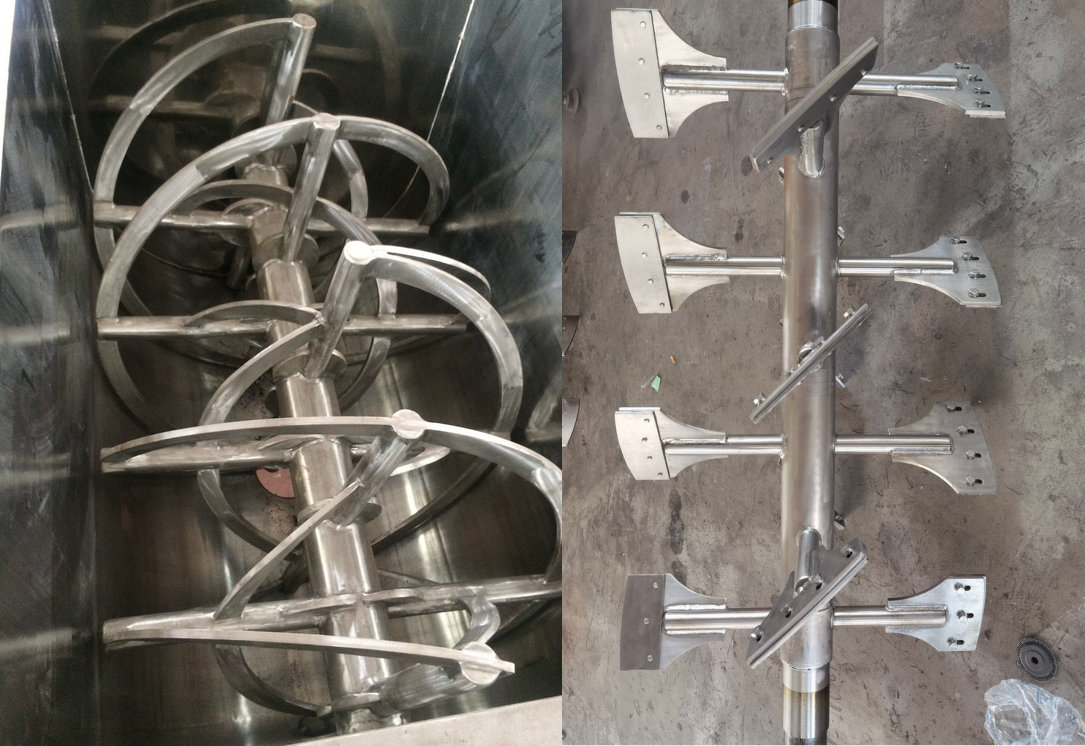
Twin-ribbon horizontal mixers: Their long, U-shaped barrel reduces material resistance. Double or triple-layered ribbon blades create a "convection-diffusion" hybrid mode, with the outer layer channeling materials toward the center and the inner layer feeding materials to the sides. Combined with a pulley-driven cycloidal reducer transmission system, mixing time is only 3-5 minutes, reducing energy consumption by 30% compared to traditional equipment. They can process materials ranging from micron-sized powders to centimeter-sized particles, with a moisture content of 5%-15%.
Paddle-type horizontal mixers: They are the preferred solution for gentle mixing. They utilize a U-shaped or O-shaped barrel to provide a stable mixing space. Dual counter-rotating blades drive the material through a cyclic agitation process. The rotating blades reduce material gravity, achieving zero-gravity mixing. Combined radial, circumferential, and axial circulation eliminates dead spots, resulting in extremely high mixing precision. They are suitable for dry mortar production, chemical powder mixing, and the food and feed industries.
The Horizontal Mixer for Building Materials is customizable, completing mixing in 8-20 minutes. It boasts high mixing uniformity and low residue, adapting to various building materials and production scales.
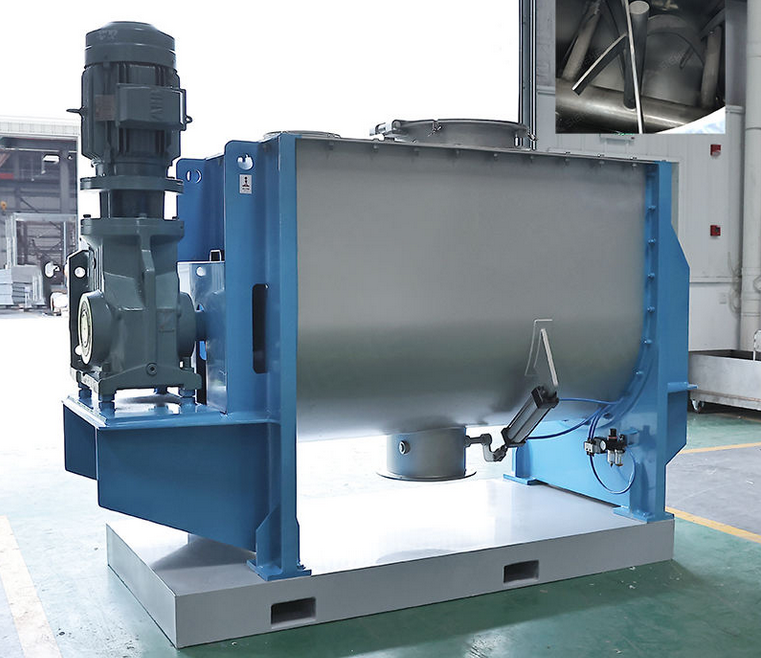
The core structure of the Horizontal Mixer for Building Materials consists of a long, U-shaped cylinder, helical ribbon impellers, and transmission components. Its design strikes a perfect balance between material flow resistance and mixing efficiency.
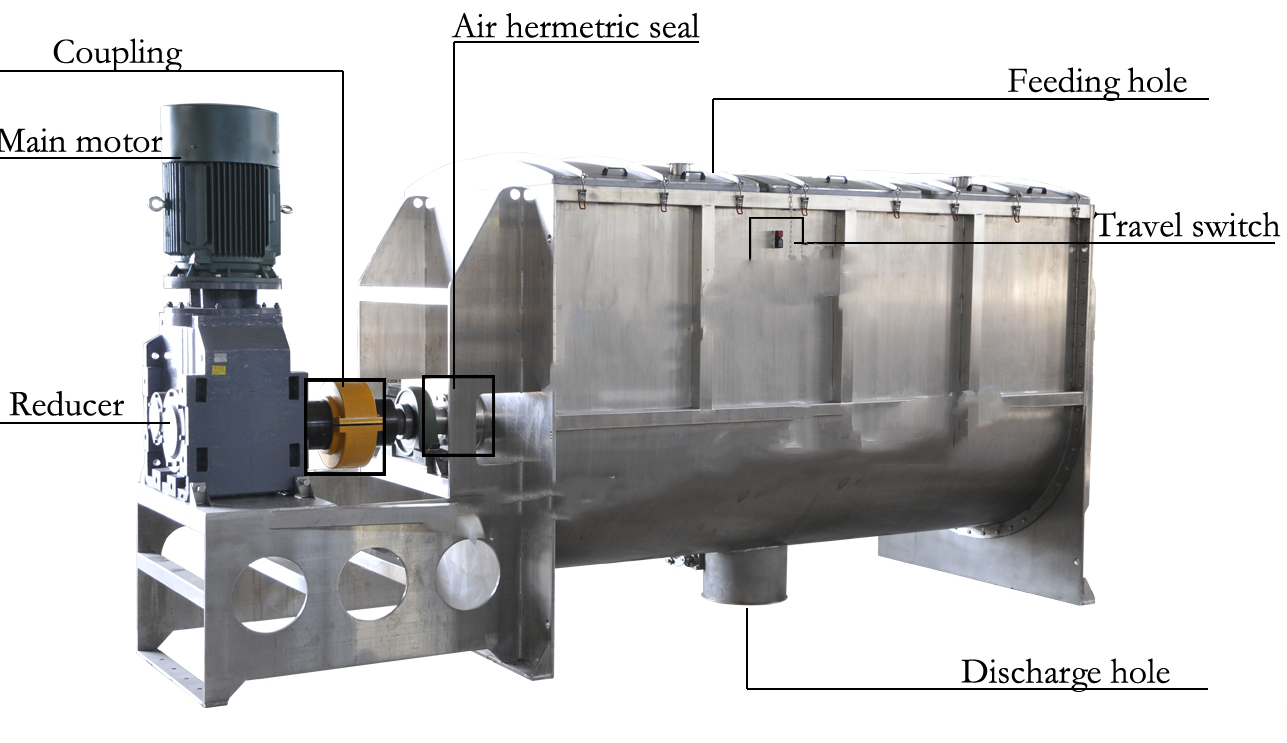
U-shaped cylinder structure: The cylinder features a U-shaped cross-section, resulting in a smaller bottom curvature than vertical or cylindrical structures, significantly reducing the resistance to material sliding along the cylinder wall during mixing. This design ensures stable laminar flow of powders, granules, or semi-fluid materials within the cylinder, avoiding dead zones caused by localized accumulation.
Helical ribbon impeller system: Utilizing a double- or triple-layer structure, the outer ribbons funnel material from the sides of the cylinder toward the center, while the inner ribbons convey material in the opposite direction to the sides, creating a "convection-diffusion" hybrid mixing mode.
Transmission and sealing system: A cycloid reducer is used in conjunction with a pulley drive. Compared to a gear reducer, the elastic connection of the belt drive automatically slips in the event of an overload, protecting transmission components from impact damage. The shaft end seal utilizes a dual structure of a stuffing box and a labyrinth, effectively preventing dust leakage and meeting the building materials industry's requirements for clean production.
After the equipment is started, the motor drives the mixing shaft through a reduction gearbox, rotating the twin helical ribbons or paddles. When building materials enter the horizontal drum through the inlet, the outer helical ribbon pushes the materials from the ends toward the center, while the inner helical ribbon transports the materials from the center toward the ends, creating a continuous convection circulation within the drum. Simultaneously, the shearing action between the paddles or ribbons and the material breaks up material agglomerates, ensuring that trace ingredients such as cement and additives are evenly dispersed throughout the sand and gravel. During the mixing process, the control system can set the mixing time. When the preset time is reached, the butterfly valve at the discharge port opens, allowing the mixed materials to be quickly discharged under stirring, enabling continuous or batch production.
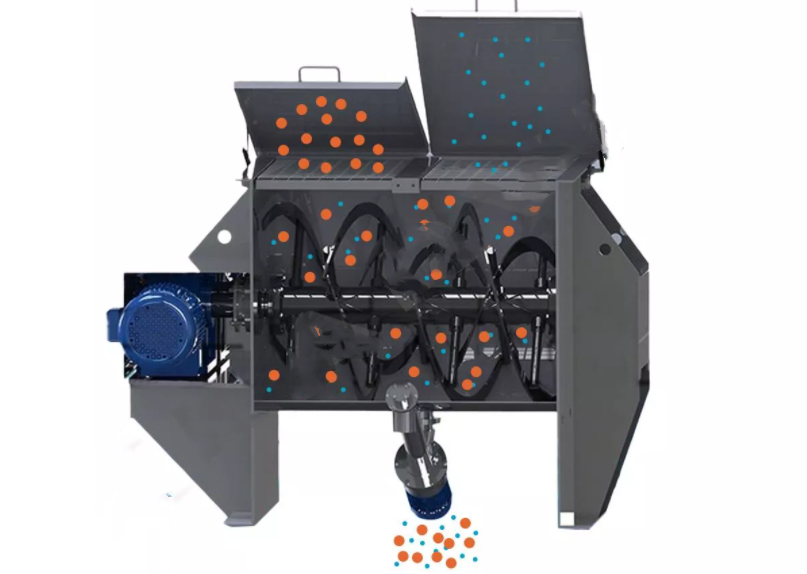
The Horizontal Mixer for Building Materials, with its high-speed mixing and customization capabilities, is widely used in dry-mix mortar, specialty building materials, concrete additives, and other applications. Covering production capacity requirements from 500L to 10,000L, it has become a key piece of equipment for improving production efficiency in the building materials industry.
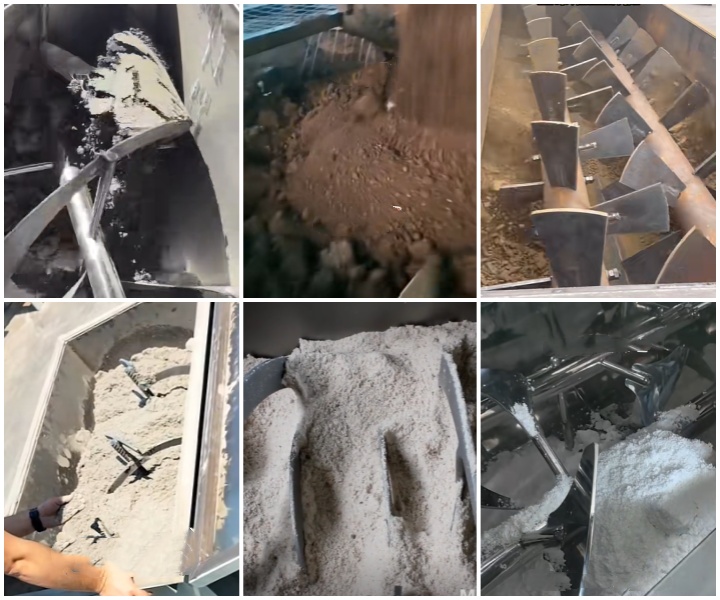
Concrete and Mortar Production: As the core equipment in a batching plant, the horizontal mixer can produce a variety of products, including ordinary concrete, high-strength concrete, and self-leveling mortar.
Dry-mix Building Materials Production: In the production of dry-mix building materials such as putty powder, tile adhesive, and thermal insulation mortar, the horizontal mixer ensures uniform mixing of components such as cellulose, heavy calcium powder, and redispersible latex powder.
Specialty Material Preparation: For specialty concrete containing fiber, lightweight aggregate, or functional additives, the horizontal mixer ensures fiber dispersion ≥95% and lightweight aggregate breakage ≤3% by adjusting the ribbon speed and mixing time.
| Model | LHY-0.25 | LHY-0.5 | LHY-1 | LHY-1.5 | LHY-2 | LHY-3 | LHY-4 | LHY-6 | LHY-8 | LHY-10 |
| One-time mixing (kg) | 100-150 | 200-300 | 400-600 | 600-900 | 800-1000 | 1200-1800 | 1600-2400 | 2400-3600 | 3200-4800 | 4000-6000 |
| Mixing time (min) | 8-20 | 8-20 | 8-20 | 8-20 | 8-20 | 8-20 | 8-20 | 8-20 | 8-20 | 8-20 |
| Mixing speed (r/min) | 60 | 55 | 45 | 40 | 35 | 25 | 25 | 20 | 15 | 15 |
| Motor power (kw) | 3-5.5 | 4-11 | 7.5-15 | 11-18.5 | 15-22 | 18.5-30 | 22-37 | 37-55 | 37-55 | 45-75 |
| Weight (kg) | 500 | 900 | 1800 | 2500 | 3200 | 4100 | 5100 | 6300 | 7500 |
Horizontal mixers for building materials, with their efficient mixing and customization advantages, have proven successful in numerous projects, from capacity upgrades for small and medium-sized building materials plants to stable supply for large-scale engineering projects.
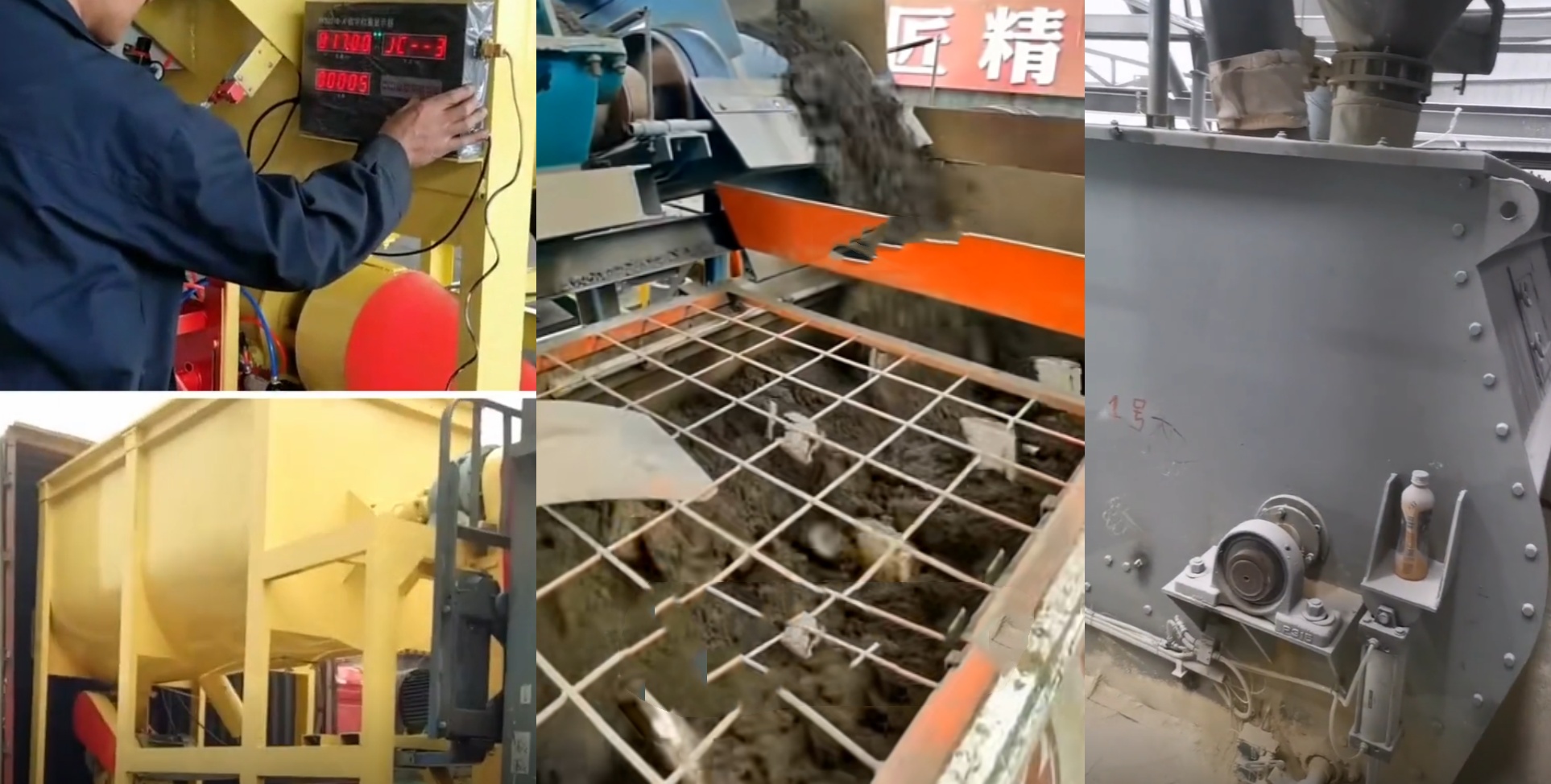
Concrete Mixing Plants: Requires mixing of cement, sand, gravel, fly ash, and admixtures. Choose a horizontal cement tank combined with a double-ribbon mixer. Its double-ribbon design achieves convection circulation: the outer ribbon pushes the sand and gravel to the center, while the inner ribbon reverses the flow, achieving a mixing uniformity of ≤2.5% within 5 minutes.
Dry Mortar Mixing: Requires mixing high-value-added products such as putty powder and tile adhesive. Choose a dual-paddle mixer. Its 45°-angled blades rotate in opposite directions at 60 rpm, utilizing the principle of weightlessness to evenly distribute lightweight additives and heavy sand particles within 15 seconds. Specialty building materials factories need to overcome fiber dispersion challenges and customize a horizontal ribbon-paddle compound mixer. The ribbon section pre-disperses the fibers at a low speed of 15 r/min, while the paddle section activates the powder at a high speed of 120 r/min. The equipment also features a built-in temperature control system to prevent nanomaterial agglomeration.
Selecting a horizontal mixer for building materials requires careful consideration of three key factors: material compatibility, production capacity matching, and application suitability, combined with comprehensive considerations of equipment performance and ongoing maintenance.
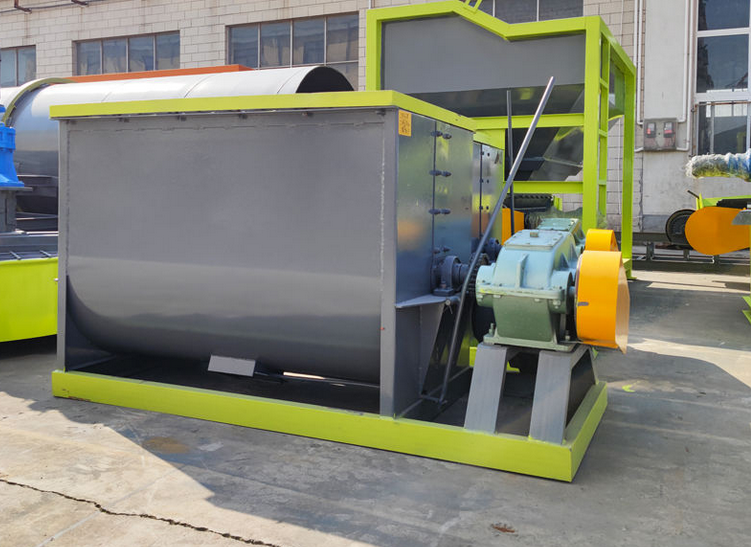
Prioritize material properties: The material's physical form, particle size, and moisture content directly determine the mixer type. For dry powder building materials, a twin-ribbon horizontal mixer is preferred, as its convection mixing mode quickly achieves uniform powder dispersion. For mixing wet materials, high-viscosity materials, or fragile particles, a paddle-type horizontal mixer is more suitable, as its gravity-free mixing principle prevents material breakage. For composite materials such as steel fiber and powder, a ribbon-paddle hybrid mixer is recommended, with its step-by-step speed design ensuring both fiber dispersion and powder activation.
Precisely matching production needs: For production capacity, select equipment capacity based on hourly or batch output. Small and medium-sized mixing plants can choose a 3-6 m³ twin-ribbon mixer, while specialty building materials plants for small-batch custom production can choose a 1-3 m³ hybrid unit. Regarding precision requirements, mixing uniformity for ordinary concrete must be ≤3%, while for high-end dry-mix mortar, ≤1%. Pay close attention to the equipment's mixing speed and gap control to ensure even distribution of trace additives.
Considering both the application scenario and O&M: The specific requirements of production scenarios cannot be ignored. For plateau and cold regions, weather-resistant equipment with thickened steel plates and sealed transmissions is required. Dust-sensitive environments require dust removal devices and fully sealed structures. For automated production lines, models with PLC control systems, vacuum loading, and automatic unloading are recommended to reduce labor costs.
The price of a Horizontal Mixer for Building Materials typically ranges from $2,000 to $9,000 per set. We consider the material characteristics, mixing uniformity requirements, and budget when selecting. The specific price fluctuates depending on the model, material, and functionality. Customized or large-scale equipment may cost over $9,000. Please contact us for a detailed quote at any time. We will recommend the most suitable mixing equipment based on your production needs.
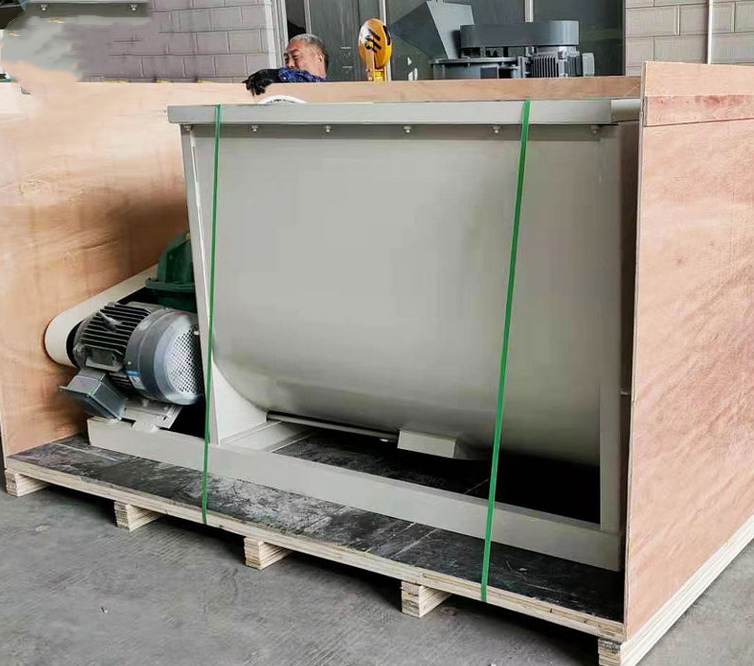
We specialize in the research and development and production of twin-ribbon, paddle, and compound horizontal mixers, providing customized solutions for concrete batching plants, dry mortar plants, and specialty building materials companies. The product boasts high mixing uniformity, low residue rates, and strong adaptability, capable of stable operation in complex environments. We also offer customized services to provide customers with optimal and cost-effective mixing solutions. The drum volume, mixing structure, and auxiliary systems can be tailored to the customer's specific materials. We also provide free technical consultation, trial runs, and lifetime after-sales service.
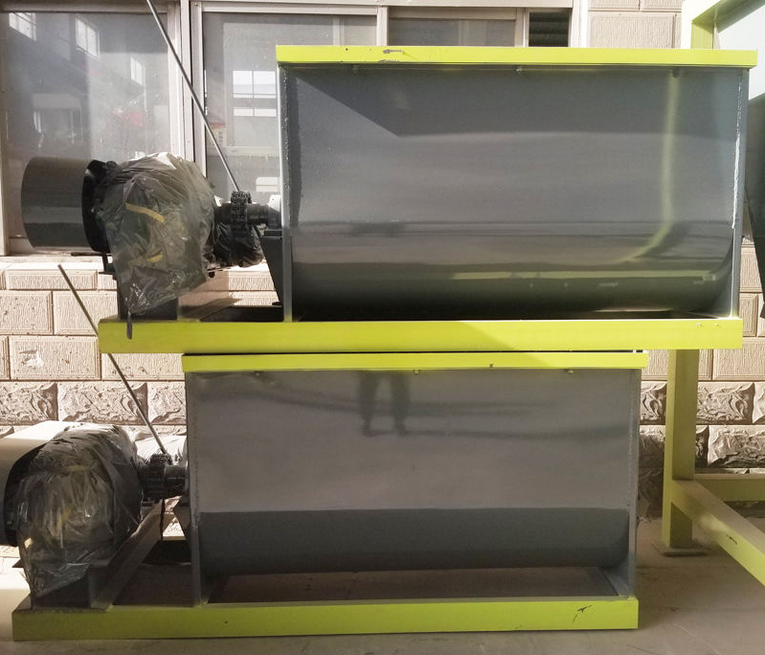
From ordinary concrete to specialized functional materials, from traditional mixing plants to intelligent production lines, the Horizontal Mixer for Building Materials, with its high speed, uniformity, and adaptability, has become an indispensable core piece of equipment in the building materials industry.


Address:China,Yanjin county forest park gate to the west 1000 meters north road.


 Online Chat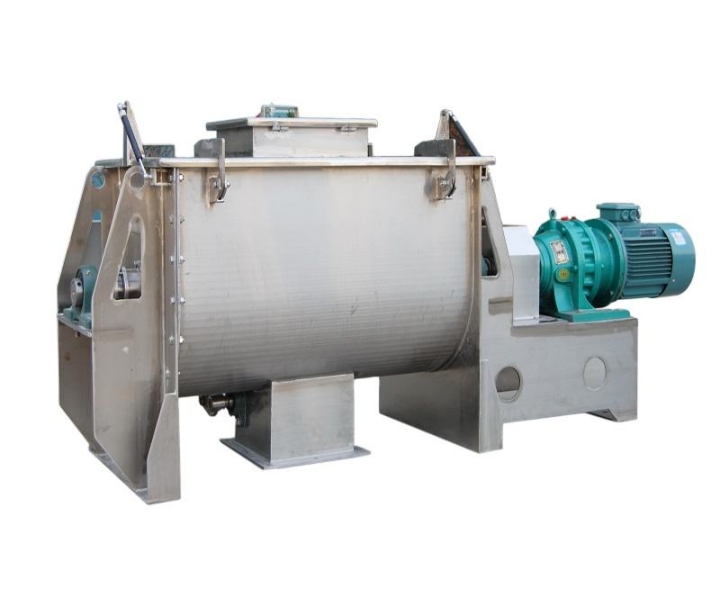
 Email
Email