


If you are handling materials with a bulk density above 50 lb/ft³, a standard ribbon blender will likely disappoint you at full-load startup.
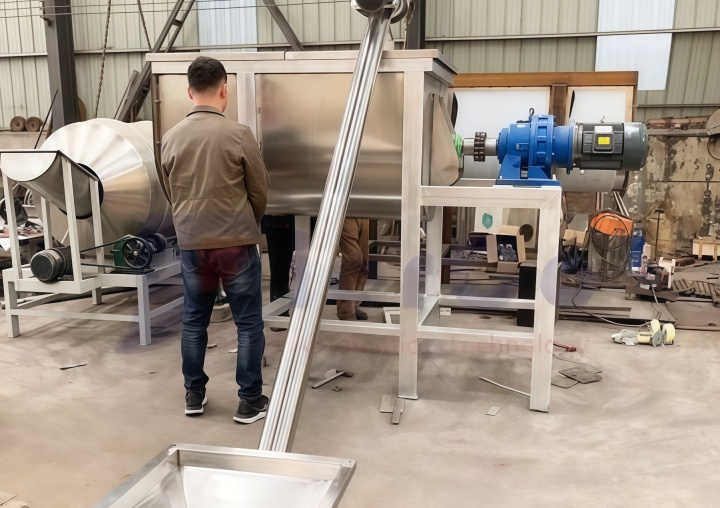
Based on public technical documents from several equipment manufacturers, the following sections break down key decisions for How to Choose a Heavy duty ribbon blender across four dimensions: material density, drive configuration, industry differences, and factory testing.
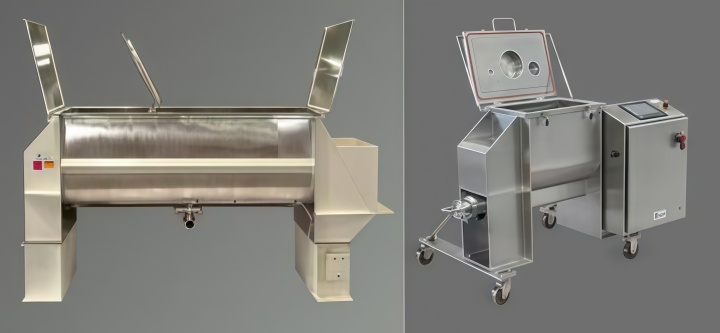
One equipment manufacturer's data shows that standard ribbon blenders handle bulk densities up to about 35 lb/ft³, while a heavy-duty model can process up to about 80 lb/ft³. According to a mineral powder production line retrofit record, a material with a bulk density of 52 lb/ft³ caused a standard 30 hp motor to draw 48 amps at full-load startup, tripping the VFD after 1.2 seconds. After switching to a heavy-duty configuration, the startup current stabilized within 34 amps.
When you Choose a Heavy Duty Ribbon Blender, you need to check motor power and shaft strength against the most demanding formula. The industry uses 1.5 times the motor's rated current as the upper limit for full-load startup peaks.
Once you confirm a heavy-duty model is needed, loading capacity and drive method are two interrelated decisions. Working volume affects batch capacity, while drive method affects operational reliability. Both need to match material density and batch targets.
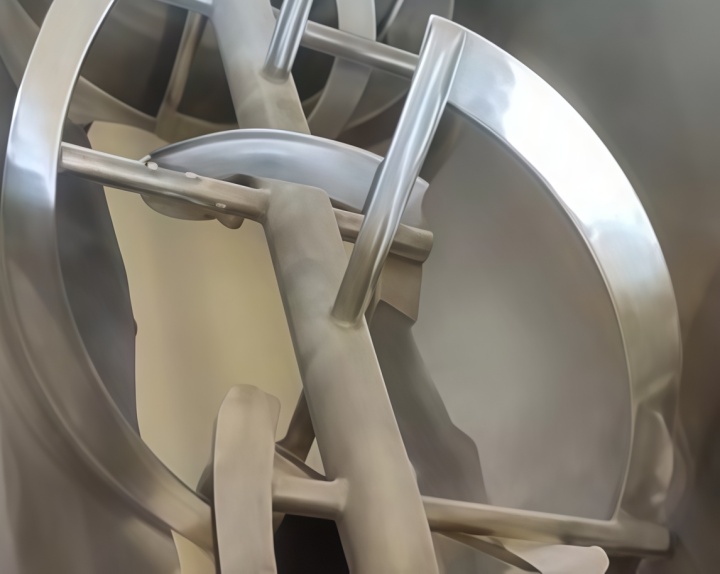
Working volume is not the same as vessel volume. One equipment manufacturer notes that a ribbon blender needs material filling of 30 to 40 percent of rated volume to form effective circulation. Heavy-duty models typically have a working volume of 60 to 70 percent of total vessel volume, so selection should match effective working volume to batch weight.
Direct-drive gear motors are preferred for drive type.An integrated motor-reducer direct drive reduces power loss from belt or chain slippage compared with belt or chain transmission. One heavy-duty model uses a 7.5 hp variable frequency motor direct-driven to 56 rpm, with a VFD for soft start and overload protection. If the VFD frequently reports overload, motor power reserve or shaft strength needs rechecking.
The same equipment has notably different configuration priorities across food, chemical, and new energy battery material industries. Food focuses on cleaning efficiency and residue control, chemical focuses on seal reliability and corrosion resistance, and new energy battery materials focus on metal contamination control. Material standards, sealing methods, and cleaning requirements differ across all three.
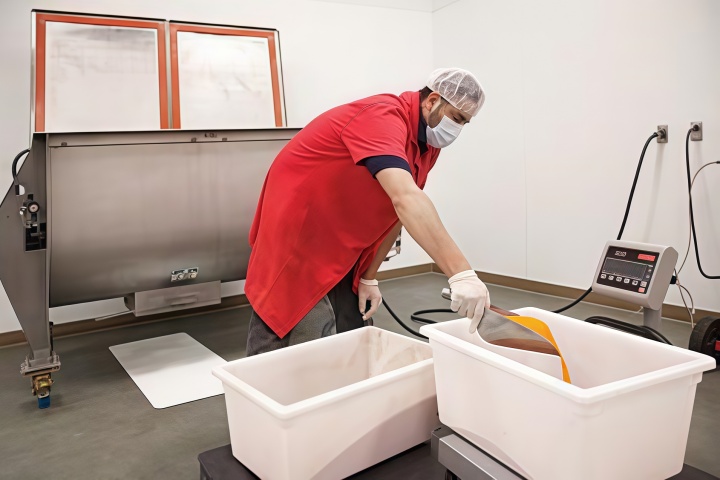
Food industry.One heavy-duty model uses 316 stainless steel, with an internal surface polished to 150 mesh, quick-release clamps, and FDA-compliant gaskets. The gap between the ribbon agitator and vessel wall is controlled at 3.2 to 4.8 mm, and residue can be kept below 0.5 percent of batch weight. A larger gap leads to higher residue, with the specific increase depending on material flowability. For production lines with frequent batch changes, a quick-release agitator shaft and flush-type discharge valve are necessary configurations.
Chemical industry.A seal company case shows that a botanical extract manufacturer using packing seals had to replace packing every 1 to 2 months, each replacement taking 1 to 1.5 hours, consuming 5 hours per month in maintenance, with product leakage costing $500 to $600 per day. After switching to an air-purge mechanical seal, the seal ran maintenance-free for five years, and batch cleaning time dropped by about 30 percent.
New energy battery materials.Metal impurity targets in cathode materials are below 1 ppm. The industry uses nickel-based tungsten carbide alloy sprayed agitators, with wear resistance 5 to 10 times that of stainless steel, coating thickness over 1 mm, and temperature resistance up to 600 degrees. The vessel inner wall has a tungsten carbide coating of 0.2 to 0.35 mm. Coating integrity at the discharge port and agitator edges affects material purity.
Parameter calculations and industry comparisons only narrow the range. To truly verify whether the equipment fits your material, you need to run four on-machine tests before purchase: full-load startup current, mixing uniformity, discharge residue, and batch cleaning time. These four items correspond to power reserve, mixing performance, material loss, and actual processing capacity, forming the core of selection verification.
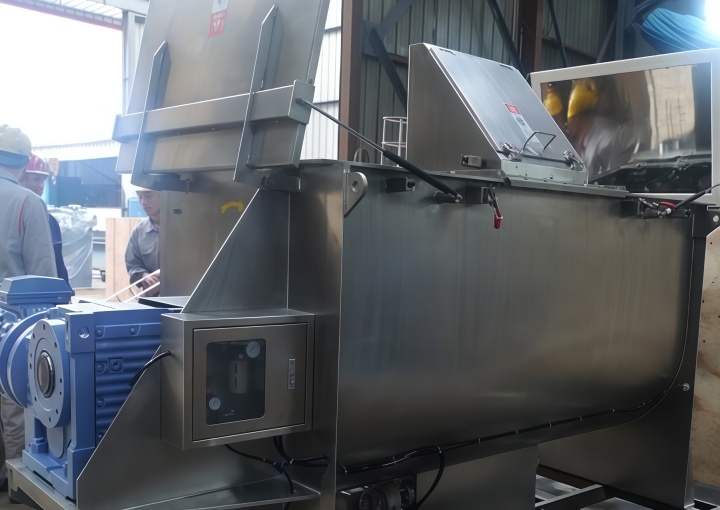
Full-load startup current.Fill to the upper working volume limit with higher-density material. If the peak exceeds 1.5 times the motor's rated value, power reserve is insufficient. This threshold applies to most heavy-duty model selections for high-density powders.
Mixing uniformity verification.One equipment manufacturer's guideline requires sampling across front, middle, and rear of the vessel, at different depths, and during early, middle, and late discharge stages, with at least 10 samples. The pharmaceutical industry's FDA requirement is RSD no more than 0.05, and well-performing models can reach no more than 0.03.
Discharge residue.In one case, a 3 mm gap design effectively reduced residue. The target for heavy-duty models is residue below 0.5 percent of batch weight. If it exceeds this, the bottom gap or discharge valve design needs reassessment.
Batch cleaning time measurement. One automated cleaning solution supplier's data shows that rotary spray heads and similar automated cleaning methods can speed up cleaning cycles by 70 percent. Traditional models require 60 to 90 minutes for batch cleaning, while models with quick-release structures and flush-type discharge valves can shorten this time. Testing with your actual formula is recommended.
The process of Choose a Heavy Duty Ribbon Blender is about asking how the material actually behaves. Density affects power boundaries, working volume affects batch capacity, drive type affects operational reliability, industry differences affect configuration priorities, and testing affects final verification.
These four dimensions are interconnected. Underestimating any one of them will show up after production starts as downtime or quality fluctuation. Run on-machine tests with your actual formula and batch targets. Selection decisions verified with data are more reliable than comparing parameters on a specification sheet.
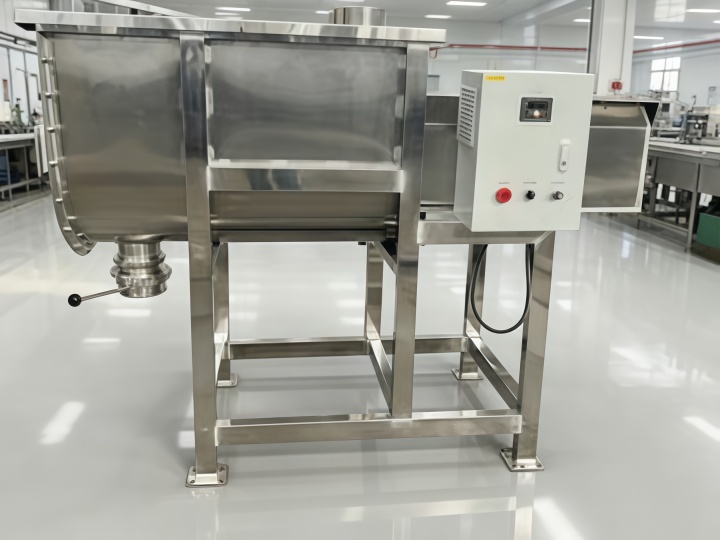
Simple replacement is not recommended. One equipment manufacturer's technical bulletin notes that a larger motor can exceed the torque capacity of a standard agitator shaft, potentially causing shaft bending or breakage. The right approach is to contact the manufacturer to evaluate shaft strength before changing materials, or select a heavy-duty model.
Traditional packing seals in abrasive powder conditions may need replacement every three to four weeks, taking 1 to 1.5 hours each time. Air-purge mechanical seals can extend the cycle. In one case, the seal ran maintenance-free for five years.
Ask the supplier to run a full-load test with your actual formula and provide three verifiable data points: whether the full-load startup current peak is within 1.5 times the motor's rated value, whether mixing uniformity RSD is within 0.05, and whether discharge residue is below 0.5 percent of batch weight. Suppliers that only provide specification sheets and refuse testing have a relatively higher chance of problems when you change materials or increase output later.
Under normal operating conditions, a well-designed model typically keeps noise below 80 decibels. If noise clearly exceeds this range during operation, it often indicates shaft misalignment or bearing wear, and the machine should be stopped for inspection.


Address:China,Yanjin county forest park gate to the west 1000 meters north road.


 Online Chat

 Email