


How to Choose a Horizontal Mixer for Building Materials, the core task is to work backward from material properties, output targets, and operating costs to determine working volume and mixing structure.
Our factory is located in Xinxiang, Henan, and has focused on mixing equipment manufacturing since 2008. The factory area is 10,000 square meters, and the site has undergone ISO quality system audits and EU CE compliance assessment.
The following content comes from frontline records of selection guidance and commissioning services for dry mortar production lines in China and abroad. Working volume, mixing structure, uniformity verification, energy and maintenance, and feeding and discharging design are linked to one another. Each is discussed below.
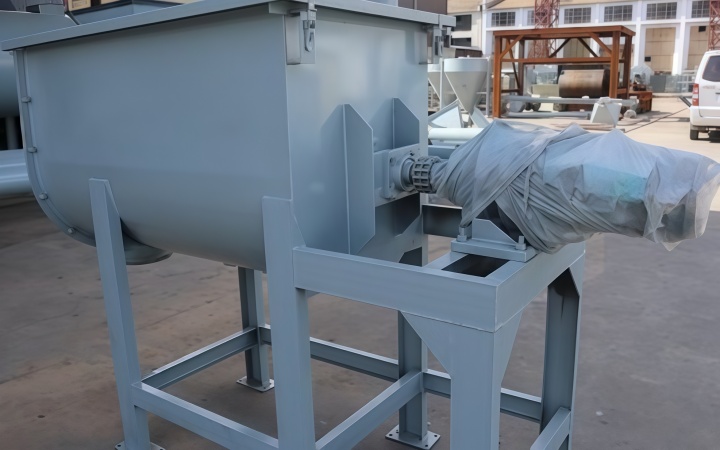
Start with working volume. For a horizontal mixer with a nominal capacity of 2,000 liters and a bulk density of 1.4 tons per cubic meter, the actual batch load is about 1.4 to 1.8 tons. Our factory produces horizontal mixers from 500 liters to 10,000 liters.
Industry test data show that the reasonable fill rate for dry mortar mixers is usually kept between 50 and 70 percent of total volume. For twin-shaft paddle mixers, the fill rate can be widened to 75 to 80 percent. When the fill rate is below 30 percent, the contact area between material and mixing parts is insufficient, and the passive mixing zone expands.
For a daily output of 10 tons and 6 hours of operation per day, with a 7-minute cycle per batch, the single-batch output must be calculated backward to determine total volume. For production lines with frequent formula changes, a smaller batch size with fast changeover is preferable to sacrificing flexibility for single-batch output. This is the first parameter to confirm when you Choose a Horizontal Mixer for Building Materials.
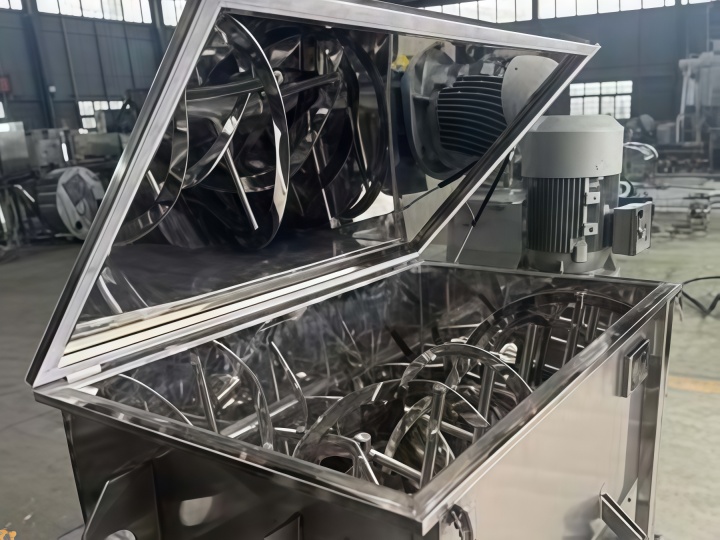
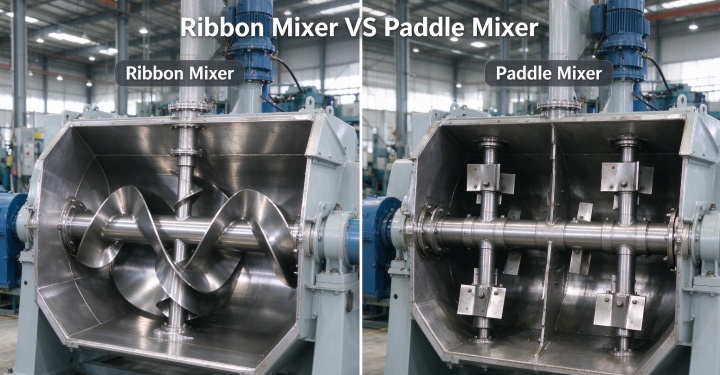
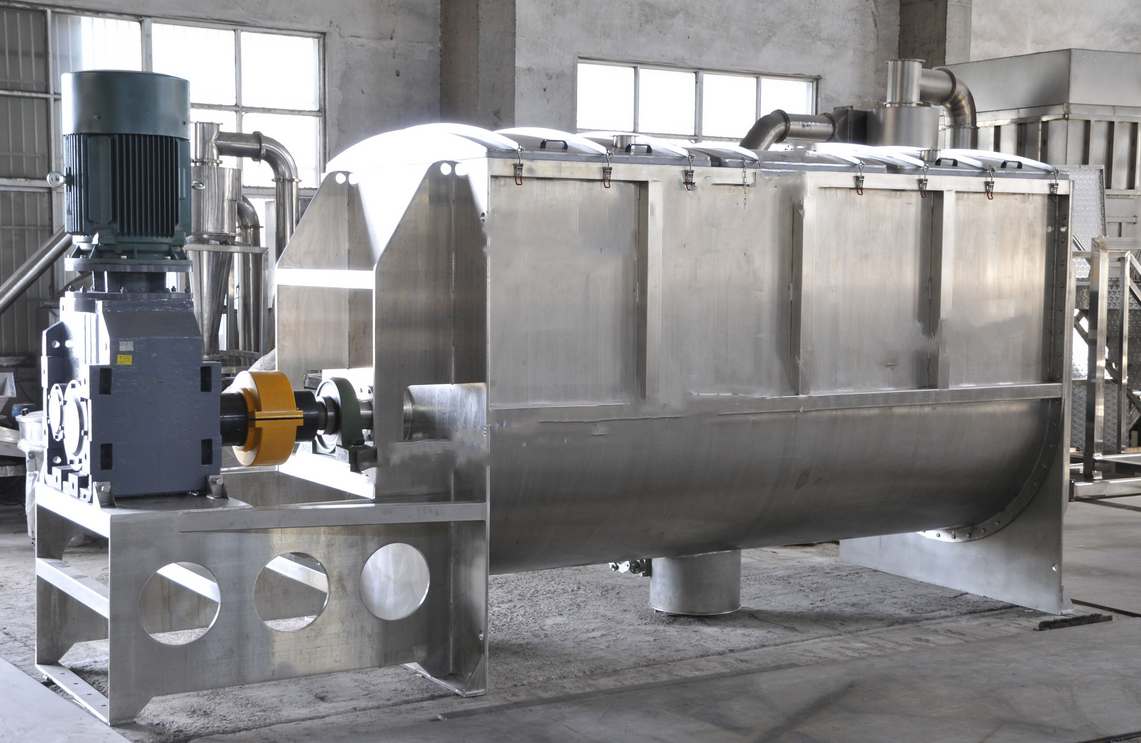
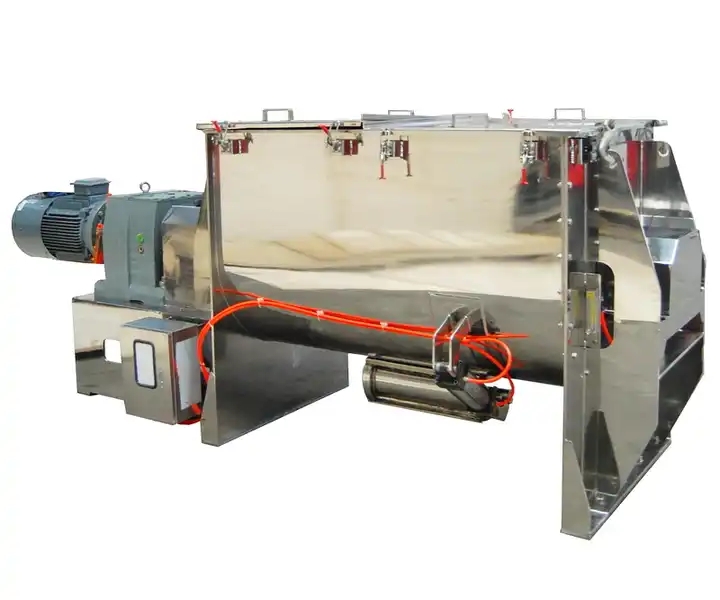
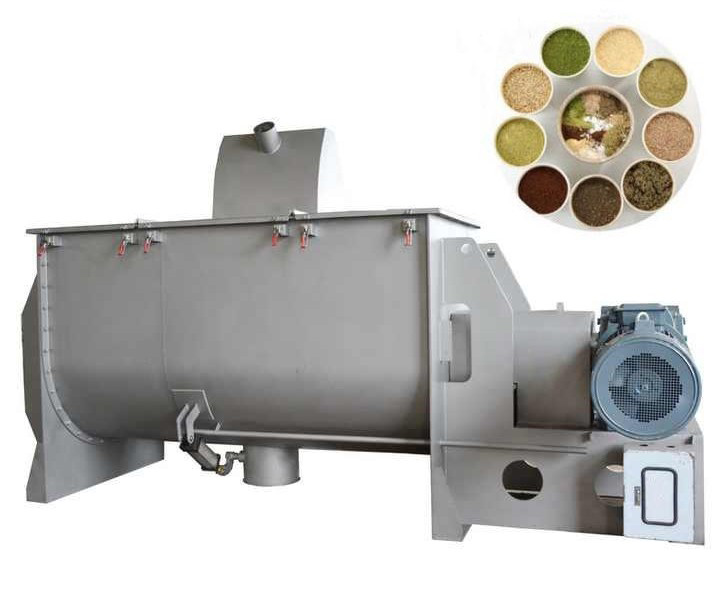
Ribbon mixers rely on inner and outer spiral ribbons pushing in opposite directions. They suit dry powders and granules with good flowability, with batch times of five to fifteen minutes. Paddle mixers create mechanical fluidization through high-speed rotation. They adapt more readily to formulas with large density differences or lightweight aggregates and fiber additives, and mixing cycles can be shortened to two to eight minutes.
Both structures can be produced, with custom materials including carbon steel, 304 stainless steel, and 316L stainless steel. When commissioning a thermal insulation mortar line for a customer, we found that a formula containing expanded perlite showed noticeably less floating and settling after switching to a paddle structure.
Industry practice shows that ribbon mixers are the main type for standard dry mortars such as masonry mortar, plastering mortar, and putty powder. Paddle mixers perform well in special formulas such as tile adhesive, self-leveling mortar, and thermal insulation mortar. Structure selection cannot rely only on manuals. Actual material testing is needed, and sample trial runs can be provided. When you Choose a Horizontal Mixer for Building Materials, this judgment directly affects whether the equipment matches your formula.
Mixing uniformity is measured by the coefficient of variation. Our factory's horizontal mixers can keep the coefficient of variation at 0.03 or lower, with mixing times of eight to twenty minutes. Industry data show that a well-adjusted ribbon mixer can reach a coefficient of variation below 0.05, and a twin-spiral model can reach 0.015 or lower.
Longer mixing time is not always better. A discrete element simulation study of a single-shaft horizontal forced mixer showed that 30 rpm gives a good balance between energy consumption and mixing performance. When the coarse aggregate particle size increased from 9 mm to 15 mm, the mixing uniformity index dropped from 0.9 to 0.6. The study can be found publicly in the journal Powder Technology.
After the equipment arrives, a mixing time curve test should be run to find the shorter time corresponding to the uniformity peak, and that time should be set as the standard operating parameter. This is also an often overlooked verification step when you Choose a Horizontal Mixer for Building Materials
Energy consumption is an operating cost that is easily underestimated during selection. Industrial mixing energy test reports show that a single-shaft dry mortar mixer consumes about 2.2 to 3.0 kWh per ton, while a twin-shaft forced mixer consumes about 1.6 to 2.5 kWh per ton.
Our factory's ribbon mixers use optimized ribbon speed and pitch design, which helps control operating energy while maintaining mixing uniformity. The reliability of shaft-end seals under fine powder conditions affects maintenance costs. Powder industry cases show that if seal failure is not handled in time, leakage gradually worsens and can eventually damage the outer bearing, causing unplanned downtime.
Our horizontal mixers have adjustable main shafts or wear-resistant treatment, which helps maintain stable mixing performance during continuous operation. The complete machine has a one-year warranty, and core parts have a six-month warranty. For decision makers who need to Choose a Horizontal Mixer for Building Materials, these data matter more than purchase price.
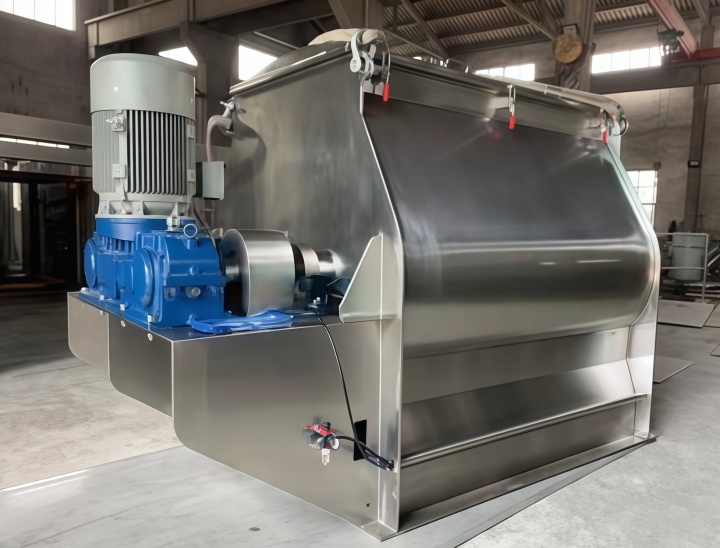
The correct feeding sequence can shorten the mixing time for multi-component powder formulas by nearly one third. Sand and cement, which make up the larger proportion, should be added first. After they form a flowing state, micro-additives should be added. Additives fed through a screw conveyor tend to segregate, so a skip hoist or manual one-time feeding should be used instead.
For discharging, side-outlet discharge causes material to be stirred repeatedly during discharge. A full-bottom opening or a large-diameter pneumatic valve allows the material to be discharged quickly as a whole. Our factory's horizontal mixers use a conical bottom and pneumatic discharge structure, and material residue can be controlled at 0.005 or lower.
This is also an often overlooked step that affects yield when you Choose a Horizontal Mixer for Building Materials.
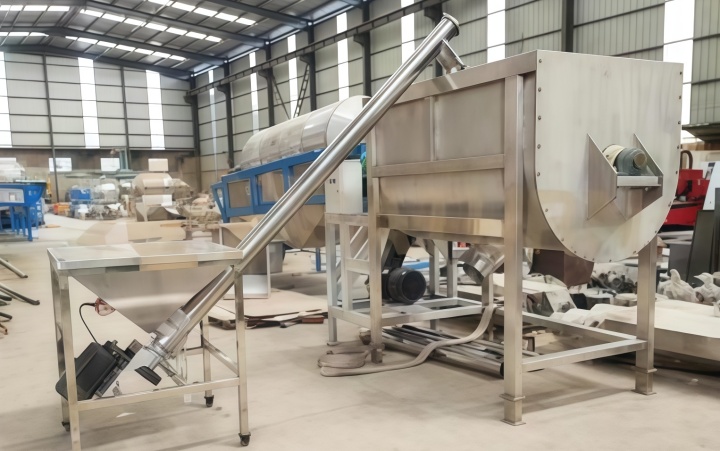
Particle size distribution, moisture content, and whether fiber or lightweight aggregate is present should also be provided. These data affect whether the mixing structure matches when you Choose a Horizontal Mixer for Building Materials, and our factory provides sample trial runs.
Normal wear usually occurs over six to twelve months. Frequent powder leakage within a short period indicates that the seal form does not match the powder fineness, and an air seal or combined seal structure should be used instead.
Check whether there are dead corners between the inner wall and mixing parts, and whether the discharge outlet can drain residue completely. Our factory's equipment can be cleaned with a short idle air purge during changeover.
First confirm that the motor rotation direction is correct, there are no hard objects in the trough, and the lubrication system oil level is normal. A half-load batch is recommended before raising to rated load.
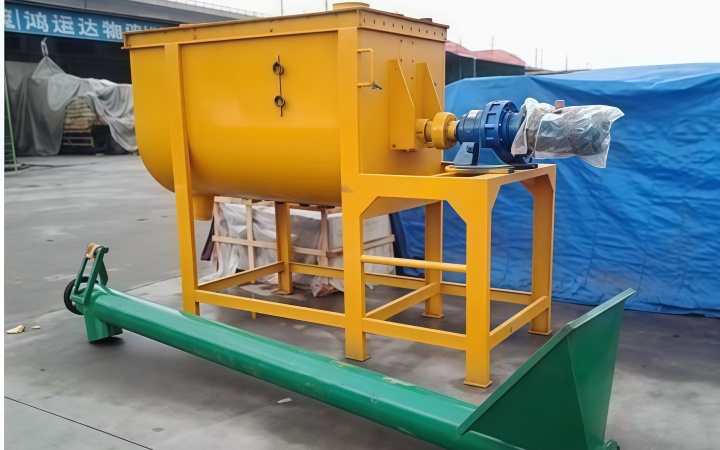
When you Choose a Horizontal Mixer for Building Materials, whether the equipment shows a difference from lower-priced models by the third month of production depends on three data points: mixing cycle, power consumption, and wear part replacement frequency. From working volume calculation to feeding and discharging design, each step affects output.
Since its establishment in 2008, our factory has provided mixing equipment and selection support for several dry mortar and thermal insulation mortar production lines in China and abroad. If you have specific material parameters and output targets, an actual mixing test combined with full-cycle cost accounting is often more useful than reading many brochures. You are welcome to discuss formulas and working conditions with us to obtain judgment support that fits the site.


Address:China,Yanjin county forest park gate to the west 1000 meters north road.


 Online Chat
 Email