


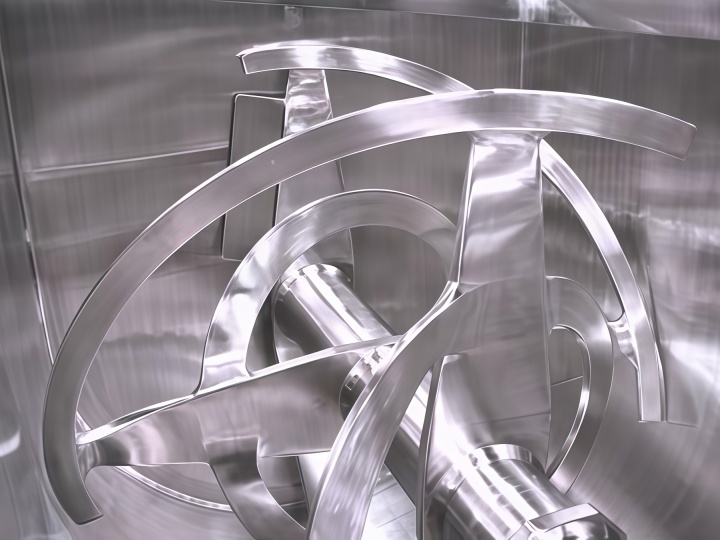
The Double ribbon mixer relies on the reverse convection structure formed by inner and outer ribbon blades to mix powders, granules and low-viscosity paste materials evenly.
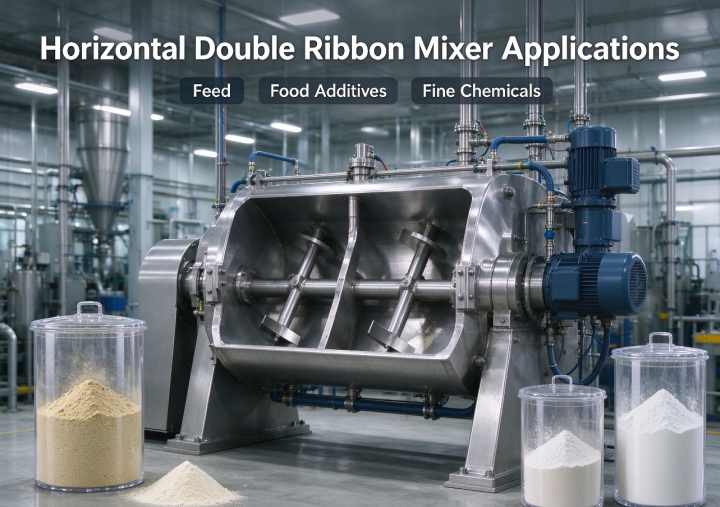
It is widely used in feed, food additive and fine chemical powder sectors. Many factories overlook the matching between material characteristics and chamber structure during selection, which may lead to uneven mixing, material residue and powder leakage on site. Double Ribbon Mixer Manufacturer can customize chamber structures according to physical properties of materials to address mixing dead zones, cleaning obstacles and shaft-end seal failures. Custom services cover structural design, material selection and pre-delivery performance testing to meet batch production demands across industries.
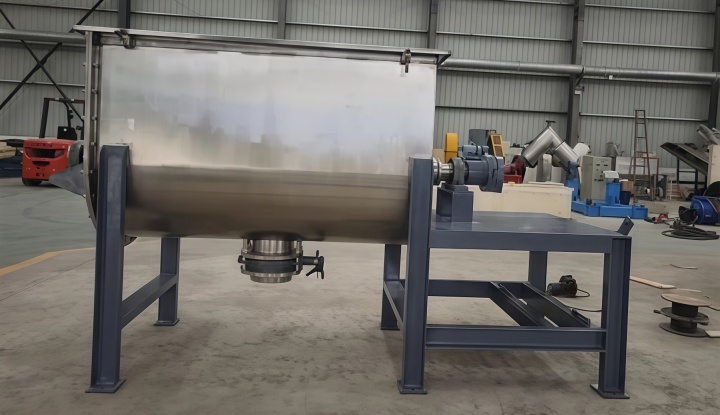
This guide covers seven modules including core equipment capability, application boundaries, material selection logic, specification reference, overseas field case, supplier screening and maintenance suggestions to support your evaluation.
Double Ribbon Mixer Manufacturer can adjust the gap between double ribbon blades and polish the inner chamber surface to reduce powder adhesion and lower cross-contamination risks between batches. In industrial powder mixing workplaces, common troubles include excessive batch variation, cross-contamination from material changeover and powder leakage. Inside the horizontal U-shaped trough, inner and outer ribbons create bidirectional material circulation to shorten mixing cycles.
For ultra-fine powders, upgraded shaft-end seals can be arranged to restrain powder escape and cut material loss. The equipment volume ranges from lab, pilot to production scale, suitable for dry powder and slightly moist powder. Reserved inner space facilitates cleaning and satisfies hygiene requirements in feed and food processing.
Material physical features decide equipment configuration, and many buyers ignore working condition boundaries in the selection phase. In feed processing, this mixer handles grain powder and trace mineral premix, with smooth discharging to ease powder segregation. For food additives and seasoning powder, strict requirements apply to inner surface finish and hygiene conditions.
Some chemical powders carry corrosive features and require anti-corrosion treatment for the chamber. This machine works for construction powder and soil conditioning powder, yet it is not fit for continuous processing of high-viscosity paste or bulk solid materials. Food and beverage sectors occupy a large share among users of horizontal double ribbon mixers, followed by pharmaceutical and fine chemical fields.
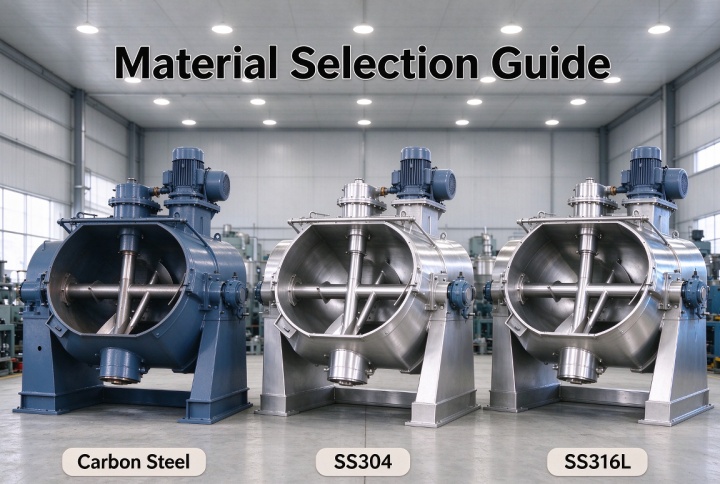
Chamber material affects equipment condition and product safety, which cannot be skipped during selection. Carbon steel brings lower procurement cost and suits non-corrosive ordinary dry powder, with anti-rust coating available on surface. Grade 304 stainless steel fits feed and food scenarios, meeting basic hygiene requirements and easy washing.
Grade 316L stainless steel shows stronger corrosion resistance for acidic powder and scenarios requiring higher cleanliness. Material selection shall combine material pH value and cleaning methods. Random adoption of high-grade stainless steel will generate extra expenditure. Models targeting European and American markets can be equipped with CE, ATEX and FDA-compliant polishing options to fit compliance requirements in different regions.
When estimating production scale, you may narrow down options with commonly adopted industry parameters. Available chamber volume falls between 50L and 20000L. Standard mixing cycles last from 5 to 10 minutes, while complex multi-component powder may take up to 15 minutes. Variation coefficient of mixing uniformity stays within a moderate scope.
Discharge options include manual bottom butterfly valve or pneumatic quick-release valve for regular and sealed discharging scenarios. Motor power matches chamber size, and large-volume units are fitted with reduction mechanisms for stable ribbon operation. Chamber length and ribbon thickness can be customized to fit space constraints on workshop sites. The recommended filling level sits between forty and seventy percent of effective chamber volume. Mixing uniformity will fluctuate once filling volume goes beyond this scope.
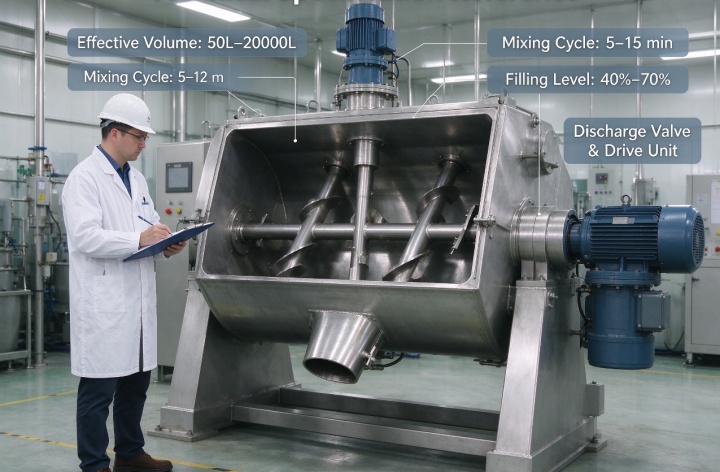
A large-scale pig feed plant in Poland mixes grain base powder, vitamins and trace minerals. Raw materials carry wide differences in density and particle size, and the old mixer brought obvious fluctuation of nutritional indicators across batches. The plant adopted horizontal double ribbon mixer for dry powder premixing.
Before the upgrade, deviation of crude protein in batches fluctuated within a certain range. After switching to double ribbon equipment, variation coefficient of batch composition narrowed to a smaller scope, and powder segregation was relieved. When solid content rises above seventy percent and forms thick paste, mixing performance of this machine will decline and alternative mixing equipment should be considered. If powder agglomeration is underestimated in selection, expected mixing results cannot be achieved even with double ribbon mixers.
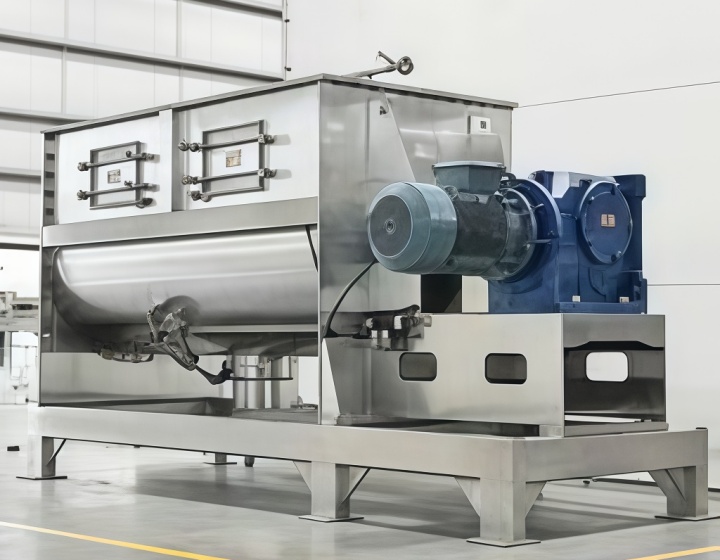
Supplier evaluation should not rely merely on quotations. Fabrication quality and delivery execution capability deserve assessment. Double Ribbon Mixer Manufacturer collects parameters such as material density, single feeding weight and corrosiveness to match chamber material and driving systems, avoiding energy waste caused by oversize or undersize selection.
At early cooperation stage, Double Ribbon Mixer Manufacturer can carry out mixing tests with real samples to verify mixing performance and prevent underperformance after equipment arrival. Key inspection points include welding quality, seal assemblies and motor parameters. Delivery timeline shall also be confirmed to avoid delays for workshop expansion. Export orders require complete compliance documents in advance to satisfy customs and compliance rules in EU, North America and Southeast Asia.
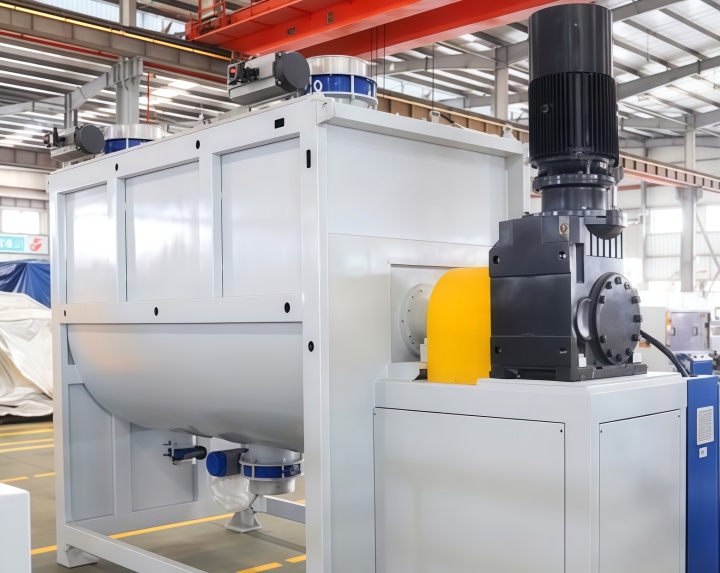
Smooth equipment operation relies on ongoing technical support, which many purchasing teams overlook in early assessment. Double Ribbon Mixer Manufacturer provides complete operation manuals to guide operators on startup, shutdown and regular inspection of seals and transmission components for stable equipment condition.
Double Ribbon Mixer Manufacturer can supply standard spare parts list for quick replacement of consumables and shorter downtime. Double Ribbon Mixer Manufacturer implements no-load and loaded testing before shipment to spot abnormal noise and leakage risks. After commissioning, technical team can offer remote troubleshooting guidance to ease maintenance workload and manage overall equipment expenditure.
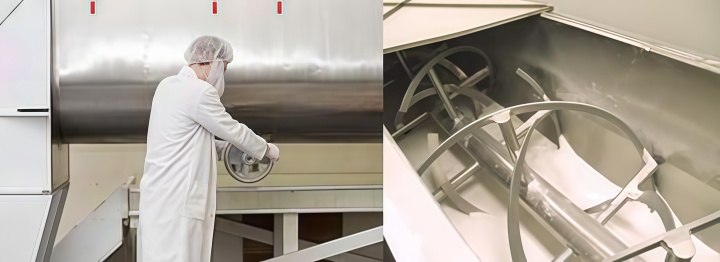
Many overseas buyers consult Double Ribbon Mixer Manufacturer about selection boundaries, installation matching, export adaptation and filling ratio when exploring powder mixing equipment. Below are common inquiries.
A: The recommended filling range is forty to seventy percent of the effective tank volume. Excess or insufficient filling will break internal material circulation and disturb mixing uniformity.
A: Spraying assemblies are optional for even small-volume liquid injection while stirring powder. This machine is not suitable for continuous processing of high-liquid viscous materials.
A: The driving system can be customized for voltage and frequency of target markets. Confirm motor and inverter electrical parameters during selection.
A: Bidirectional convection mixing of double ribbon mixers works well for powder with large density differences. Single ribbon mixers fit simple formulations and smaller production scale.
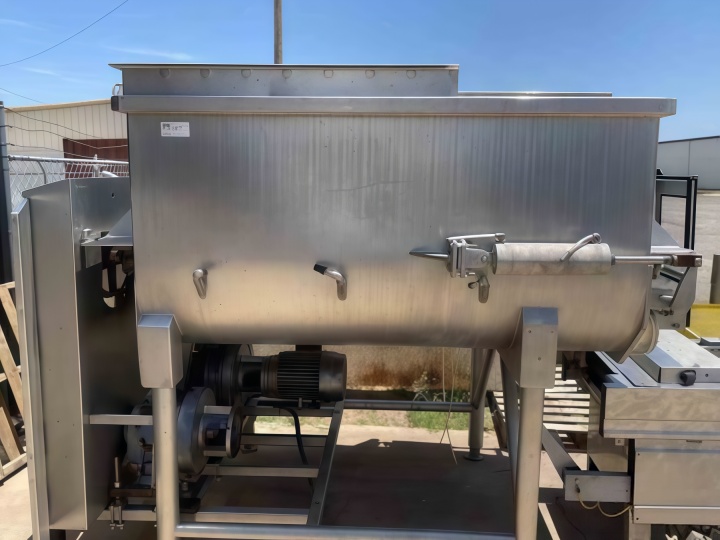
This article explains working principles of double ribbon mixers and summarizes core challenges during procurement. Selection logic is elaborated from equipment performance, application boundaries, material options, technical parameters, overseas project case, supplier screening and maintenance schemes. Mixing quality, fabrication craft and supporting technical services relate to steady workshop operation.
When cooperating with Double Ribbon Mixer Manufacturer, you can obtain customized solutions based on material features and workshop conditions besides standard equipment, cutting expenses from trial and error in selection. If you are assessing powder mixing solutions, submit material characteristics, production scale target and workshop conditions. Contact Double Ribbon Mixer Manufacturer for non-obligatory selection evaluation and equipment proposals.


Address:China,Yanjin county forest park gate to the west 1000 meters north road.


 Online Chat
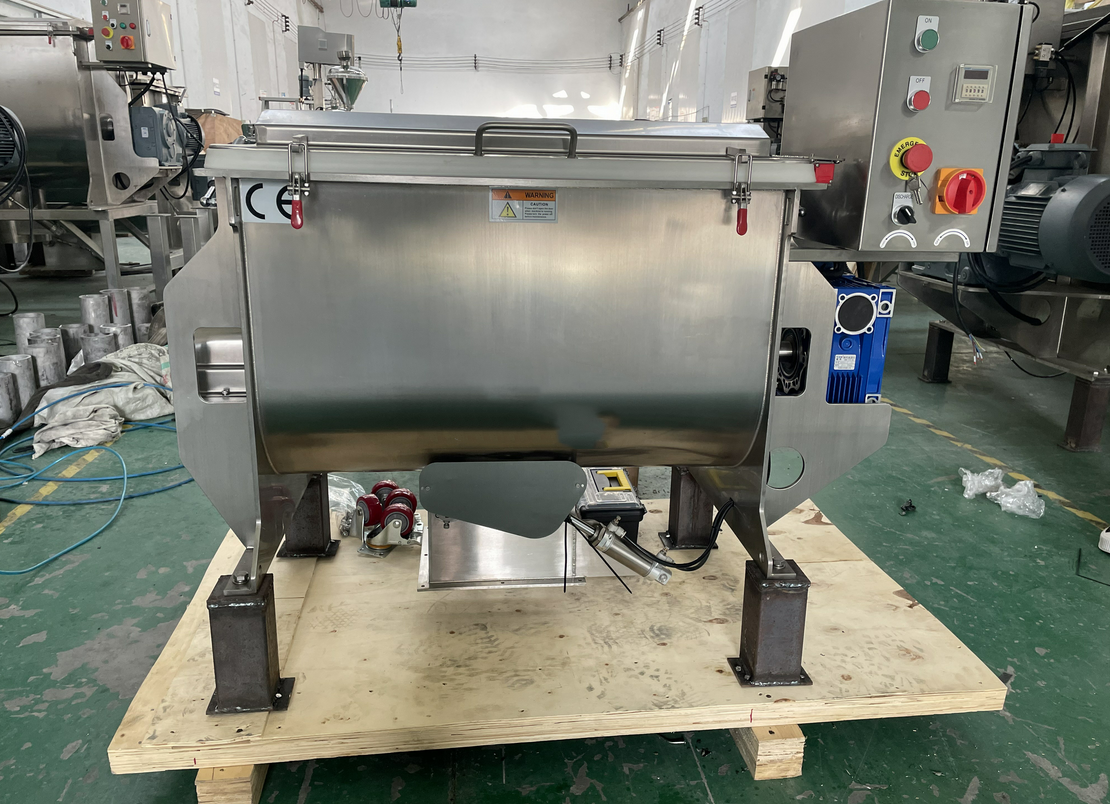

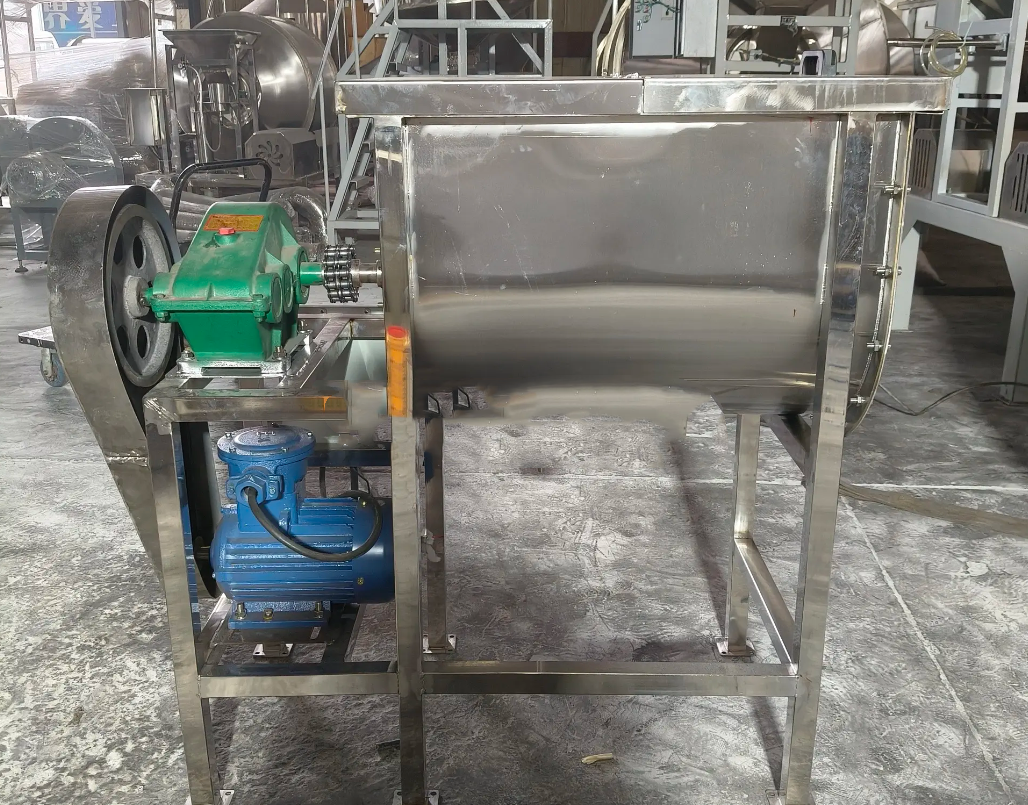
 Email